

Scientists have identified unknown fragments of a supercontinent that once covered 80 percent of the Earth
**Scientists have identified unknown fragments of a supercontinent that once covered 80 percent of the Earth**
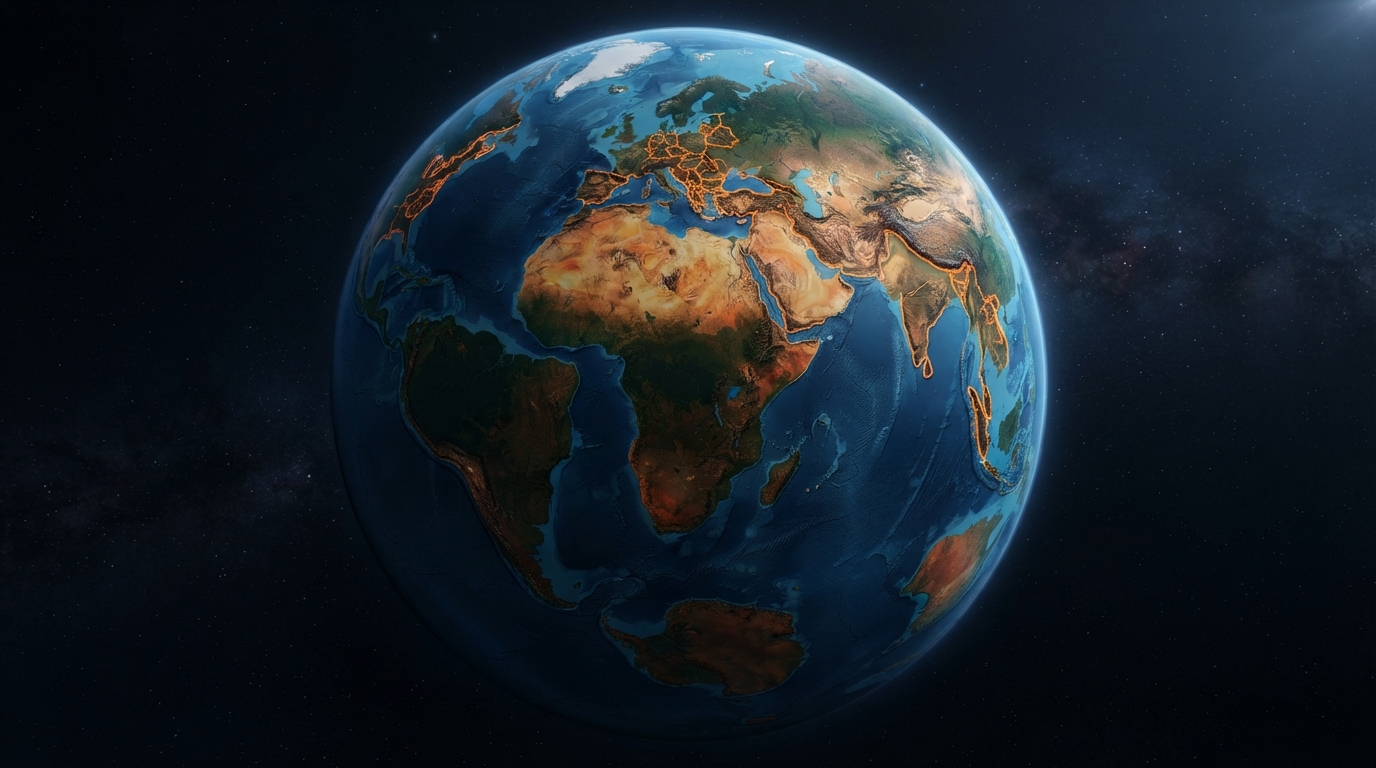
Scientists from the Chinese Academy of Geological Sciences have reconstructed the boundaries of the Gondwana continent (a massive ancient supercontinent that existed 500-600 million years ago and later broke apart) and identified previously unknown fragments of the ancient crust. It was revealed that approximately 550 million years ago, this supercontinent may have covered up to 80 percent of the Earth's landmass.
The researchers used a global geochemical database compiled by specialists from various countries. They analyzed the composition of more than 25,000 igneous rock samples and compared their origins.
In processing the data, the scientists utilized artificial intelligence and geological mapping methods. The analysis showed the presence of buried layers of ancient crust in Southeast Asia, Central Europe, and the southeastern part of North America.
Previously, Gondwana's area was thought to have accounted for approximately 64 percent of the total landmass at that time. The new calculations have raised this figure to 80 percent, changing perceptions of the ancient continent's size.
Scientists also linked the existence of Gondwana to processes preceding the Cambrian explosion, which occurred approximately 541 million years ago. During this period, the diversity of animal life increased sharply, and many organisms whose descendants still live today emerged.
The formation of such a massive landmass may have influenced global sea levels, the movement of mantle materials, and the composition of the atmosphere. It is noted that the new data will help to study more precisely the connection between continental drift, climate change, and the development of life during the early stages of Earth's history.