

Traces of 4,000-year-old silk weaving discovered in Surkhandarya
Evidence of sericulture dating back nearly 4,000 years has been found at the Sopollitepa site in Surkhandarya region. The ancient cocoons and mulberry tree remains discovered by scientists could change perceptions about the history of silk production in Central Asia.
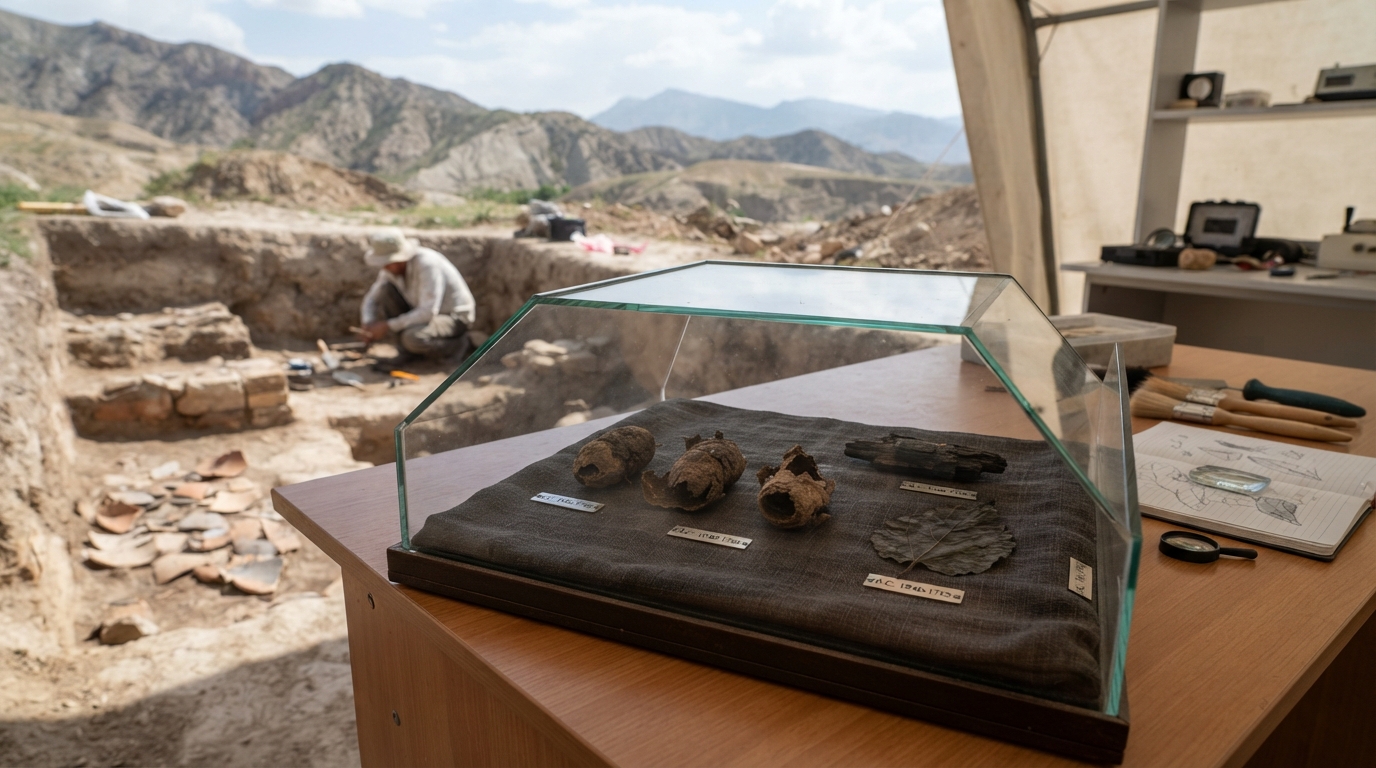
Traces of 4,000-year-old silkworm farming discovered in Surkhandarya.
According to the newspaper “Narodnoye Slovo”, scientists have studied artifacts found in the ancient Bronze Age settlement of farmers in Surkhandarya region – Sopollitepe.
Specialists from the Institute of Anthropology of the Academy of Sciences of Uzbekistan, in collaboration with an international team of researchers, analyzed three ancient cocoon fragments found in the area. Micromorphological and proteomic analyses confirmed that these cocoon remains belong to the domestic mulberry silkworm. Radiocarbon analysis showed that the finds date back to 1940–1765 BC, that is, about 4,000 years ago.
Archaeologists also discovered the remains of a mulberry tree from the same cultural layer. Mulberry leaves are known to be the main food for silkworms. Scientists believe that the discovery of cocoons and mulberry tree remains in one place indicates that the inhabitants of Sopollitepa may have been aware of silk cultivation and processing technologies as early as the Bronze Age.
The findings may add new information to existing views on the history of the spread of silk production technology in Central Asia. At the same time, the discovery does not change the generally accepted date for the formation of the Great Silk Road - the 2nd century BC. However, it suggests that the exchange of knowledge about silk products and their production may have begun almost two thousand years before the formation of the Great Silk Road.
The results of the study are published in the scientific journal Science Advances.