

Remains of a thousand-year-old wall discovered in Fergana
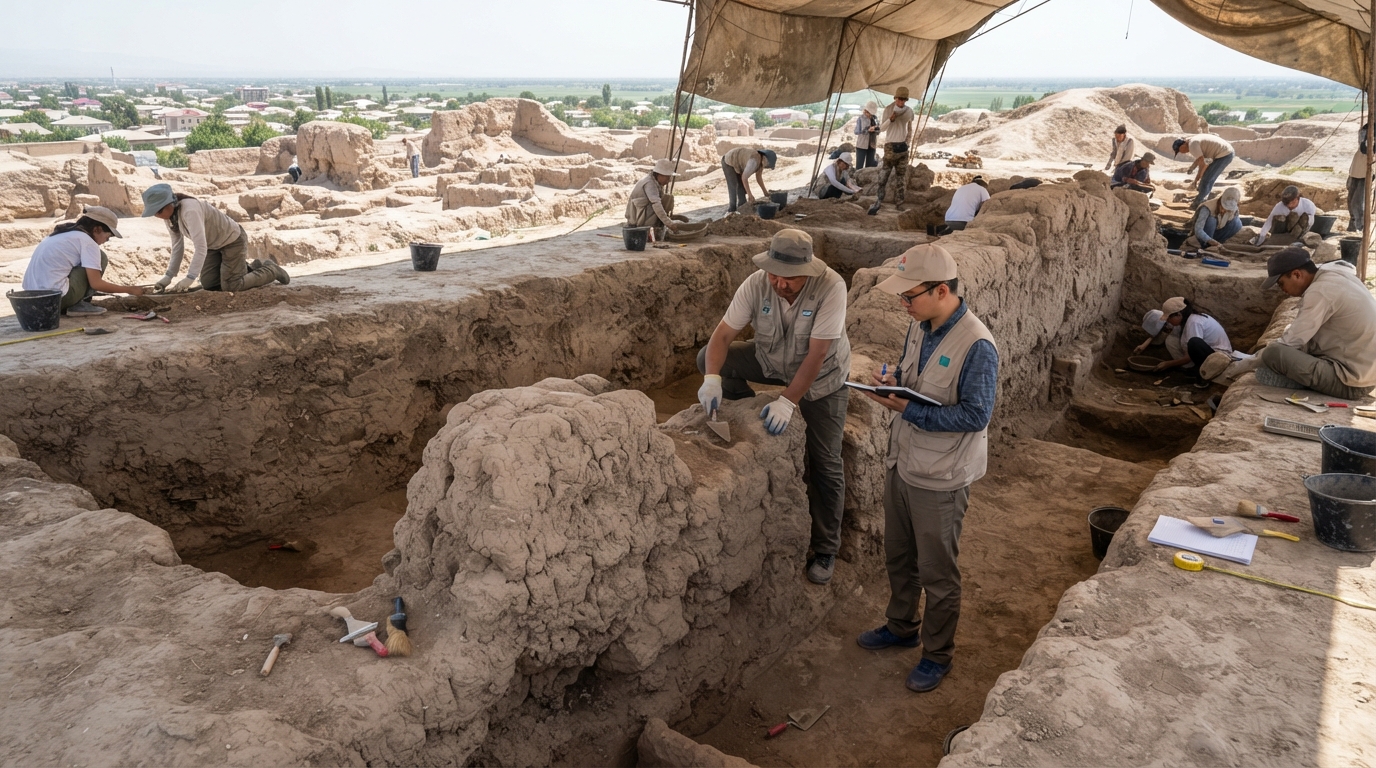
Archaeological research in the ancient town of Quva in Fergana region has revealed the remains of a thousand-year-old wall. It was determined that this wall dates back to the period from the 3rd century BC to the 10th century AD.
The excavations are being conducted by scientists from Fergana State University and the Chinese Institute of Archaeology in the ancient city of Qubba. These works are being carried out within the framework of the Fergana-Shanxi Archaeological Research Center established under Fergana State University.
Experts say that these remains will serve as important material evidence for studying cultural exchanges between the East and the West in the history of the Great Silk Road.
Recall that in July, during excavations at the Mingtepa archaeological site in the Jamboy district of Samarkand region, a palace of rulers, possibly dating back to the 8th century AD, was discovered.