

Scientists have identified the safest place on Earth during a global catastrophe
An international team of scientists has studied which countries are most resilient to severe consequences in the event of global disasters. According to the study, Australia is rated as the country with the highest resilience potential due to its geographical location, food production capabilities, industry and governance system.
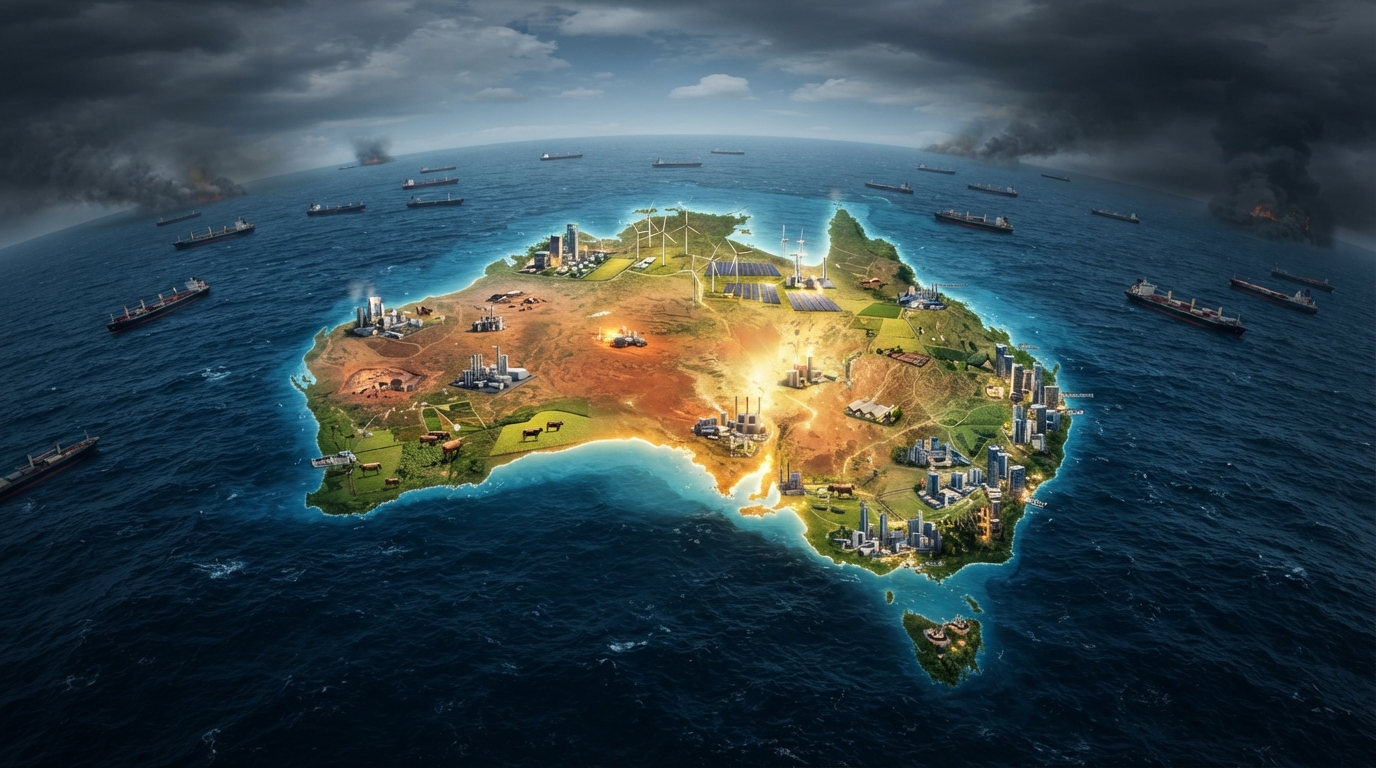
Scientists have identified the safest place on Earth in the event of a global catastrophe. This was reported in a study published in the journal Global Challenges.
The researchers analyzed the scientific literature on the consequences of global catastrophic risks and divided such risks into three main categories:
1. **A sharp decrease in the amount of sunlight:** This could be caused by a powerful volcanic eruption, a nuclear winter, or a collision of the Earth with a large asteroid or other celestial body.
2. **A serious disruption of global infrastructure:** This refers to large-scale disruptions in the power supply, transportation systems, and food production. Scientists say that this situation could be caused by powerful geomagnetic storms, coordinated global cyberattacks, pandemics, or high-altitude electromagnetic pulses.
3. **Global biological threat:** This includes scenarios such as a pandemic of a virus that is more contagious and deadly than the one that causes COVID-19, the accidental release of dangerous pathogens from a laboratory, or the use of biological weapons.
Scientists also assessed the ability of countries to maintain vital functions and the well-being of their populations in the event of a global crisis. They focused on four main factors:
* Geographical isolation
* Ability to be self-sufficient
* Quality of governance
* Decentralized decision-making system
When all factors are taken into account, **Australia** was ranked as the most resilient country to global disasters.
The study's lead author, German ecologist Florian Ulrich Jen, explained that Australia's island location makes it easier to isolate itself from the outside world if necessary. In addition, the country produces a large amount of food, has large domestic industrial and mining sectors. Australia's economic capabilities and relatively stable governance system also increase its resilience to global crises.
However, Australia is not completely independent from the outside world. The country depends on international trade for supplies of fuel, medicine, and fertilizers.