

Scientists have identified a biological pathway that could help extend lifespan
Researchers have found that low temperatures can affect the aging process by activating the production of certain substances in the body. To test this, they studied the roundworm species Caenorhabditis elegans in experiments.
**Scientists Have Identified a Biological Pathway That Could Help Extend Lifespan**
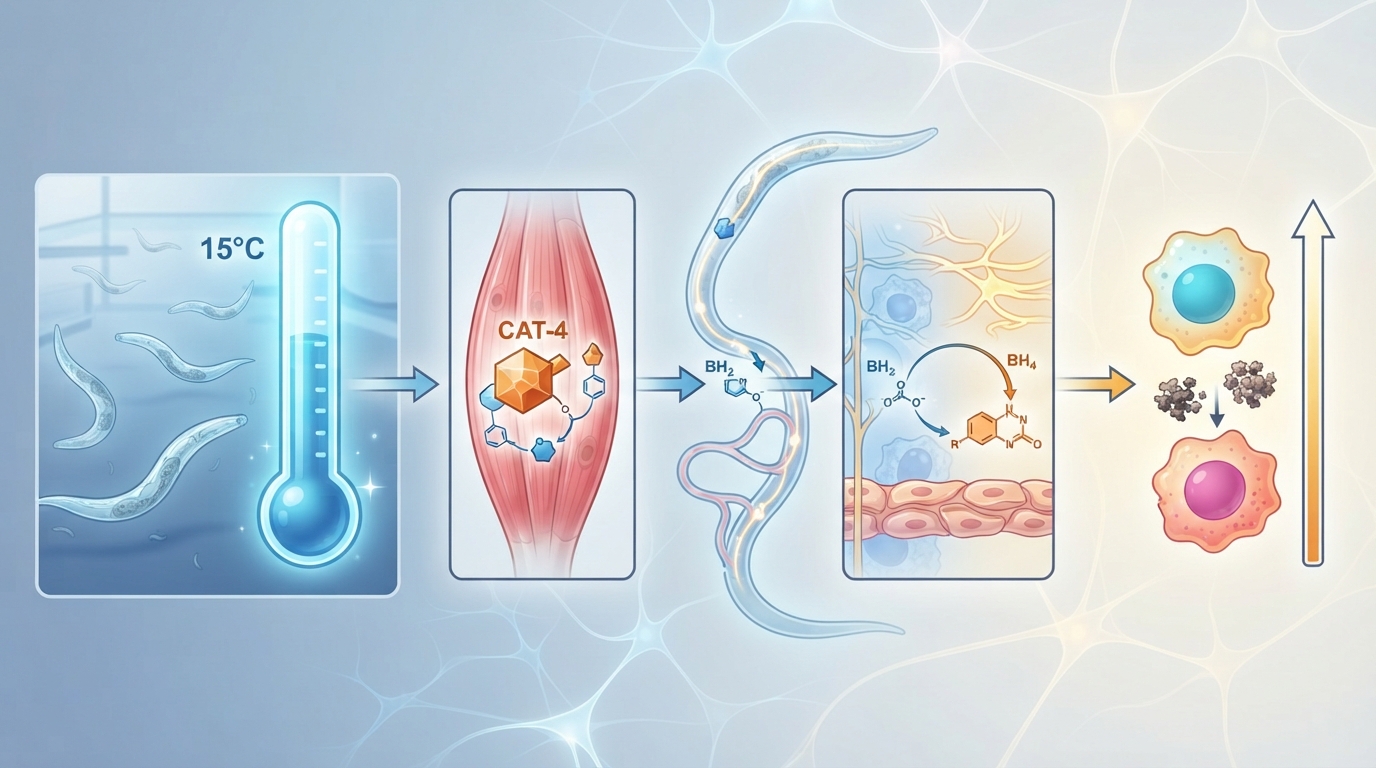
Scientists at the University of Cologne in Germany have identified a biological pathway explaining how moderate cold temperatures affect increased lifespan. According to the study's results, low temperatures can trigger the production of certain substances in the body, influencing the aging process.
In the experiment, the researchers studied nematodes of the species **Caenorhabditis elegans**. They found that at a temperature of 15 degrees Celsius, the production of the **CAT-4** enzyme increased in the muscles of these creatures. This enzyme is involved in the formation of a substance called **dihydrobiopterin (BH2)**.
BH2 then moves to other tissues, such as the gut and the nervous system, and converts into **tetrahydrobiopterin (BH4)**. BH4 is essential for the activity of an enzyme that helps synthesize the amino acid tyrosine. Scientists found that when this biological chain is disrupted, the lifespan-extending effect associated with cold temperatures diminishes.
Another interesting phenomenon was observed during the study. Boosting the production of BH2 in the muscles extended the lifespan of the worms even under normal or elevated temperature conditions.
Scientists also conducted separate experiments on human cells. In these, the addition of BH2 or tyrosine reduced the accumulation of altered proteins associated with Huntington's disease and amyotrophic lateral sclerosis.
Nevertheless, the study does not prove that moderate cold extends human lifespan or that cold-related therapies are effective. For now, additional research is required to evaluate the impact of the identified mechanism on the human body.