

Salary during studies, work after graduation: A new system in higher education institutions
Starting from the 2027-2028 academic year, a dual education system will be introduced in higher education institutions based on orders from enterprises, on the condition of hiring the graduate. The enterprise will pay the student a monthly salary during the study period, and the student will be required to work at that enterprise for at least two years after graduation.
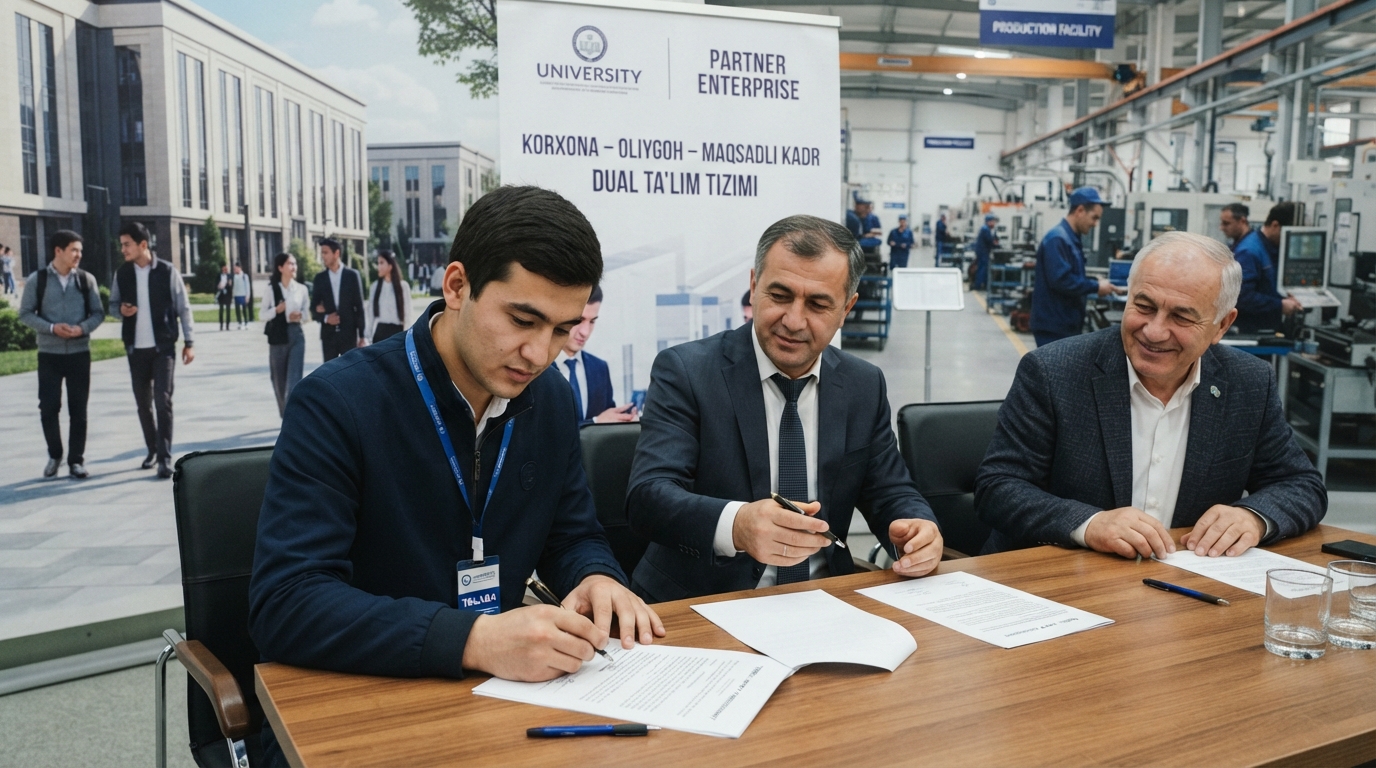
Salary during the study period, a job after graduation: A new system in HEIs
This procedure is established by the President's Decree No. PF-209 of September 29, 2026, "On measures to improve the system of personnel training in the form of dual education in higher education."
According to the document, the "enterprise – university – target specialist" principle will be introduced in training highly qualified personnel. Personnel will be trained based on the orders of employing enterprises.
Higher education institutions themselves will determine the undergraduate fields of study and admission parameters to be accepted under the dual education form. However, this must be agreed upon with the Ministry of Higher Education, Science and Innovation.
Admission is carried out annually until October 1 on a fee-paying contract basis, based on the order of the employing enterprise.
Dual education is established on the basis of a tripartite agreement concluded between the higher education institution, the enterprise, and the student.
According to the agreement, the enterprise is obliged to pay the student a monthly salary of not less than the minimum wage throughout the entire period of study.
Also, the personnel training system provides for the condition of hiring the graduate at the ordering enterprise.
After completing their studies, the student must work at this enterprise for at least two years. This obligation is also specified in the tripartite agreement.
Thus, in the new system, the enterprise's need for personnel, the education at the university, and the graduate's subsequent labor activity are linked with each other.