

Russia struck the main bridge in Kyiv
After the bridge over the Dnieper River, which divides the Ukrainian capital into two parts, was closed, huge traffic jams occurred in the city.
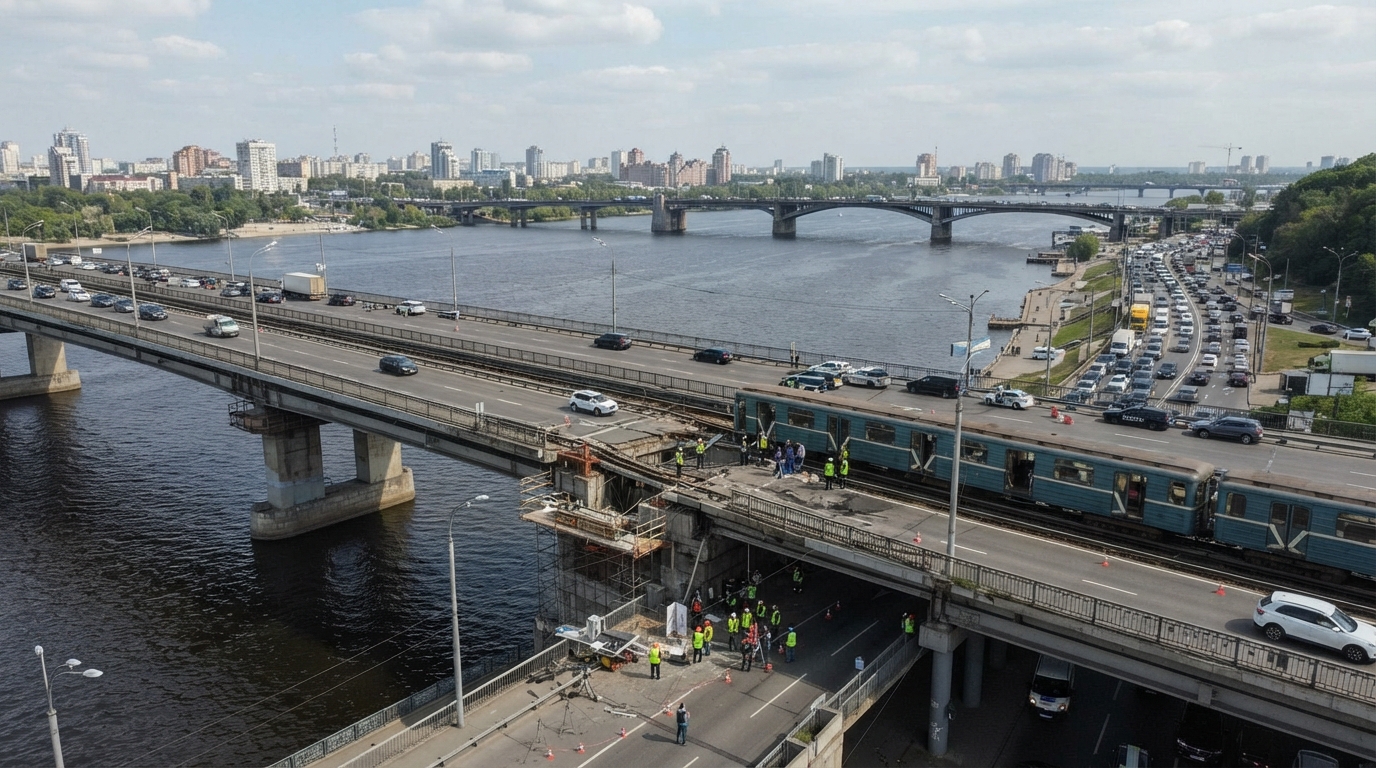
Russia strikes main bridge in Kyiv
Russian forces continue to attack Kyiv with drones. On October 1, one of the drones struck a school building in the Solomianskyi district. By that time, the students had already managed to go down to the basement bomb shelters, and no one was injured.
During the day, the Russian military launched attacks targeting bridges in Kyiv for the first time since the start of the full-scale war. During the day, the South Bridge was struck three times — this bridge is used by both cars and the metro.
Due to the blast wave, dust entered the ventilation of the train carriages crossing the bridge at that moment. The passengers were not harmed, and the train was not damaged, but it was sent to the depot for additional inspection.
Initially, metro and bus services across the bridge were suspended. According to the Kyiv City Military Administration, metro trains are operating only on the underground sections between the "Syrets" and "Vydubychi" stations, as well as "Osokorky" and "Chervonyi Khutir" stations. Bus routes have been temporarily changed.
Specialists are inspecting the bridge to assess the damage caused by the strikes. According to preliminary data, "the bridge pillar, the roadside barrier, the road surface, and the protective concrete layer of the metro system were damaged."
On the morning of October 2, traffic was restricted along the Paton Bridge in the direction from the right bank to the left bank, as well as on the Metro Bridge. This caused major traffic jams in the city. On the afternoon of October 2, two-way traffic was restored on the Paton Bridge, but for now, it can only be accessed from the Mykola Mikhnovsky Boulevard side. The Kyiv Defense Council called an emergency meeting to discuss how to organize traffic on the bridges connecting the left and right bank parts of the city. There is no underground transport tunnel under the Dnipro River.