

ROX Group in Uzbekistan: Long-Term Cooperation
The meeting between the President of Uzbekistan Shavkat Mirziyoyev and the founder of ROX Group, Tran Anh Tuan, on September 11 has elevated the cooperation between the Vietnamese company and Uzbekistan to a new level. But behind this high-level meeting lies a broader question: why has Uzbekistan become a market of special focus for ROX Group, and what contribution can the Vietnamese company make to the country's development?
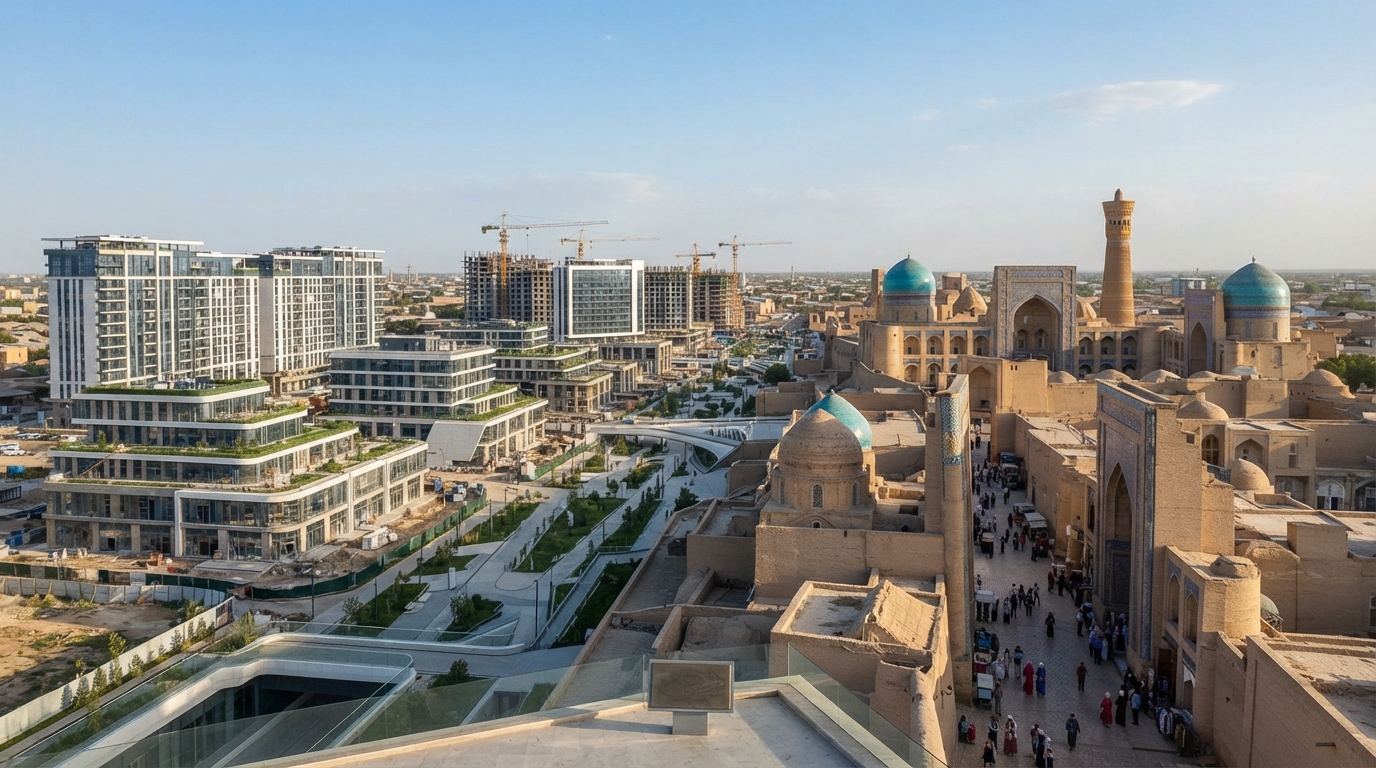
ROX Group in Uzbekistan: Cooperation with a Long-Term Focus
In recent years, Uzbekistan has been actively modernizing its cities and investing in infrastructure, industry, energy, and tourism, increasingly attracting international resources to achieve its development goals. It is in these very areas that ROX Group has accumulated experience for nearly thirty years — first in Vietnam, and later in foreign markets.
The alignment between Uzbekistan's development needs and ROX Group's expertise became one of the key reasons why the company views the country as a market with potential for long-term cooperation.
ROX Group began promoting cooperation with Uzbekistan in late 2024. During initial meetings with central and local government authorities, the company discussed projects in housing, urban development, and tourism in Tashkent, Bukhara, and several other regions. Later, the scope of interaction expanded.
Bukhara became one of the most prominent areas of cooperation.
At the end of 2025, ROX Group and the Khokimiyat of Bukhara signed a cooperation agreement to implement two projects — New Bukhara City and New Central Bukhara. In June 2026, the agreements reached an intersectoral and regional level: the Ministry of Investment, Industry and Trade of Uzbekistan, the Khokimiyat of Bukhara Region, and ROX Group signed a trilateral investment agreement at the V Tashkent International Investment Forum. The total value of the agreement is 2 billion US dollars.
For the city itself, this is not just about new facilities. Bukhara is one of the most important historical cities in Central Asia; its historical center was inscribed on the UNESCO World Heritage List in 1993. The city is increasingly attracting tourists, businesses, and new economic activity, and the presence of world-class heritage presents it with a special challenge: how to preserve the historical environment while meeting the needs of a modern city?