

Renault presented a new sports coupe in a retro style
The Renault R8 Gordini Concept is designed in the style of the 1960s sports sedan. The model will not go into mass production.
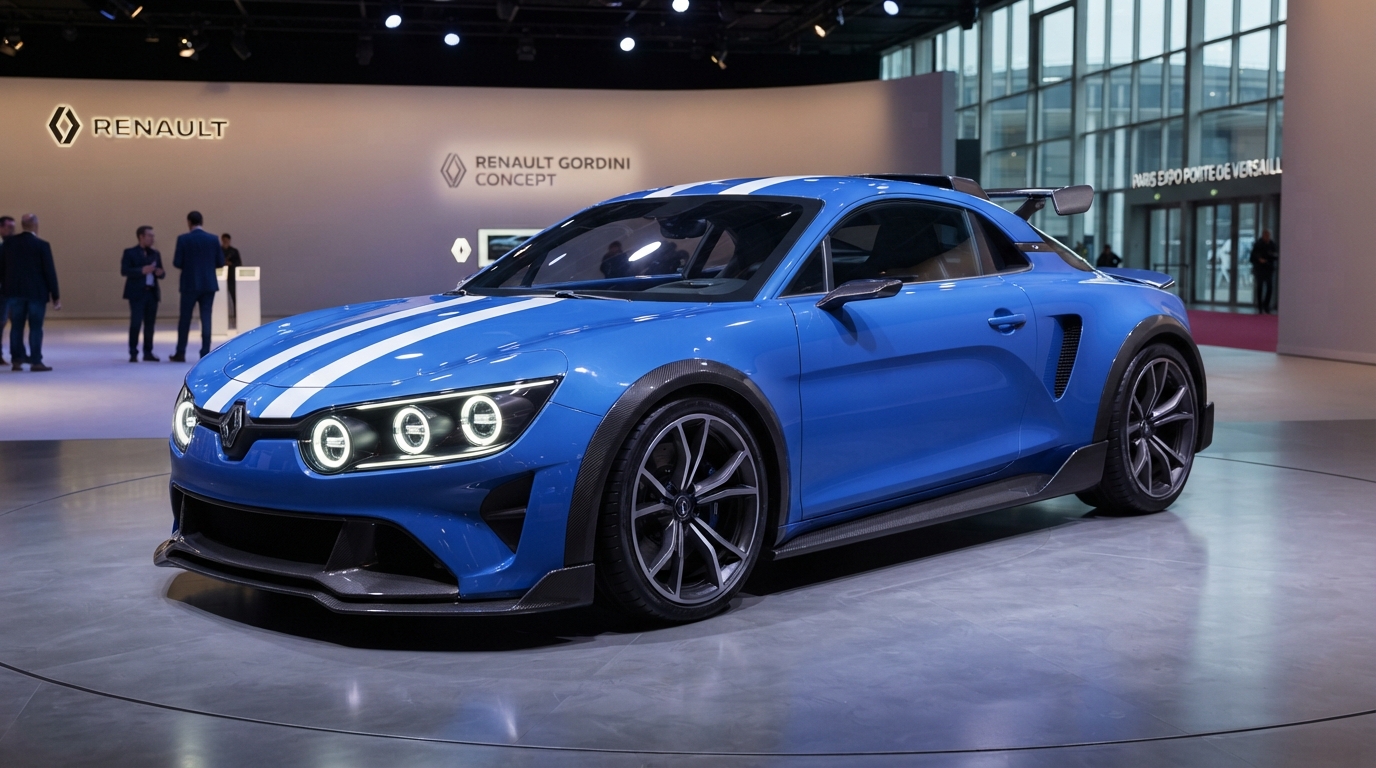
Renault presented a new retro-style sports coupe
Renault has unveiled a concept coupe inspired by the 1960s Renault 8 Gordini sports sedan.
Unlike the R4 and R5 retro models already in production, this concept will not enter serial production, but some of its design solutions may serve as a basis for future models.
The original Renault 8 Gordini debuted in 1964 as a high-performance version of the rear-engine, rear-wheel-drive family sedan designed for mountain roads. The model featured nearly double the power, lowered ground clearance, upgraded brakes, four or six round headlights, as well as a distinctive blue color with white racing stripes.
The new R8 Gordini Concept is a two-seater electric coupe with a low and wide silhouette. The front end is distinguished by the absence of a radiator grille and a V-shaped hood with six round LED headlights. The taillights are flush with the body and are virtually invisible when turned off. Exterior features also include a sporty bumper with air intakes, widened wheel arches, fasteners on the rear pillars, a roof spoiler, a ventilation grille at the rear, and a large diffuser. The body is trimmed with carbon and painted in the traditional blue-and-white color scheme.
Renault disclosed very few technical details. It is known that the concept is equipped with a single electric motor producing 266 horsepower and transmits tractive force to the rear axle.
According to the company, the designers prepared more than 300 sketches. The main goal was to "evoke emotions by relying on both heritage and modernity."
At the same time, the concept will not be mass-produced. The public premiere will take place at the Renault Carwalk event, after which the coupe will be exhibited at the Paris Motor Show. Later, the concept will be handed over to the Renault Collections museum.