

Real Madrid tops the list of the most valuable football brands
The combined value of the 50 biggest football brands reached €23.9 billion, with the top ten clubs accounting for more than 60% of this amount.
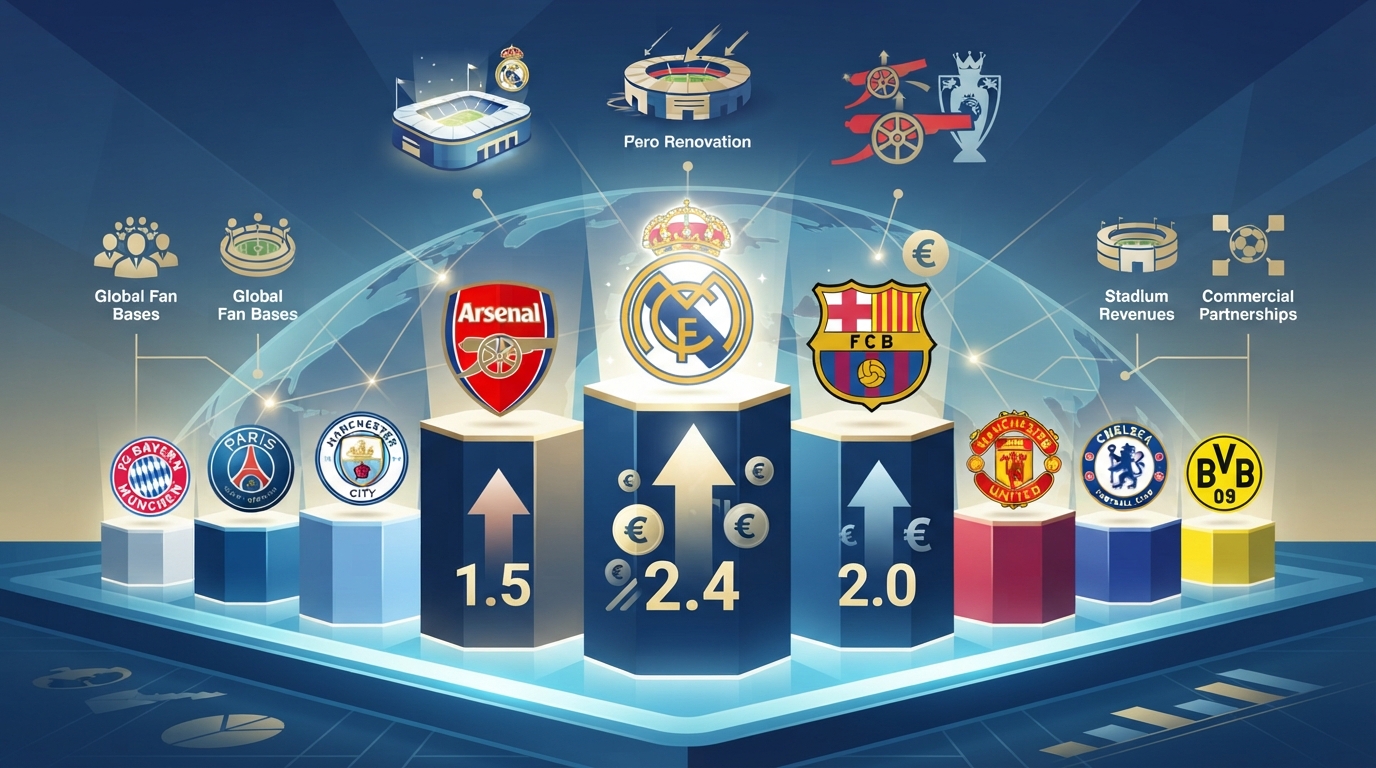
Real Madrid tops the list of the most valuable football brands.
According to the Brand Finance Football 50 2026 report, the combined brand value of the world's 50 largest football clubs reached €23.9 billion, while their combined enterprise value amounted to €79.7 billion. More than 60% of this total brand value belongs to the top ten clubs, highlighting the growing gap between the elite of global football and the rest of the teams.
Real Madrid tops the list of the world's most valuable football brands for the third consecutive year. The Spanish club's brand value increased by 25% over the year, reaching €2.4 billion.
Barcelona retained second place, increasing its brand value by 15% to €2 billion. Arsenal entered the top three for the first time, climbing five places, with its brand value increasing by 28% to €1.5 billion.
Overall, the ten most valuable football brands are valued at €14.9 billion, accounting for over 60% of the total brand value in the ranking. Since 2012, their combined value has increased by 250%, while the value of the top 50 brands combined has increased by 220%.
Stuttgart demonstrated the fastest growth among the top 50 clubs, with its brand value nearly doubling to €183.5 million. Aston Villa became one of Brand Finance's top clubs to watch after its brand value increased by over 60%.
Real Madrid consolidated its top spot amid improved commercial performance. The 2025/26 season marked the first full season since the renovation of the Santiago Bernabéu, during which the stadium was almost fully utilized for its intended purpose. This contributed to increased revenue from matches, VIP services, the museum, and tourism services.
Combined with a large international fan base and a significant portfolio of sponsorship agreements, the stadium renovation strengthened the club's commercial position. Real Madrid's revenue for the 2025/26 season was €1.2 billion.
Barcelona also received a commercial boost after a phased return to the Camp Nou, which the club had not used for over two years. Their sporting achievements included two consecutive La Liga titles under Hansi Flick and a Spanish Super Cup victory.
The return to the renovated stadium increased matchday revenue after a temporary relocation, which was estimated to have resulted in a loss of approximately €100 million per year. Increased sponsorship and merchandise sales, including e-commerce, allowed the club to approach €1 billion in annual revenue.
Arsenal was one of the biggest growth stories in the 2026 rankings. Their first Premier League title in 22 years and a run to the Champions League final provided the club with a significant commercial boost. Renewed kit and stadium sponsorship deals also boosted long-term commercial revenue.
Arsenal's projected revenue of approximately £790 million could make the London club one of the world's most profitable football teams, behind Real Madrid and Barcelona. An additional factor was the club's strong presence at the FIFA World Cup: more Arsenal players have reached the latter stages of the tournament than any other Premier League club.
Bayern Munich climbed two places to fourth place after another record-breaking financial year. Increased revenue from broadcasting, commercial activities, and matches was accompanied by the team's successful performances. The German club won the Bundesliga, the German Cup, and the German Super Cup, completing the domestic treble.
Paris Saint-Germain retained fifth place, with its brand value increasing by 10% to €1.5 billion. The French club won the UEFA Champions League, Ligue 1, UEFA Super Cup, FIFA Intercontinental Cup, and the Champions League.
However, Brand Finance notes limitations related to Ligue 1's international appeal and commercial competitiveness compared to leading European leagues. Increased sponsorship revenue and the effective use of its global brand and partnerships enabled PSG to increase its brand value by 10%.
Manchester City, Liverpool, and Manchester United fell in the rankings despite growth in their brand value. This reflects the rapid strengthening of their competitors' commercial positions.
Manchester City's brand value increased by 3%. Growth slowed amid a less successful performance in European competitions and the departure of Pep Guardiola after a decade at the club.
Liverpool also increased its brand value despite a lackluster season. This, according to Brand Finance, demonstrates the resilience of the largest football brands and their reduced dependence on short-term sporting results.
Chelsea, with a brand value of €955 million, retained ninth place. The club's commercial progress was offset by inconsistent results and the managerial situation.
Borussia Dortmund returned to the global top ten for the first time in a decade. Increased revenue from television broadcasts, sponsorship, ticket sales, and merchandise, as well as the commercial impact of European competition and high fan engagement, allowed the German club to once again re-enter the top ten most valuable football brands.
Brand Finance also assessed the strength of football brands. Six clubs received at least 90 points out of 100 on the Brand Strength Index (BSI) in 2026, comparable to the strongest global brands in other industries.
Real Madrid also retained its top spot for brand strength, with a BSI score of 95.8 out of 100. In a study among international fans, the club ranked first in most brand attributes out of 281 clubs analyzed. Its reputation was cited by 67% of respondents, loyal fans by 64%, star players by 62%, history and prestige by 60%, and an attractive style of play by 58%.
The club also received high marks for its stadium and sponsors. Following its renovation, the Santiago Bernabéu has become a year-round entertainment venue, hosting concerts and NFL matches, while the museum and stadium tours attract record numbers of visitors.
The brand's commercial appeal is supported by long-term partnerships with Adidas and Emirates, as well as a star-studded roster that includes Kylian Mbappé, Jude Bellingham, and Vinicius Junior.
Barcelona ranked second for brand strength, with a BSI score of 95.4. The club received high marks for its history, fan base, stadium, management, and player base.
Bayern Munich climbed to third place with a BSI of 94.0. Improvements were seen across several brand appeal dimensions, including fan affinity, perception of the club's history and prestige, and assessment of its playing style.
Arsenal overtook Manchester United to become the strongest football brand in the UK. The London club ranked fourth globally with a BSI of 94.0.
67% of fans surveyed associate Arsenal with spectacular football. This is almost 2.5 times higher than the Premier League average and significantly higher than Manchester United's 49%.
Positive changes were also noted in their assessments of Arsenal's off-field performance. 52% of fans associate the club with innovation, compared to 37% for Manchester United. Arsenal is considered a well-managed club by 55% of respondents, compared to 41% for United.
Liverpool ranked fifth for brand strength, while Manchester United fell to sixth with a BSI of 90.4. United's decline came amid a deterioration in the overall perception of the Premier League. The league's reputation rating fell by 6%, history and prestige by 8%, and overall fan interest by 6%. Match atmosphere and accessibility also declined.
Manchester United's history and global fan base remain key strengths. However, lower ratings for innovation and management quality indicate a gap between the brand's reach and the perception of its development.
Chelsea and Manchester City ranked seventh and eighth, respectively, for brand strength. This brings the total number of Premier League clubs in the top ten. Paris Saint-Germain overtook Borussia Dortmund to take ninth place, while the German club rounded out the top ten strongest football brands in the world.