

Rare tree offspring given lifeline at Scottish botanic garden
Logan Botanic Garden is helping save a species native to Robinson Crusoe Island in the South Pacific.
Rare tree offspring given lifeline at Scottish botanic garden
The young of one of the world’s rarest trees has found a new refuge in south-west Scotland as conservationists intensify efforts to keep the species from disappearing forever.
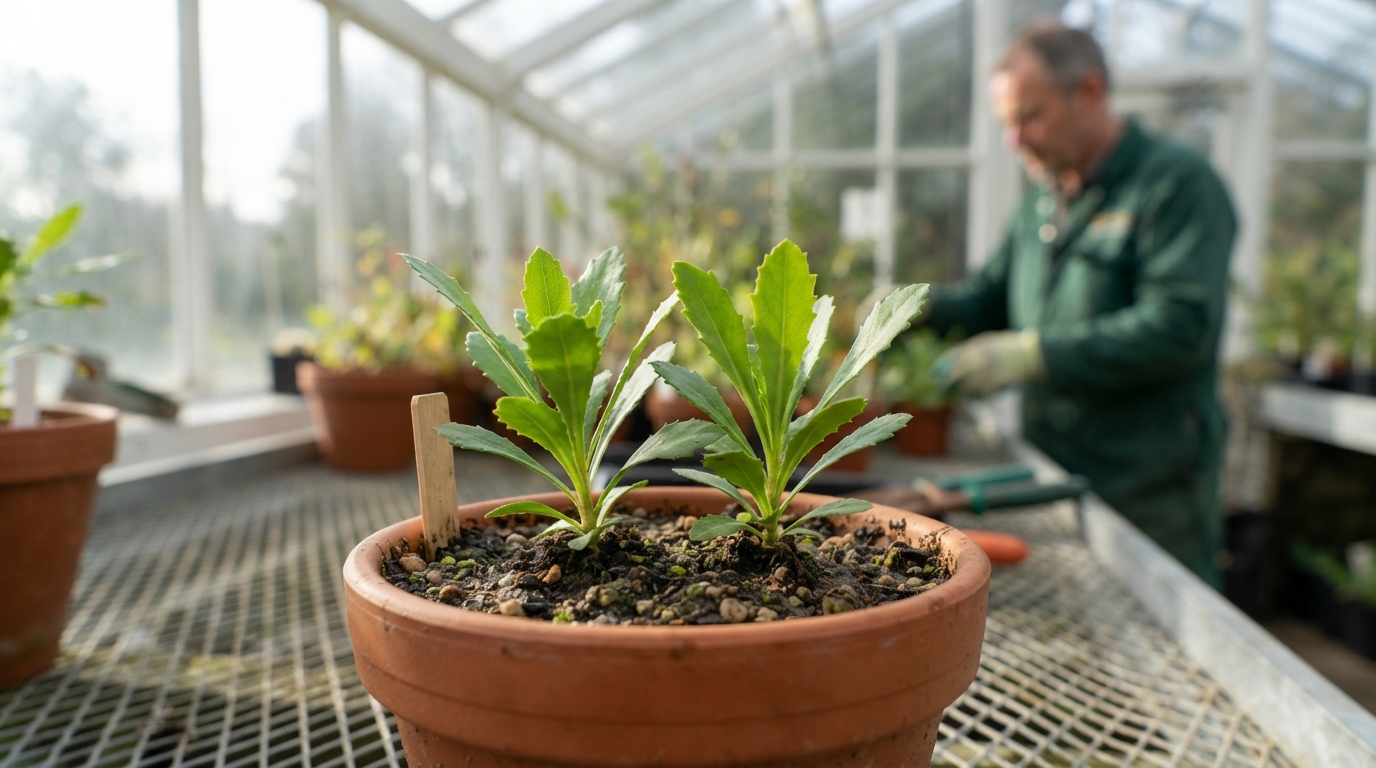
Two seedlings from the last known wild dendroseris neriifolia tree have been delivered to Logan Botanic Garden in Dumfries and Galloway following an international rescue operation involving specialists in Chile and the UK.
Native to Robinson Crusoe Island in the South Pacific, the species has been driven to the edge by habitat loss, invasive species and repeated wildfires.
Conservationists hope the relocation will act as a crucial safeguard for the future of a plant that now survives in the wild as a single tree clinging to a cliff face.
Dendroseris neriifolia, a rare tree daisy found only on Chile's Robinson Crusoe Island, has seen a steep decline over recent decades.
By 1980, just eight wild specimens were left, and although reintroduction efforts began in the early 2000s, the collapse of protection measures in 2017 left the species exposed once more to invasive plants and grazing animals.
Today, the last surviving wild tree is held in place by ropes on a steep volcanic outcrop to stop it from falling.
In May this year, 29 seeds were taken from the lone tree and sent to the Millennium Seed Bank at Kew Wakehurst.
Eight seedlings germinated successfully, and two have now been moved to Logan Botanic Garden, where the climate is regarded as especially suitable for rare Chilean plants. The other seedlings will remain at Kew.
Richard Baines, curator at Logan, called the arrival an important moment and said the garden could have a key role in learning more about the species and helping to secure its future.
"Experience shows that plant species from the Juan Fernández Islands do well at Logan," he said.
"This is the start of an exciting new period.
"Creating a safe place for these seedlings, getting to know them, and learning more about their adaption to different environments, gives us the chance to contribute so much more."
Scientists involved in the project said the international partnership offered a rare chance to stop the extinction of a unique plant lineage and preserve part of the natural heritage of the Juan Fernández archipelago.
Diego Penneckamp, a scientist at Jardín Botánico VerdeNativo, said saving the species was a "race against time".
"This international collaboration to support the last remaining individual could prevent the extinction of a species that represents a unique lineage with its own natural history," he said.