

Putin admitted: Ukrainian strikes cost Russia 1 percent of GDP
Russian President Vladimir Putin stated that Ukraine's strikes on oil refineries have led to losses equivalent to nearly 1 percent of the country's GDP. He admitted that the attacks had partially achieved their goal, but rejected the proposal to mutually cease strikes on energy facilities and vessels.
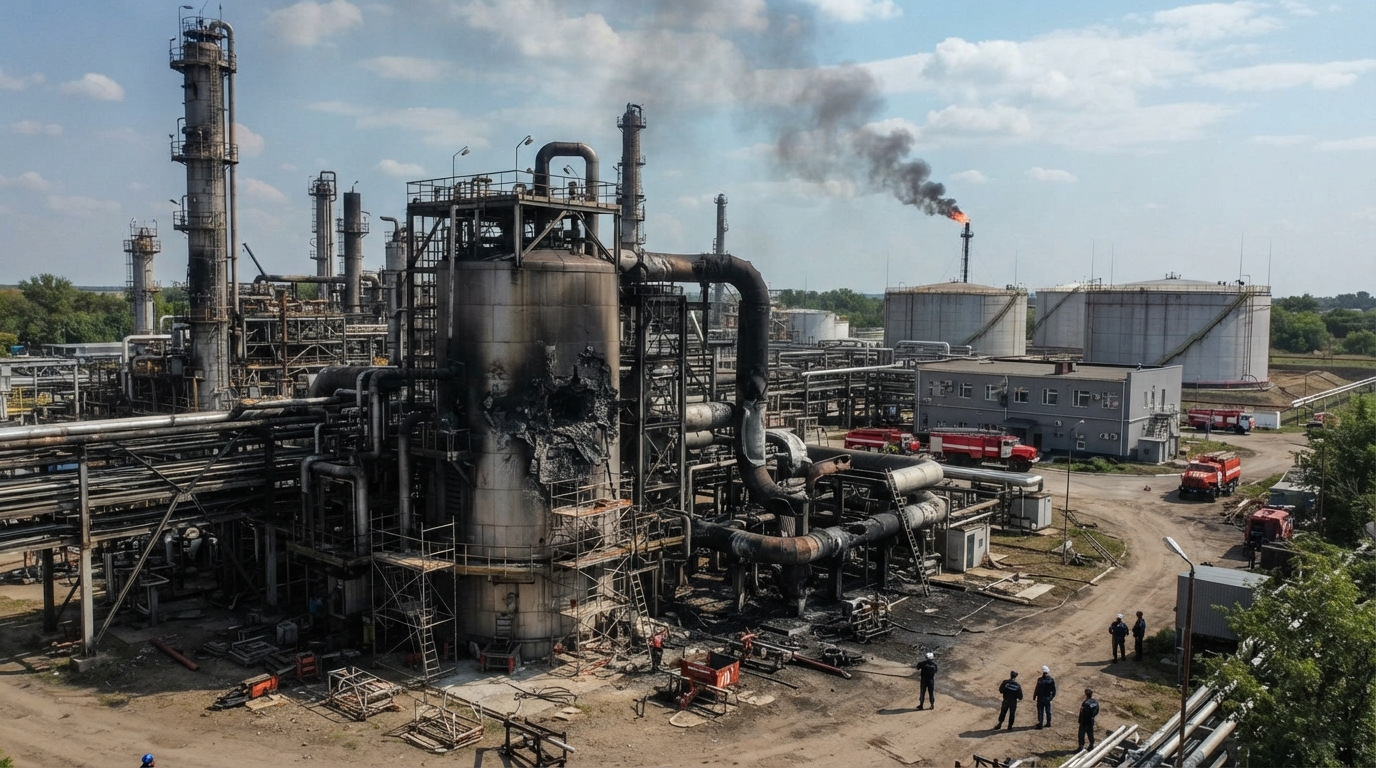
Putin admitted: Ukrainian attacks caused damage to Russia equivalent to 1 percent of GDP
According to DW, Putin announced this on October 1 at the plenary session of the "Valdai" International Discussion Club.
He said that Ukraine aimed to damage the country's economy by striking oil refineries in Russia.
"Did they achieve the goal? Partially," said the Russian president.
Putin estimated the losses resulting from such strikes at approximately 1 percent of Russia's GDP.
He said that in response, Moscow is striking facilities it considers important for the Ukrainian economy. Putin, in particular, claimed that Ukraine's metallurgical sector has practically ground to a halt. He alleged that this sector is also used in weapons production.
### Production decreased at major plants
In recent months, strikes on Russian oil refineries have caused disruptions in fuel production.
According to Reuters, six major diesel-producing enterprises in Russia provided nearly half of the country's production of this fuel. However, in September, several of them sharply reduced production or stopped completely.
In particular, the Kirishi oil refinery completely halted its operations. The Volgograd refinery and the NORSI enterprise operated at approximately one-quarter of their designated capacity.
According to the International Energy Agency, a successful strike on oil refineries in Russia was recorded on average once every three days in the first eight months of 2026.
### Diesel export ban extended
Disruptions at the enterprises were one of the reasons for the introduction of restrictions on fuel exports from Russia.
On September 30, Reuters reported that the Russian government extended the ban on diesel exports until the end of October.
Prior to this, export restrictions had been introduced several times against the backdrop of fuel shortages and rising prices in the domestic market.