

Three of Lukoil's four largest oil refineries in Russia have stopped operating
Three of the four oil refineries owned by Russian oil company Lukoil have been shut down following drone attacks by Ukrainian forces. Currently, only the company's Ukhta facility in Russia remains operational.
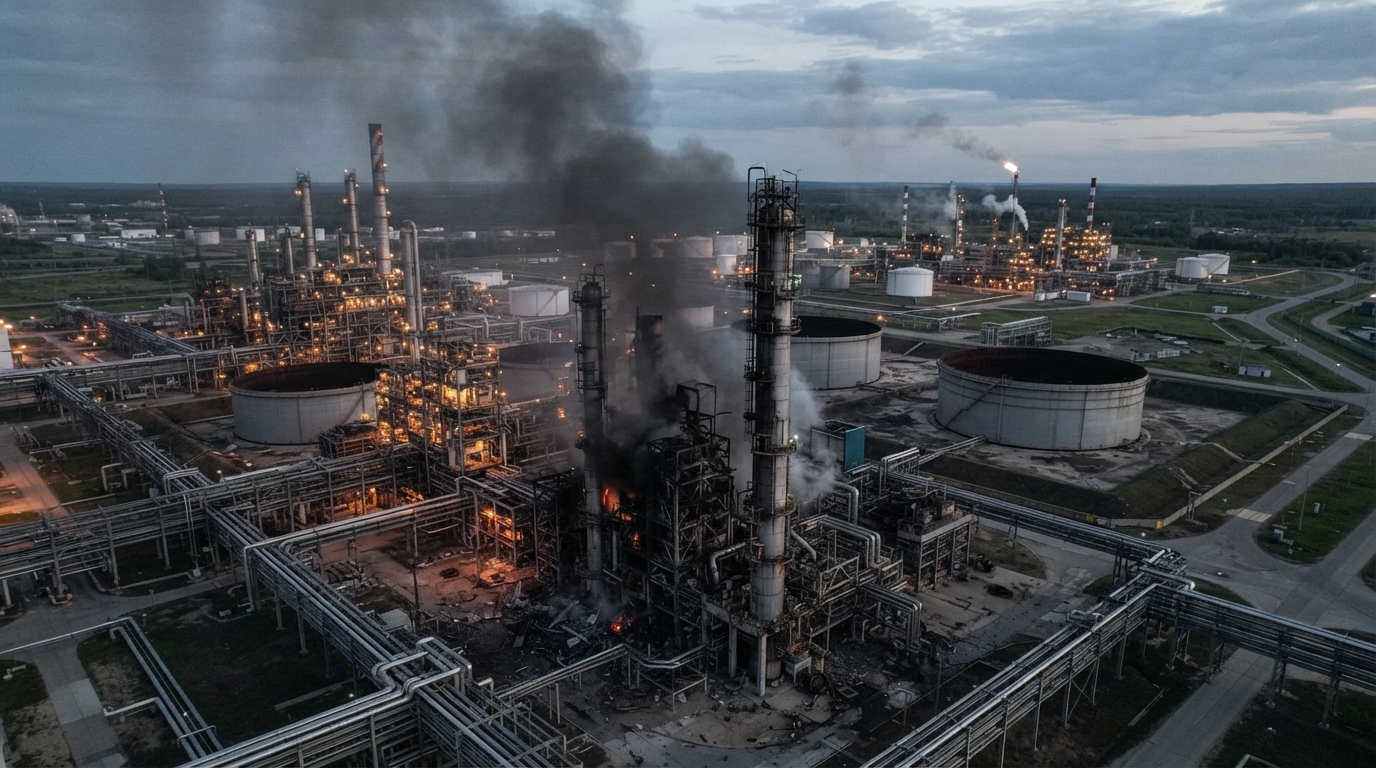
Three of Russia's four largest oil refineries owned by Lukoil have been shut down.
Three of Russia's four oil refineries owned by Lukoil have been shut down by drone strikes, Reuters reported on August 26, citing three sources.
The Lukoil-Nizhegorodnefteorgsintez refinery in Kstovo, Nizhny Novgorod region, has been shut down after a nighttime attack. The refinery is Russia's fourth-largest oil refinery and the second-largest gasoline producer. It has an annual capacity of about 15 million tons of oil and about 5 million tons of gasoline.
The Reuters source said that several technological devices, inter-departmental communications and general plant facilities were damaged as a result of the drone strike. As a result, the plant temporarily suspended operations. It is not yet known how long it will take to repair the plant and resume production.
In addition to the plant in Kstovo, Lukoil's Volgograd refinery was also forced to suspend operations after the attack on the night of July 31. The company's Perm refinery also suspended operations after the attack on the night of August 21.
Thus, only one of Lukoil's four refineries in Russia, Lukoil-Ukhtaneftepererabotka, is currently operating.
The Ukrainian Armed Forces regularly carry out drone strikes on oil refining facilities in various regions of Russia. In particular, after the attacks on facilities in the Rostov region on the night of August 25, local authorities reported damage to the Novoshakhtinsk refinery. As a result, this plant was also forced to stop working.
In addition, the Tyumen oil refinery was temporarily suspended after the attack in late July. According to Reuters sources, the strike caused a fire in a diesel hydrotreating unit at the plant. It was also reported that a complex designed to produce high-octane gasoline may have also failed.