

Public pastures will be established for the population in remote areas
The President instructed the hokims to restore and increase the productivity of 3 million 700 thousand hectares of pastures next year
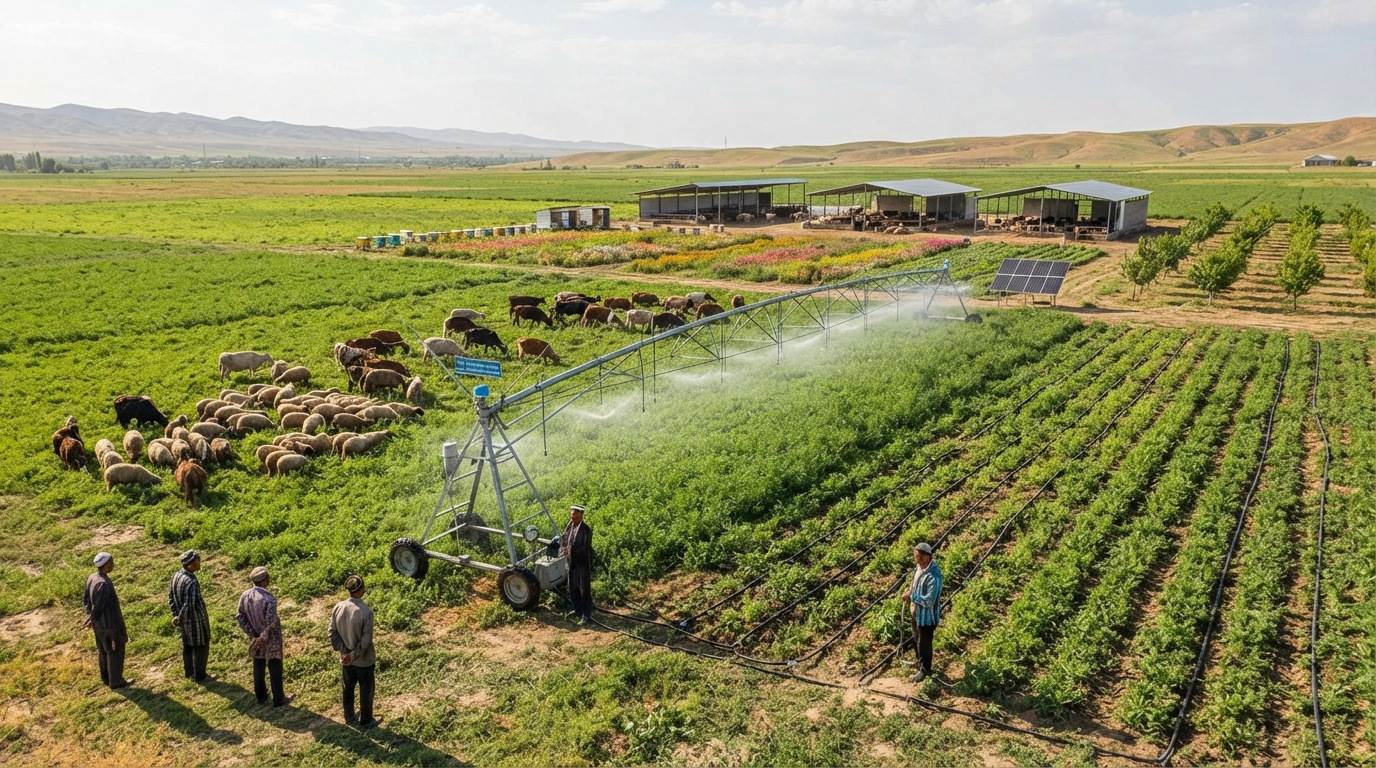
Public pastures to be established for residents of remote areas
President Shavkat Mirziyoyev was briefed on a presentation regarding the prevention of pasture degradation, improving water supply, and their effective utilization.
Although there are 21 million 255 thousand hectares of pastures in our country, only 40 percent of them are being used effectively. The Head of State emphasized that fully leveraging this huge potential is extremely important in ensuring our country's food security.
Tasks were outlined to organize the implementation of the recently signed Presidential resolution on the effective use of pastures. Khokims were tasked with restoring and increasing the productivity of 620 thousand hectares of pastures by the end of the year, and 3 million 700 thousand hectares next year. Within one month, together with the Agency for the Development of Livestock and Pasture Farming, they will approve comprehensive programs to reduce degraded areas by 10 percent this year and by 20 percent next year.
In Navoiy region, thanks to 30 billion soums allocated from the local budget, the "Kengsoy" pumping station is being reconstructed, and 20 thousand hectares of pastures are being reclaimed. Taking advantage of this opportunity, 11 entrepreneurs have begun constructing water reservoirs and implementing sprinkler irrigation technology. As a result, an opportunity will be created to cultivate 250 thousand tons of fodder annually for 60 thousand head of cattle on these areas.
In Nishon district of Qashqadaryo region, a pivot irrigation system has been introduced on 1,332 hectares of pastures, and new forage plants adapted to local conditions are being planted. Instructions were given to establish this experience in Muborak and Dehqonobod districts as well, and to set up a total of 9.4 thousand hectares of seed-growing areas within one year.
Financial sources were also determined for supplying pastures with water. Funds received from the lease of pastures will remain at the disposal of regional pasture management entities. At the expense of these funds, an additional 448 wells will be dug, improving the water supply of 1.5 million hectares of pastures next year. By the end of the year, 1,600 wells will be repaired.
In addition, at the expense of 100 billion soums allocated from the budget, 161 irrigation facilities will be built this year, and 81 in each of 2027 and 2028 — making a total of 323 facilities. This will allow for the restoration of 969 thousand hectares of pastures.
The issue of formalizing the rights of livestock breeders who have been using pastures for years was also considered. The authority of the relevant commission will be extended until the end of the year to register 623 thousand hectares of pastures, where 260 thousand head of livestock are currently being grazed, in the names of current users.
Public pastures will be established for residents in remote areas to graze livestock from their households. By the end of the year, 627 thousand hectares of pastures will be leased free of charge for 49 years to 470 mahallas. These areas will be exempt from tax.
According to the new procedure, permission will be granted to construct livestock complexes without changing the category of pasture lands. In this process, the starting price of land plots and land tax will be calculated like agricultural lands. It was determined that 15 complexes designed for over 55 thousand head of livestock will be built on a total area of 130 hectares in Navoiy, Samarkand, and Surxondaryo regions.
It was noted that pastures are important to use not only for livestock grazing, but also in the directions of ecotourism, beekeeping, cultivation of medicinal plants, seedling production, hunting, and sericulture. For this reason, renting out pastures for these types of activities will also be permitted. In implementing such projects, the importance of preserving the natural state of pastures and ensuring their regeneration was emphasized.
Officials were given instructions on restoring pastures, strengthening the water and fodder base, and implementing the new opportunities established for the population and entrepreneurs on the ground.