

Presidential decree sets higher tariffs to spur small and micro hydropower construction
Tashkent Times is an English language online-newspaper that brings all latest Uzbekistan news
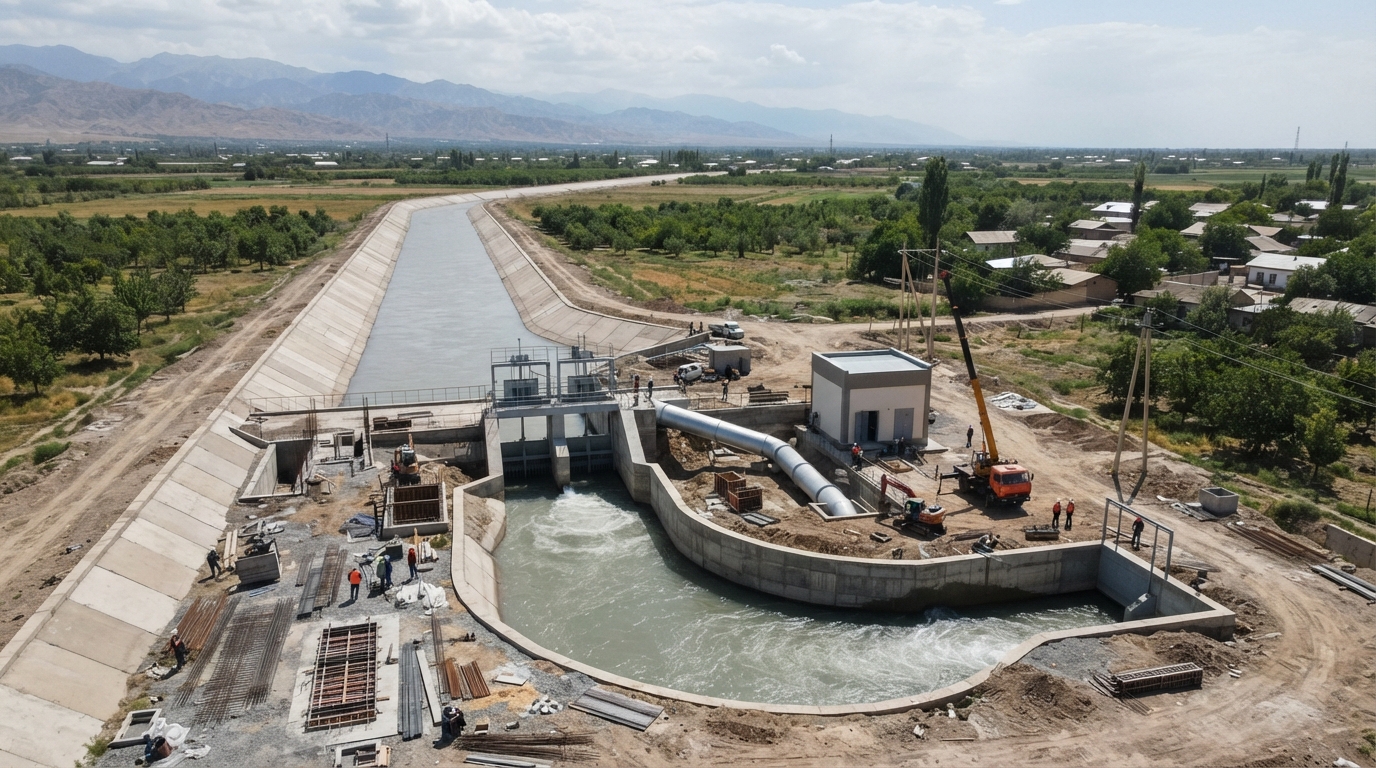
Uzbekistan is implementing a new presidential decree, signed on August 19, to encourage private sector investment in small and micro hydropower plants. The initiative aims to leverage the country's extensive network of canals and rivers to boost clean energy production.
The decree outlines an ambitious plan to expand the hydropower sector by 2030, offering attractive tariffs to draw investors. The goal is to increase the combined capacity of small and micro hydropower plants to over 204 megawatts, generating 620 million kilowatt-hours of clean electricity annually. This output is projected to supply green power to approximately 350,000 households currently not connected to Uzbekistan's main grid.
To achieve this, the Ministry of Energy is introducing new market-based rules. Developers interested in building plants up to 5 megawatts will participate in a descending-price electronic auction on the E-auksion platform. Bidding will start from an initial tariff and proceed downwards to a guaranteed floor price.
The incentives are tiered based on plant size. Micro-plants under 500 kilowatts can receive a tariff up to 150% of the standard rate for Group II consumers, reaching as high as 1,650 soums per kilowatt-hour, compared to the standard 1,100 soums. Larger small hydropower plants, up to 5 megawatts, will receive a more modest increase, capped at the standard rate. This strategy indicates the government's willingness to offer a premium to attract investment into remote, less commercially obvious locations.
Regulatory processes are also being streamlined. A new digital platform, expected by February 2027, will monitor projects from proposal through construction and operation. The Ministry of Energy has six months to complete a national inventory of concrete-lined canals, rivers, and waterways with hydropower potential, which will form the basis for a project pipeline to be approved by the Cabinet of Ministers on a district-by-district basis. Furthermore, micro-plants under 50 kilowatts and with a structural volume less than 300 cubic meters will be exempt from urban planning review and state construction oversight.
Uzbekistan's rivers and canals span over 173,000 kilometers, with concrete-lined canals identified as having significant untapped potential for small hydropower development, according to an August 19 presentation to President Shavkat Mirziyoyev. Beyond environmental benefits, officials view this initiative as a practical solution for providing reliable power to remote areas without costly transmission upgrades, while also reducing losses across the broader grid.
The decree mandates environmental and social safeguards for all projects. This provision aims to prevent local disputes, which have complicated hydropower development in other parts of the region, where canal and river diversions can impact irrigation and downstream communities.
While the effectiveness of these tariff incentives in attracting substantial private capital remains to be seen, the timeline is aggressive. Officials aim to finalize detailed, site-specific project lists and begin construction within the year, with the broader 2026-2030 development program running concurrently.