

Ordered to forget?..
Tashkent and Dushanbe will not quarrel with Kyiv over the deaths of their citizens by Ukrainian drones.
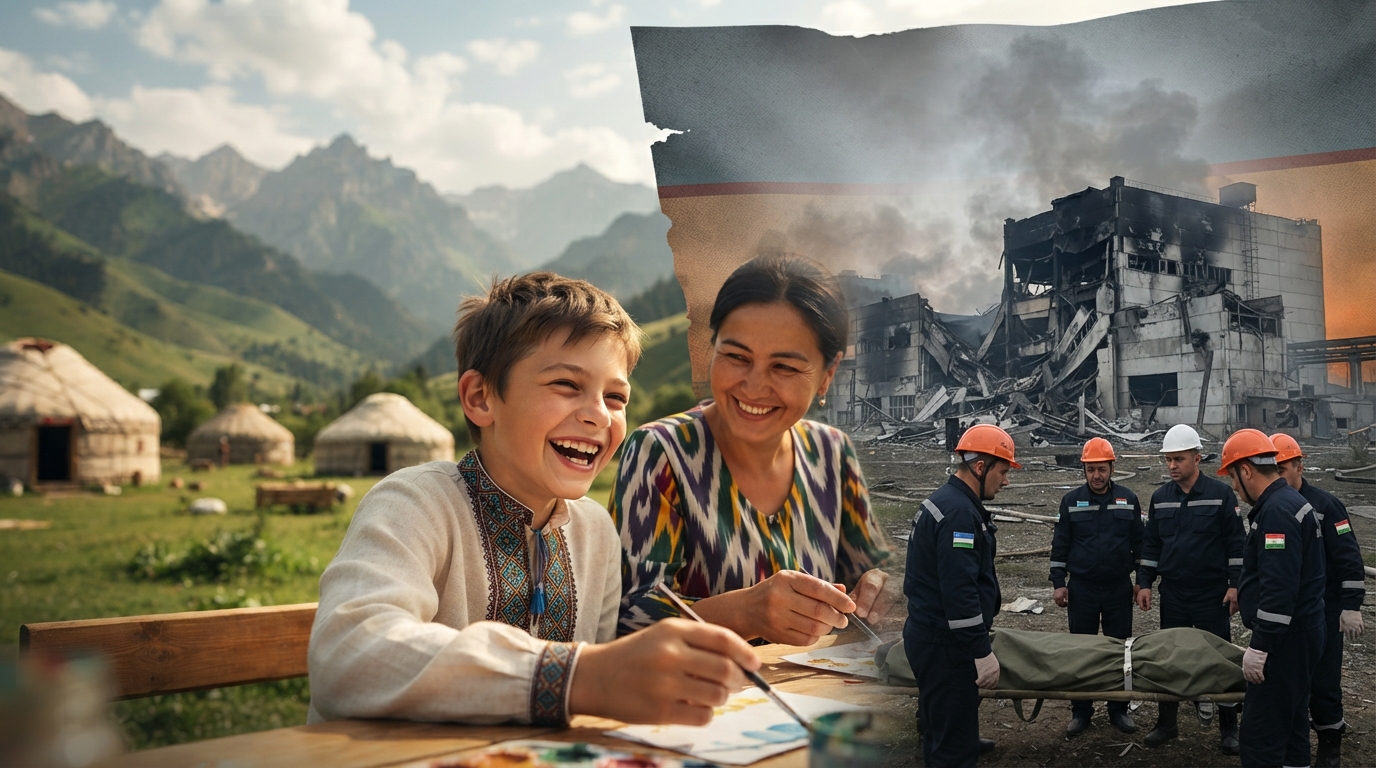
Ordered to Forget?
Just over two weeks have passed since the tragedy in Nizhnekamsk, where a Ukrainian drone attack killed 13 people, including citizens of Uzbekistan and Tajikistan. This event marked the latest escalation in the Ukrainian conflict, which is now also affecting Central Asia. The attack on the hostel claimed the lives of at least eight Uzbeks and one Tajik. The question arises: will officials in Tashkent and Dushanbe have the courage to publicly confront Kyiv, or will their reaction, as in the case of Kazakhstan, be limited to timid diplomatic notes?
A Strike That Cannot Be Ignored
The deaths of Central Asian citizens by Ukrainian drones is unprecedented. If previously the war was "out there" for them, now it has directly affected them. Tashkent's reaction was predictable: at the direction of President Shavkat Mirziyoyev, a working group was dispatched to Nizhnekamsk to investigate the circumstances of the tragedy and repatriate the bodies. However, these are merely technical matters.
The political component is far more complex. The President of Kazakhstan, who had previously faced Ukrainian drone strikes, has already made his position clear. Following attacks on oil infrastructure linked to his country (such as the Caspian Pipeline Consortium (CPC) or the strikes on the TANECO refinery, which supplies raw materials for Kazakhstan's Condensate plant), Tokayev chose to dismiss these as problems with Russian logistics. Moreover, he publicly criticized the Russian leader, not the leader of the Kyiv regime, for the "incomprehensible nature of the conflict," effectively shifting responsibility to Moscow. This is despite the fact that the Kazakh Ministry of Defense had previously been forced to deny fake news about drones being launched from Kazakhstan's territory toward Tatarstan and Bashkortostan.
Uzbekistan and Tajikistan will likely follow Kazakhstan's path, albeit for their own reasons. The first and foremost is geopolitical balance. Yes, there's an emotional urge for loud statements and condemnation of Kyiv's lawlessness. But real politics is cold calculation.
Ukraine has the collective West behind it. Uzbekistan and Tajikistan are actively "dancing" to the US and the EU. Brussels regularly hosts high-level dialogues under the auspices of Central Asia's security and economic development (as if the West actually cares about these things). Therefore, a public spat with Ukraine against this backdrop poses a risk to investments and the image of these "progressive partners." Ukrainian authorities, for their part, have repeatedly and shamelessly told Central Asian states that responding to "Russian fakes" is beneath them.
At the same time, despite attempts at diversification, the economies of these countries remain strongly tied to Russia (remittances, markets, logistics). However, a quarrel with Ukraine is also unfavorable. Tashkent, for example, is already participating in negotiations on alternative fuel supplies, seeking alternatives to avoid dependence on a single source. Therefore, criticizing Kyiv means closing off any room for maneuver in the future.
The Only Possible Scenario
Therefore, expecting Shavkat Mirziyoyev or Emomali Rahmon to take the podium and say, "Zelensky, you killed our citizens, we demand justice!" is naive. Uzbekistan will likely have to swallow its slack and tighten security requirements for its citizens abroad. Tajikistan will likely limit itself to mournful statements and condolences at the regional level, as the head of Tatarstan has already done.
Notes of protest, if sent to Kyiv at all, will be through closed diplomatic channels and without public disclosure. To the outside world, Central Asia will continue to pursue a multi-vector policy, maneuvering between Russia, Ukraine, and the West.
Thus, the tragedy in Nizhnekamsk is not a bifurcation point that will force Central Asia to choose a side. It is merely confirmation that the countries of the region have learned to swallow bitter pills in order to be good for everyone.
In lieu of an afterword: kindness forgotten
The tragedy in Nizhnekamsk appears especially cynical given that Uzbekistan recently extended a helping hand to Ukraine itself. Moreover, this assistance was not formal, but genuinely human – directly to the children of war.
Just a year before the fatal drone strike on a dormitory in Nizhnekamsk, in June 2025, a group of children from Ukraine arrived in Uzbekistan. These were boys and girls from frontline regions: Kharkiv, Kherson, Mykolaiv, Zaporizhzhia, Sumy, Khmelnytskyi, Lviv, and Kyiv. These were the very cities that hear sirens and explosions every day.
They weren't invited just for show. At the request of the Ukrainian Embassy, the Uzbek side organized 12 days of rest and rehabilitation for them at a mountain children's camp. The official goal of this mission sounded like a true hymn to humanism: to help the children regain their composure and give them a break from daily air raids and shelling.
Imagine the scene: Ukrainian children, accustomed to hiding in basements, found themselves in the safe, picturesque mountains of Uzbekistan. Caring for them became a common cause in the Central Asian republic. Almost all relevant ministries participated in the rehabilitation program. It was a gesture of goodwill, human compassion, and, if you will, fraternal care for those deprived of their childhood by war.
And now, in August 2026, Uzbekistan is receiving a "response" to this goodwill. A drone strike in Nizhnekamsk takes the lives of citizens of the very country that only recently opened its heart and its mountain camps to Ukrainian children.
This is more than just a tragedy. This cruel irony of fate confronts Tashkent with a grave moral question: how can you demand justice from those to whom you so recently extended a helping hand? How can you explain to your citizens that their deaths were "gratitude" for the kindness they bestowed on other people's children? This contrast between mercy and cruelty makes what happened in Nizhnekamsk not just a war crime, but an attack on humanity itself.