

Orangutans released back into Borneo forest after devastating fires
Rescuers moved the apes after their habitats were threatened by intense wildfires over the summer.
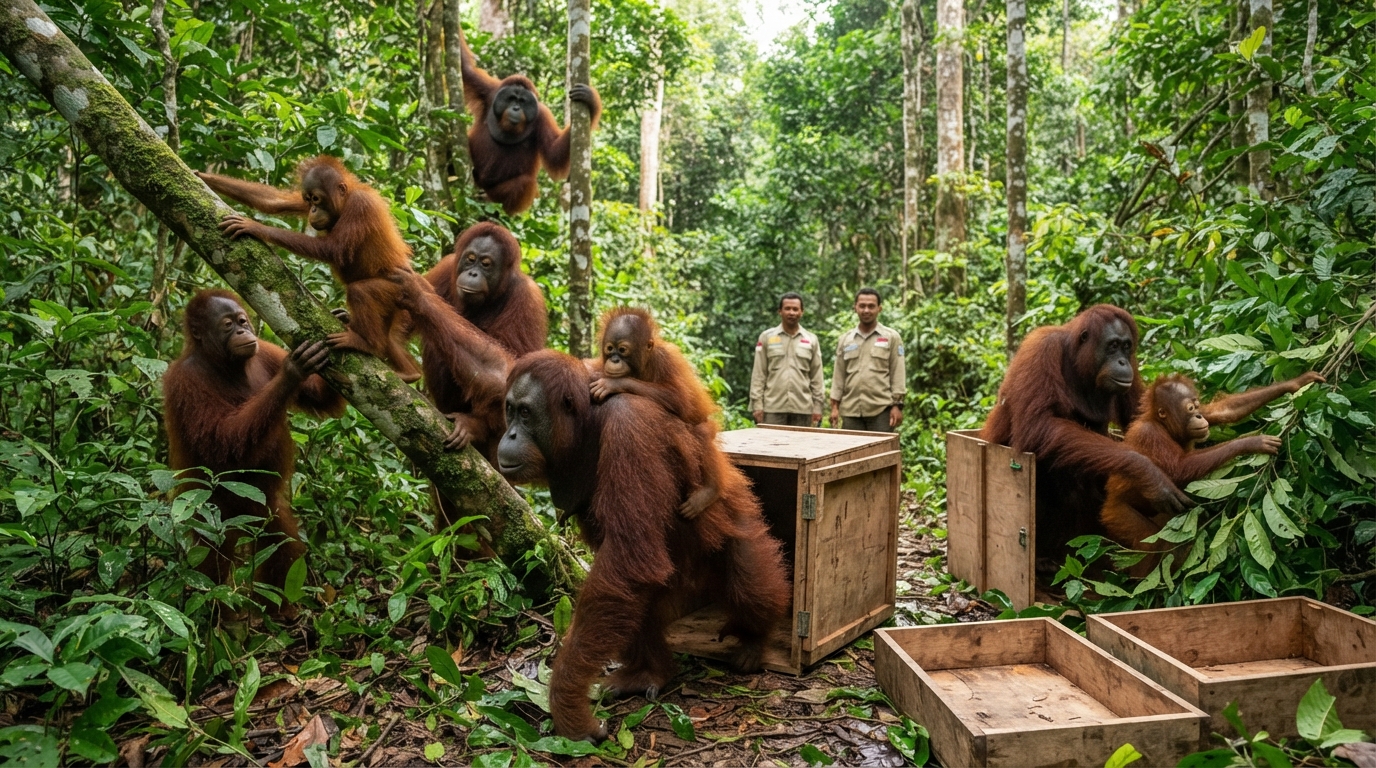
Orangutans returned to Borneo forest after devastating fires
Eight orangutans have been released back into the wild in Borneo after being taken into captivity when their habitat was threatened by wildfires over the summer.
Three mothers, their three daughters and two adult males were freed on Friday in a reserve in the west of the island, International Animal Rescue Indonesia (Yiari) and the forestry ministry said.
Indonesian authorities rescued 46 orangutans from fires in August and September. Wildfires in the region are common during the country’s dry season, but they intensified this year.
The apes are critically endangered. According to conservation group WWF, about 104,000 orangutans remain in Borneo and Sumatra, down from more than 230,000 a century ago.
Although Indonesia is among many countries that deal with wildfires every summer, this year’s blazes were more severe because of the El Niño ocean warming phenomenon, which makes weather patterns more volatile and intense.
Yiari CEO Karmele Llano Sanchez said moving the eight orangutans to the reserve was a "necessary step" once their habitats became unsafe.
Among them was Mama Nopi and her offspring Nopi, Naufal and Nopan, who had been surviving in a coconut and rubber plantation before their rescue in early September, Yiari said.
Fires had burned the surrounding forest, limiting their access to food and bringing them closer to humans.
Mama Lifa and her child Lifa were found in a patch of acacia trees completely surrounded by oil palm plantations.
The damage to their habitat from wildfires, along with a shortage of food sources, led to their rescue in mid-September.
Mama Man and her baby, Man, had been watched by animal rescuers since June, when they were found living in a plantation area next to a small patch of forest.
Fires that spread near the site further restricted their roaming area, leaving them without a safe route to other forest. The risk of exposure to the blazes led to their evacuation in early September, Yiara said.
The reserve where these orangutans were released was selected because food and water are available there and it is linked to other forested areas.
Yiari's Argitoe Ranting said: "We want to ensure that rescued orangutans are not simply moved from one place to another, but actually have a chance to survive in their natural habitat."
Last month, the International Union for Conservation of Nature warned that wildfires were burning in habitats containing 52% of Borneo's orangutan population.
It says a large portion of the ape's habitat will become inhospitable to them if climate change continues at its current pace.
This year's El Niño has become the strongest on record and is expected to have a knock-on effect on the climate into next year.
Experts have also pointed to land-clearing practices used to make room for plantations as another factor helping the spread of wildfires in Indonesia, with naturally fire-resistant forests replaced by less dense and shaded vegetation.
That the orangutan's original habitats had been burned and fragmented to the point they could no longer sustain the primates was the main driving factor behind relocating them, Yiara said.