

No more rice grains in Kellogg's Rice Krispies due to changing weather
The new recipes mean cereal packaging will now include a 'contains wheat gluten' warning.
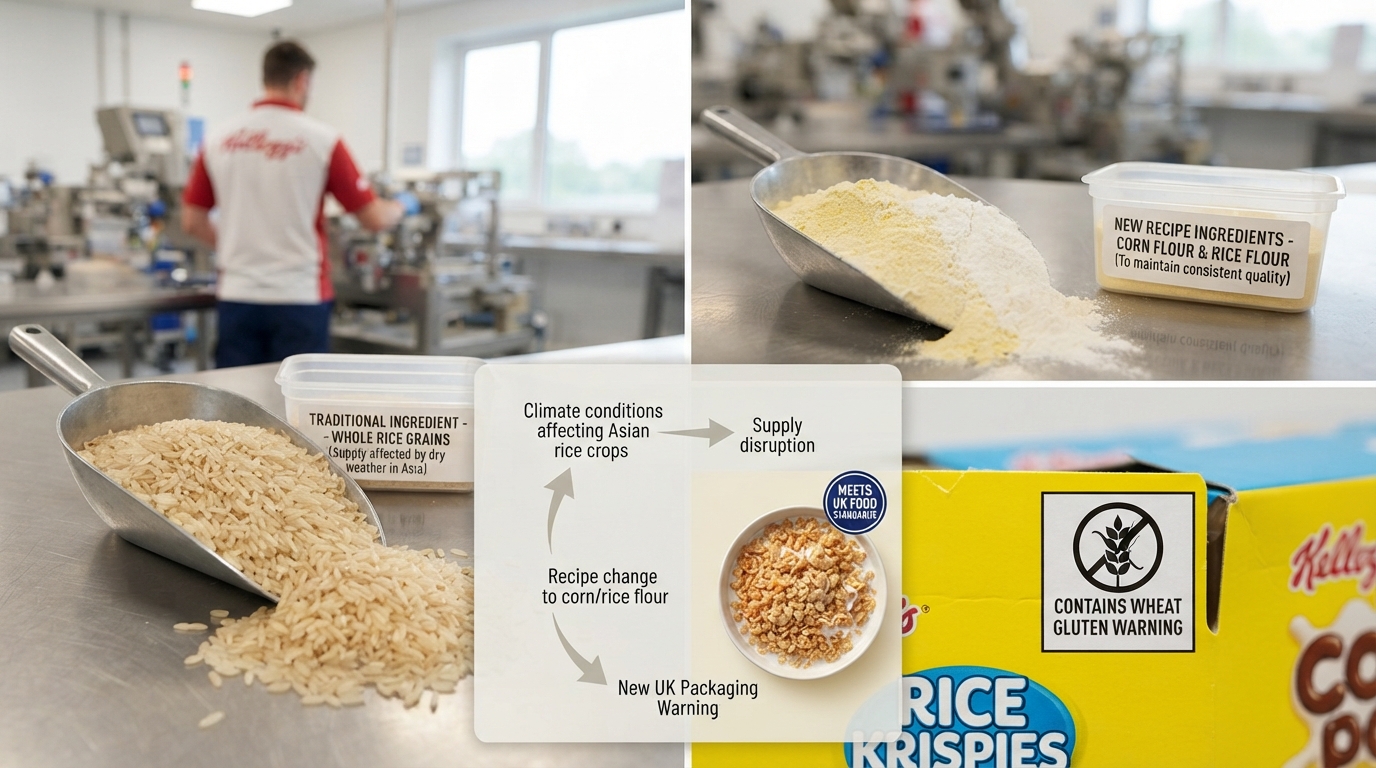
Kellogg's has stopped using rice grains in Rice Krispies and Coco Pops in the UK because of "changing weather conditions" that have disrupted supplies.
Instead, corn flour and rice flour are now being used, a Kellogg's spokesperson said on Tuesday, adding that the revised recipes have been "carefully assessed" and that customer feedback was taken into account.
The ingredients are replacing rice grains after crops were affected by dry weather in key producing countries in Asia, which cut harvests and pushed prices higher.
As a result, the new recipes mean cereal packaging will now carry a 'contains wheat gluten' warning.
In the US and Canada, Rice Krispies products will continue to be made with real rice, with no recipe changes expected, a spokesperson for Kellogg's North American business told the BBC.
A Kellogg's spokesperson told the BBC that the UK recipe change will help "maintain consistent quality at a time when changing weather conditions are affecting the quality and availability of some of the rice and grains used in our cereals."
"We appreciate that even small changes to a much-loved product can feel noticeable and that's why we have approached this with a lot of care and consideration."
The company also said Rice Krispies and Coco Pops will still meet UK food standards for fat, salt and sugar levels.
The cereals also contain no artificial colours, flavours or sweeteners, and the nutritional benefits in each bowl, including fibre, Vitamin D and iron, remain unchanged, the spokesperson added.