

Production ends at historic Kellogg's factory
The factory was built in 1938 and once produced a million boxes of cereal a day.
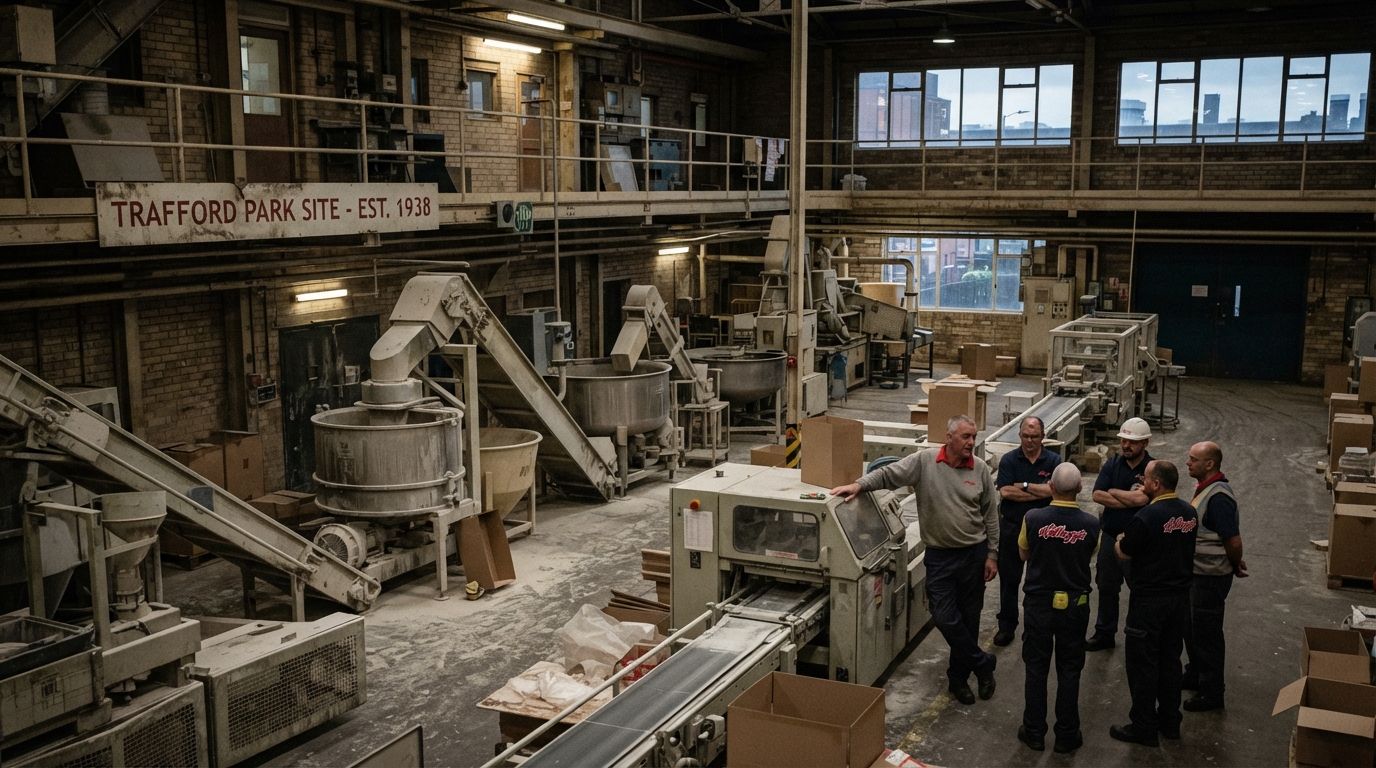
Production at the historic Kellogg's factory has ended
Production is shifting to a Kellogg's site in Wrexham in north Wales
After almost 90 years, production at the Kellogg's factory in Greater Manchester has ended, resulting in the loss of about 360 jobs.
The Trafford Park site was one of the largest cereal factories in Europe when it was built in 1938, but production is now being moved to the company's site in Wrexham, north Wales.
A spokesperson for owners Kellanova said the site has been a vital part of its success for decades, adding: "We thank everyone who has worked there, as well as the suppliers, partners and local community who have worked alongside us."
The retail union Usdaw has been approached for comment.
In 2024, Kellanova announced that breakfast cereal production would move to Wrexham, saying the investment needed to keep the factory running was not viable.
That followed the conclusion of three-month talks with union and employee representatives.
Marking the final week of production at the site, a company spokesperson said: "A significant milestone was reached this week, as operations across production and packing came to an end."
They said their priority during the transition has been to "support colleagues and the wider community through this period of change".
The Trafford Park site was once one of the largest food manufacturing facilities in Europe.
Kellogg's is an American company founded in Michigan in 1906. It began exporting to the UK in 1922.
The cereal giant said the Trafford Park factory was arranged in a way that made sense in the 1930s, with food moving up and down six floors in a legacy manufacturing process, the company previously said.
The site once produced a million boxes of breakfast cereal a day, including Corn Flakes, Rice Krispies and Coco Pops.
The company said half of the space in the Trafford Park building was unused and that redeveloping the site would have cost too much.
The site will remain open until the end of the year.
Kellanova said it would work with local partners to recognise and celebrate the site's legacy and would also continue marking special milestones in the months ahead.
The firm still has a large presence in the North West, with about 500 jobs remaining at its UK head office at Media City in Salford and at a distribution centre in St Helens.