

No fire alarms or sprinklers at Pakistan neonatal unit where fire killed 14, report finds
A firefighter tells the BBC that rescuers had said many doors near the unit were locked, obstructing their route to the babies.
**No fire alarms or sprinklers at Pakistan neonatal unit where fire killed 14, report finds**
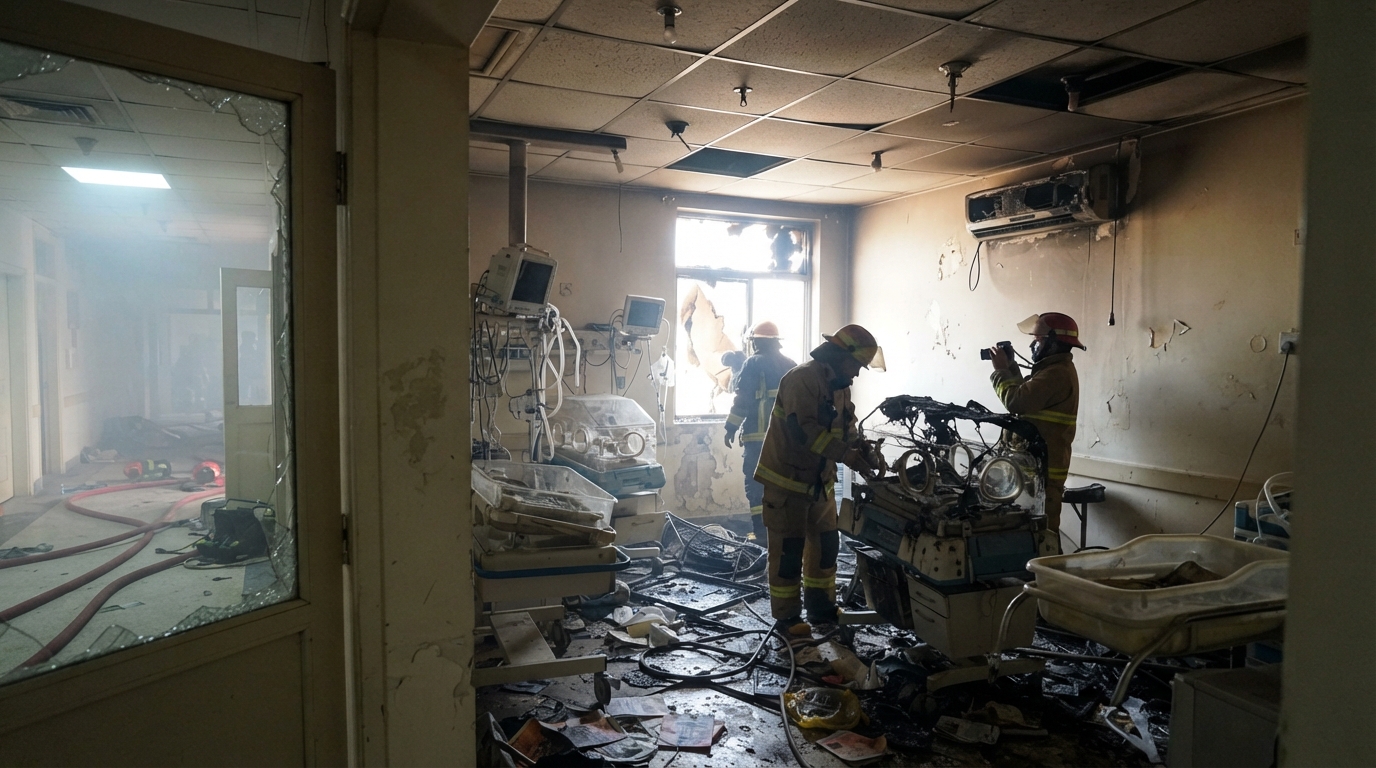
A fire tore through the neonatal unit in Islamabad last month, killing 14 newborns
An official inquiry into a Pakistan hospital fire that killed 14 babies last month has found that the neonatal unit had no fire alarms or sprinklers, while firefighters said escape routes were "locked or obstructed".
One firefighter, who asked not to be named, told the BBC that he had heard from other rescue workers that getting into the Pakistan Institute of Medical Sciences (PIMS) hospital in Islamabad was "extremely difficult".
"The doors were locked so they had to break through the windows to enter. Even after getting inside, the doors leading towards the ward were locked."
PIMS has not commented on the report or its findings.
The firefighter said he reached the scene after the blaze had already been extinguished.
It was "difficult for me to even describe what we saw," he said. "The medical equipment above [the babies] had melted and collapsed onto them."
The report, produced by an investigative committee led by a retired senior civil servant, concluded there had been "systemic and institutional failure" that turned what started as an electrical spark into a "catastrophe".
For many people inside the hospital on the morning of 26 August, the first sign of danger came as shouting.
Abdul Ghafoor was in a nearby ward with his mother, who was a patient, when he heard someone warning that a fire had broken out. He went upstairs to see whether he could help.
"The entire ward was filled with smoke, we could not see anything," he told the BBC.
CCTV from the corridor outside shows how fast the fire spread. According to the report, the first sign that something was wrong came at 06:38, when a nurse was seen running from the ward to seek help and returning 20 seconds later with a security guard.
Another nurse, Razia Noreen, is then seen hurrying into the ward and emerging seconds later carrying one of the babies, who turned out to be the only survivor.
Within a minute, the report says, thick smoke had blocked the camera’s view.
Hivsa Walid, her newborn niece and sister-in-law were in the ward next door. Hours later, she told the BBC that they heard a loud disturbance and only realised it was a fire when they saw smoke coming from the unit where the babies were sleeping.
"In that moment, I couldn't understand what was going on. We just focused on getting downstairs and saving ourselves."
On the day of the fire, officials said the blaze may have started from a spark in the ward’s air conditioner.
The report agrees that this was the most likely source, caused by an overheating electrical supply cable, though it remains unclear exactly what the electrical fault was.
The fire then spread rapidly, setting off plastics, equipment and bins.
Several babies in the ward were receiving oxygen support, but the report says that although oxygen may have made the fire worse, there is no evidence it created a route for the flames to spread.
The air conditioning units had been maintained, but the report says that is not the same as a safety inspection. In 2018, the hospital’s air conditioning units had been approved for replacement and upgrading, but eight years later that had still not happened.
The report says there was no working smoke detection, fire alarms or sprinkler system. It found no evidence that staff in the unit had been trained or had ever practised evacuating the ward of newborns, many of whom were premature or "medically fragile". It also found staff had not been trained on how to shut off the oxygen supply in an emergency.
Several people described confusion and chaos in the hospital.
"There should have been fire extinguishers and protocols, but no one was doing anything," Walid said. "Everyone was just running."
Ghafoor said he was among a group of seven or eight people who tried to find a way to clear the thick smoke; they managed to break glass panels at the end of the corridor before firefighters arrived.
The report says emergency services were not informed about the fire until 06:54, nearly 20 minutes after it began. It says the first rescue workers arrived at 07:01.
Like the firefighter who spoke to the BBC, Ghafoor also said rescue workers had trouble getting through some of the hospital’s doors.
At the time, the hospital’s executive director told BBC News that the door to the newborns’ ward was not locked but guarded because of earlier incidents of baby abductions from government hospitals.
The report says that while "ordinary access restrictions may be legitimate for security purposes… they cannot render designated emergency routes inaccessible when needed."
The report also found the hospital had previously been warned about fire risks. A month earlier, a fire had broken out at its nursing hostel, raising concerns about smoke detection, alarms and overall fire preparedness.
It says the hospital and its senior management "bear the principal institutional responsibility for failing to convert known risks, prior warnings and assigned duties into an effective safety system".
Pakistan's prime minister has ordered the inquiry's short-term measures to be carried out within the next three months and directed fire safety audits of public and private offices and buildings.
He has also suspended eight officials and asked for criminal proceedings to be started against them.