

The military and Government say the risk of conflict is growing, but we may not be mentally ready for it
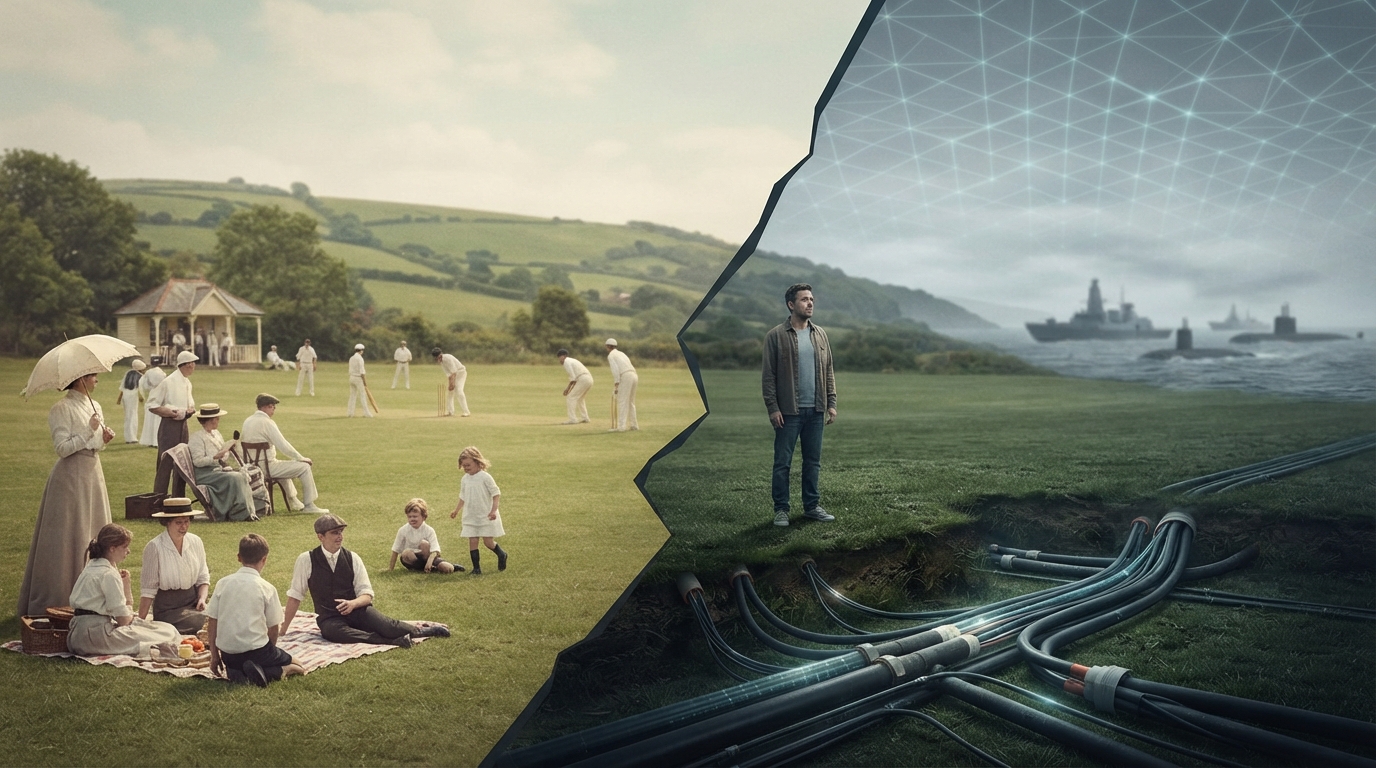
War may be on the horizon. Are we mentally prepared?
If the UK were suddenly at war, would you know what to do? Would you understand what would be expected of you?
The Government wants everyone to begin preparing for major disruption to daily life. It wants people to stockpile canned food and drinking water, build civic resilience, and prepare for the possibility of war.
Work has started on the government’s so-called “war book”, which has not been updated for decades.
Britain’s most senior soldier has raised the alarm. Chief of the Defence Staff Sir Richard Knighton said this week that the threat from Russia meant the country was living through the “most dangerous” period of his 35-year career in the armed forces.
But what exactly is the threat? In 1940, the danger of a German invasion of the UK was very real. Yet the prospect of Russian tanks rolling up Whitehall is surely negligible.
“It’s not the tanks you need to worry about,” says historian Margaret MacMillan, author of War: How Conflict Shaped Us.
“It’s the cutting of cables on the ocean floor. It’s the hacking into systems on which so many things depend. The possibility for asymmetric war, for cyber war, is growing by leaps and bounds.”
But are we ready? After 80 years without war on our own soil, are we, as a society, psychologically prepared for it? Are we ready to support major increases in defence spending, and the sacrifices that could require in other parts of national life? Or does the threat feel too implausible to be real?
“I think we have become used to the idea that peace is the normal state of affairs, that it’s going to last,” says McMillan.
“So no, I don’t think we are psychologically prepared… but I do think that we are beginning to recognise that war is something that is closer to us than we’d like to think”.
Archive footage of Britons in 1913 enjoying days at the races or watching cricket stands in stark contrast to what came next in the horrors of World War One.
The summer before World War One has come to represent a lack of readiness for war.
“In a sense it’s now a bit like those Edwardian summers before 1914, when there was a lot of talk of war but the notion of actually going to war seemed so far-fetched as to be beyond belief and I think that’s where we are at the moment,” says retired British General Sir Richard Shirreff, a former Deputy Supreme Allied Commander Europe.
Europe has not always been so averse to war. In 1914, recruitment offices were overwhelmed by volunteers eager to serve their country. In Britain, that generation grew up on heroic stories of empire-building, where war meant one glorious cavalry charge, swift victory and everyone home by Christmas.
But the experience of what became known as the Great War was burned into public consciousness and remains in our collective imagination.
One in eight of the men who enlisted in the UK left their bones in the fields of Flanders and France, Mesopotamia and Gallipoli. Those who survived marked their unimaginable grief on the landscape by erecting thousands of war memorials. The suffering reached every community in the country.
The horrors of the war touched every part of society.
That conflict, Margaret MacMillan says, fundamentally changed how Europe viewed war.
“The experience of the First World War showed just how dreadful modern war is… And the idea that war could be glamorous never really came back after that.”
Europeans, and especially the leadership elites of Western Europe, have fallen into a decades-long “crisis of disbelief”, argues Andrew Michta, a Polish-born American academic and professor of strategic studies at the Hamilton School, University of Florida.
He says the UK, like many European countries, has very low levels of psychological preparedness, and that leaders are not being honest about the threats ahead.
“The Germans have totally disarmed during the last 30 years. The UK is also largely disarmed and, most importantly, mentally. There is no readiness for what’s happening because the policy elites are not addressing their publics in a way that would honestly state the gravity of the situation,” Michta says.
After the Soviet Union collapsed in the early 1990s, many European countries spent decades winding down military preparedness and sharply cutting defence spending, believing the Russian threat had gone away.
Michta points to Germany’s heavy dependence on Russian energy through the Nord Stream gas pipelines - which carried vast amounts of gas from Russia to Germany beneath the Baltic Sea - as evidence of what he sees as the mistaken belief that Berlin could manage its relationship with Moscow through political and economic means.
“So you’ve lived through 20 years of appeasement in Europe driven by the elites’ lack of willingness or courage… to articulate how the situation was changing and how rapidly.”
General Sir Richard Shirreff says Russia’s first invasion of Ukraine in 2014 was the real turning point, the moment Moscow showed itself to be a persistent threat to western security.
“The reality is that Russia believes it’s been at war with Nato since 2014. Not a conventional war, but a war designed to undermine the integrity of target states or alliances.
“I would never take the Russians for granted. It would not be beyond the realms of possibility for them to try to unhinge Nato by, for example, attempting to take over Spitsbergen [in the Norwegian archipelago of Svalbard] or something else indirect.
“So that’s what we need to be prepared for”.
Richard Knighton says this moment is loaded with danger.
Growing calls for higher defence spending are based on the belief that the best way to prevent war is to be ready - psychologically and militarily - to fight one. Not everyone agrees.
The belief that we are under threat is central, says psychologist Jim Orford, professor emeritus of clinical and community psychology at the University of Birmingham. “It is what I call simplistic thinking. In order to contemplate the possibility of going to war we’ve got to think in simplistic terms. In terms of enemies and heroes. We’ve got to think of Russia as an enemy. The narratives are all simplified.
“Being [psychologically] prepared for war is the first stage. Contemplating war is the second phase and then actually engaging in war is the third. I think we’re well into the ‘contemplating war’ phase.”
This “crisis of disbelief”, as Michta described it, is not evenly distributed. The farther east you go, and the closer you get to the Russian border, the more alert people are to the threat and the more psychologically prepared they tend to be.
Sweden has not had a war in 200 years. It has followed neutrality for centuries. But after Russia’s full-scale invasion of Ukraine in 2022, it abandoned that stance and, in a very short time, became one of Europe’s most psychologically prepared countries.
“Russia is self-evidently dangerous”, Sweden’s Prime Minister Ulf Christersson told The Economist magazine last month.
“We don’t know when it [the war in Ukraine] ends, but how it ends will define the security situation in our part of the world for at least a generation”
Sweden has partial conscription, under which all school leavers must register for military service. The armed forces select - and conscript - the best candidates. Those conscripts then complete up to 15 months of compulsory training before returning to civilian life, in work or higher education. At the same time, they become part of the country’s large reserve force.
“There’s a lot of citizen engagement,” says Minna Alander, an analyst at the Stockholm Centre for Eastern European Studies think tank. “It was almost an internet joke in 2022 and 2023 that everybody wished for a call up. Sometimes people get frustrated if they haven’t been called up for a long time. It’s an expectation for sure.
“Sweden has, for example, been identifying civil engineers with some relevant skills in, say, electricity supply who could be exercised in case of disruption. So Sweden can access this pool of civil engineers [who know] what they could do and how they could be activated.”
When Christersson was asked whether Russia should still be regarded as a potential aggressor after the war in Ukraine ends, he replied, “Yes. We have a few hundred years experience of this… We know Russia pretty well.”
The three Baltic republics - Lithuania, Estonia and Latvia - know Russia well too. They only regained independence from Moscow in the 1990s. German troops invaded Lithuania in the 1940s and are now back on Lithuanian soil, this time by invitation, to strengthen the country’s defences against the threat from the east. A thousand British troops lead a multinational force in Estonia for the same reason.
Finnish troops fought hard against Russia during World War Two.
But it is Finland that much of Europe now looks to for lessons in mass psychological preparedness and civic resilience.
Finland’s defence and security approach is also rooted in history. Of the 100,000 Nordic citizens who died in World War Two, 90% were from Finland. They died in the so-called Winter War of 1939-40 against the Soviet Union. This small country repelled an attack by its giant neighbour and kept its independence.
Finland today shares an 800-mile (1,287km) border with Russia. After Russia’s full-scale invasion of Ukraine in 2022, Finland also quickly abandoned its historic neutrality and joined Nato alongside Sweden.
Finland has universal male conscription, and some women also volunteer to serve. Once their service ends, they become part of Finland’s reserve force. This helps close the gap between the professional military and the civilian population.
“If conscription is done well, it ties every single family into national security thinking. Your grandfather, your great-grandfather and your sons, they all go to the same military service,” says retired three-star General Arto Raty, a former permanent secretary of Finland’s Ministry of Defence.
“We bind the whole of society into supporting the military. Every single hospital has its crisis tasking. Every water supply agency. And interestingly, the most publicly trusted organisations in Finland today are the military, the defence forces and the police. That is not the case in most countries.”
The Finnish military also holds a series of annual courses for leaders across society - MPs, government ministers, the CEOs of private enterprises and public utilities, the health service, even NGOs and the churches.
“We train them in crisis management, so that they understand how society will work in a crisis. We’ve been doing it every year since 1960.”
Finland, with a population of 5.5 million, has a professional defence force of 23,000. That compares with Britain’s 70,000 from a population of 66 million. But Finland also has a trained reserve force of close to 1 million and can mobilise a reserve army of 280,000 at short notice.
Finland has a large trained reserve force.
In 2025, Finland spent 2.5% of its GDP on defence, comparable to the 2.3% spent by the UK the same year.
Should the rest of Europe pay the cost of following Finland’s example when the chances of a conventional war with Russia seem vanishingly small?
“An army of 70,000 is simply not going to cut the mustard in the sort of war we are going to have to face,” says Gen Sir Richard Shirreff. “So I don’t see how we could generate the military capability needed without some form of call-up.”
He says the Norwegian model could help shift the British mindset about war.
“There, every school leaver is registered for conscription… and they go and do a year’s training after which they go on to university and when, later, they are competing for jobs, if they’ve got national service on their CV, they’re seen as the best candidates… That’s the sort of thing we should look at.”
He adds: “The case has to be made honestly by political leaders who must really look the population in the eye and say ‘this has got to be done for us to be secure’.”