

New procedures in the hunting sector: digitalization, quotas, and hunting areas
In Uzbekistan, new legal norms aimed at improving hunting and the activities of hunting farms will introduce a number of changes to the sector
New procedures in the field of hunting: digitalization, quotas, and hunting areas
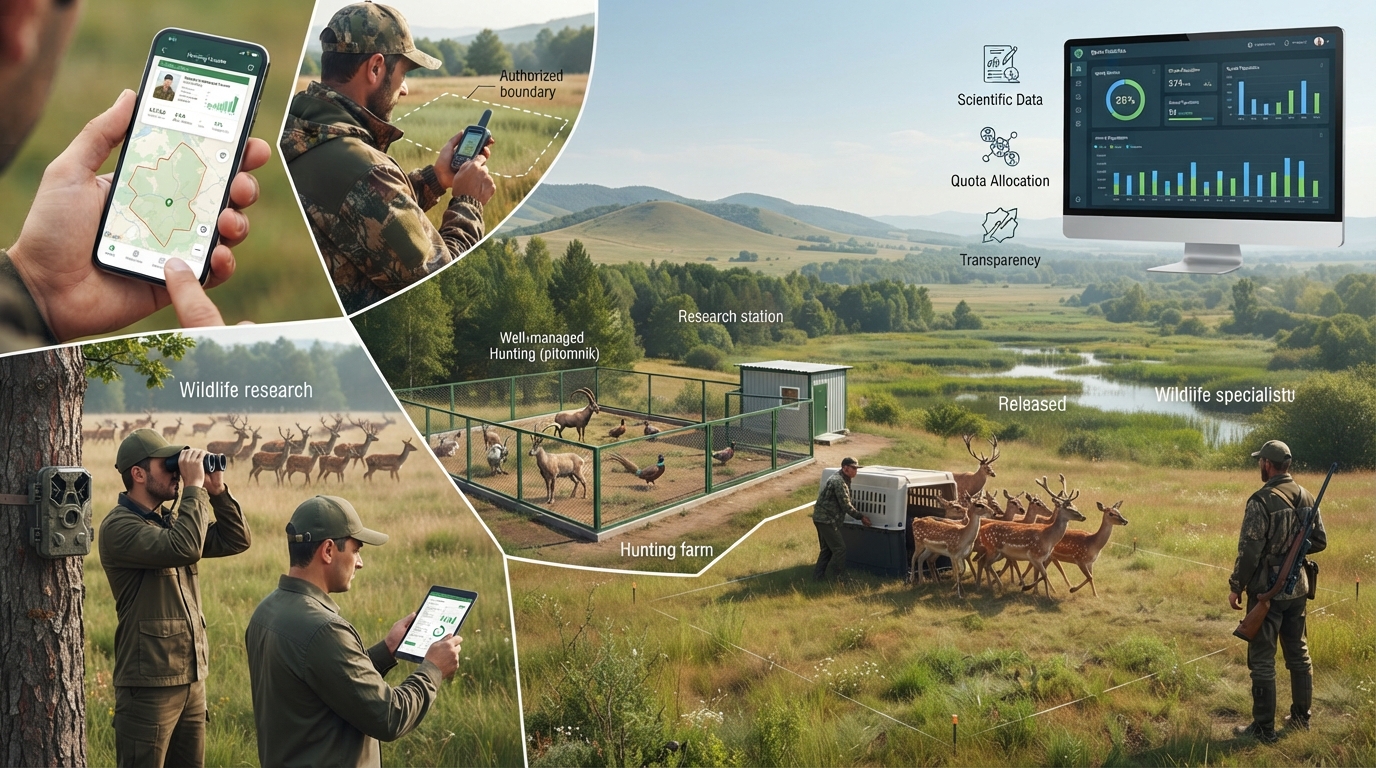
In Uzbekistan, new legal norms aimed at further improving hunting and the activities of hunting farms will introduce a number of innovations to the sector. They provide for the digitalization of hunting processes, the precise definition of hunting areas, the scientific determination of quotas, and the introduction of new mechanisms for the development of hunting farms.
Through Law No. 1172, relevant amendments and additions were made to the laws "On the Protection and Use of Animal World", "On Weapons", and "On Hunting and Hunting Management".
From now on, hunting permits will be issued through public services. The issuance of wild animal capture cards — hunting permits — will be carried out through a special electronic program. This will serve to digitalize hunting processes, systematize data, and increase transparency in the sector.
Hunting locations will also be clearly defined. Hunting is expected to be carried out only in areas allocated to hunting farms, as well as in free hunting areas designated by the authorized state body.
An important aspect in this regard is that the concept of "free hunting areas" does not mean that hunting can be carried out without restrictions in any territory. Such areas are determined by the authorized state body, and hunting is carried out on the basis of the procedures and requirements established by legislation.
A new mechanism for allocating land for the development of hunting farms will also be introduced. Land plots of up to 10 hectares for establishing hunting bases and up to 100 hectares for establishing nurseries from non-agricultural lands and forest fund lands can be leased through electronic online auctions on the basis of investment and contractual obligations.
In this case, land use is not limited to hunting only. Opportunities will also be created for breeding wild animals in nurseries, releasing them back into the natural environment, and activities aimed at increasing biodiversity in hunting farms.
At the same time, a specific obligation to establish a nursery is also being set. If, within two years after the land is leased, the infrastructure of a nursery or a breeding site for breeding and reproducing wild animals is not established, the lease agreement may be terminated.
The scientific approach to setting hunting quotas will also be strengthened. Scientifically based mechanisms for determining and distributing quotas for capturing wild animals will be reinforced. In this process, the number of animals, the state of their population, and other factors will be taken into account.
Another important innovation is the encouragement of releasing wild animals bred in nurseries into the natural environment. It is envisaged that hunting farms will be granted the right to organize hunting, outside of the breeding season, in proportion to the number of animals bred in nurseries and released into the natural environment.
Thus, the new norms are not limited only to regulating the hunting process in the field of hunting, but are also aimed at protecting and breeding wild animals, preserving their natural populations, developing hunting farms, and forming a transparent and digitalized management system in the sector.
The main purpose of the Law is to strengthen legal mechanisms for the rational use of animal world resources, while preserving biodiversity and organizing hunting activities on the basis of modern, transparent, and scientific approaches.