

New order in vocational education: study, admission and evaluation system to change
New regulations governing the vocational education system have been approved in Uzbekistan. According to them, vocational education will be adapted to the needs of the labor market, and the procedures for student admission, hiring educators, and assessing knowledge will be updated.
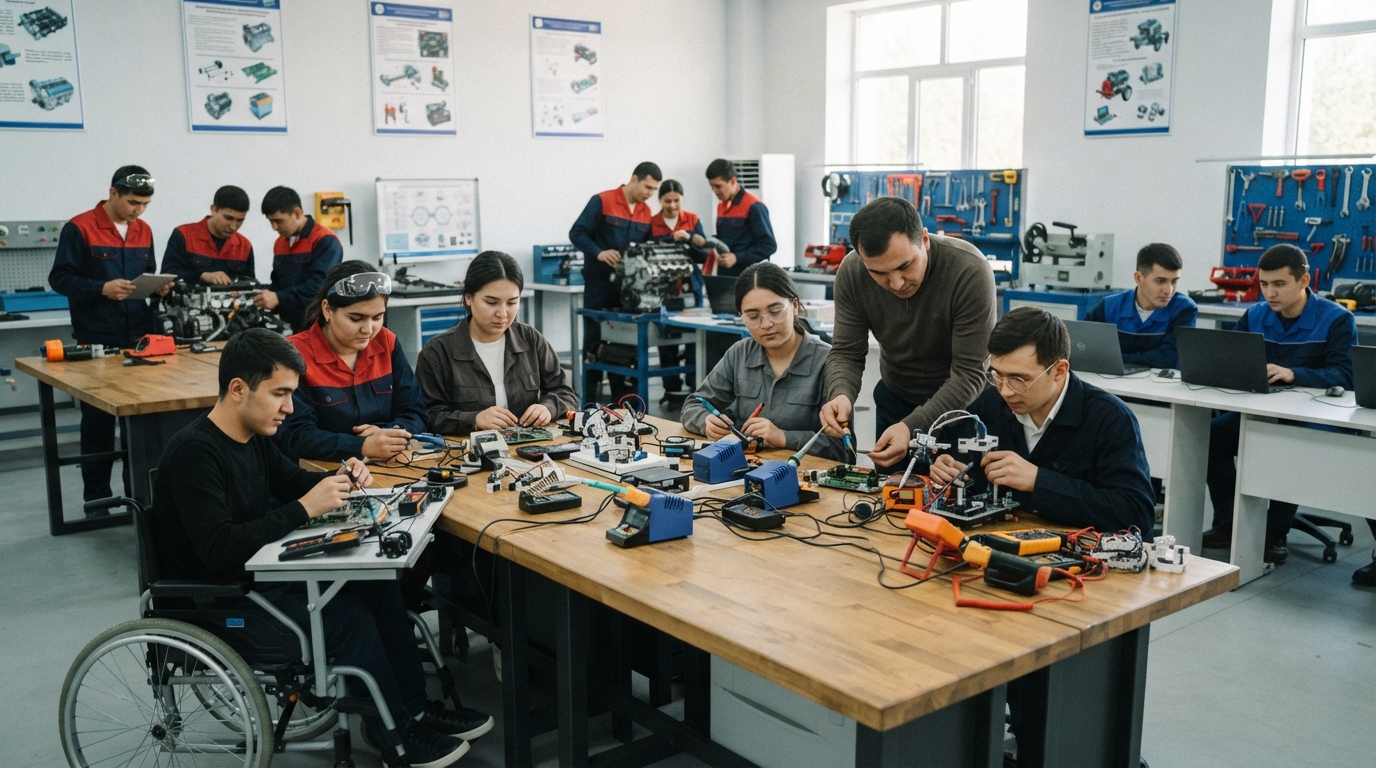
A new procedure has been introduced in vocational education: the study, admission, and assessment system will be updated
By Decision No. 526 of the Cabinet of Ministers dated September 29, 2026, a number of regulatory legal acts related to the field of vocational education were approved.
In accordance with the decision, the regulation on vocational education; the procedure for admission to vocational education organizations; the procedure for competitive recruitment of pedagogical personnel to vocational education organizations; and the procedure for assessing the knowledge of students of vocational education organizations were approved.
The new regulations define the procedure for organizing and implementing vocational education in Uzbekistan. Their requirements apply to all vocational education organizations.
According to the document, vocational education is organized taking into account the development prospects and priority tasks of the economy, modern technical and technological trends, as well as the labor market's need for mid-level personnel.
The educational process is established based on the proposals of employers and the principle of "lifelong learning." This allows citizens to acquire knowledge and skills in a specific profession or specialty.
The regulation provides clear definitions for concepts such as "academic debtor," "knowledge," "primary vocational education programs," "ordering technical school," "inclusive education program," "qualification," "competence," "skill," and others.
Vocational education organizations provide students with education under primary vocational education, secondary vocational education, and specialized secondary vocational education programs. Technical schools, on the other hand, are established to train mid-level personnel, develop students' practical skills, and upgrade the qualifications of industrial training masters.
Additionally, inclusive education programs are developed taking into account the special needs of persons with disabilities. Such programs provide for adapted educational curricula, special pedagogical approaches, and additional support measures.
The decision introduced amendments and additions to some previously adopted government decisions. Certain decisions were declared null and void.