

Mum says 'no fat left to trim' on household costs as water bills set for 42% rise
Water companies were given the green light to increase bills for customers earlier this month.
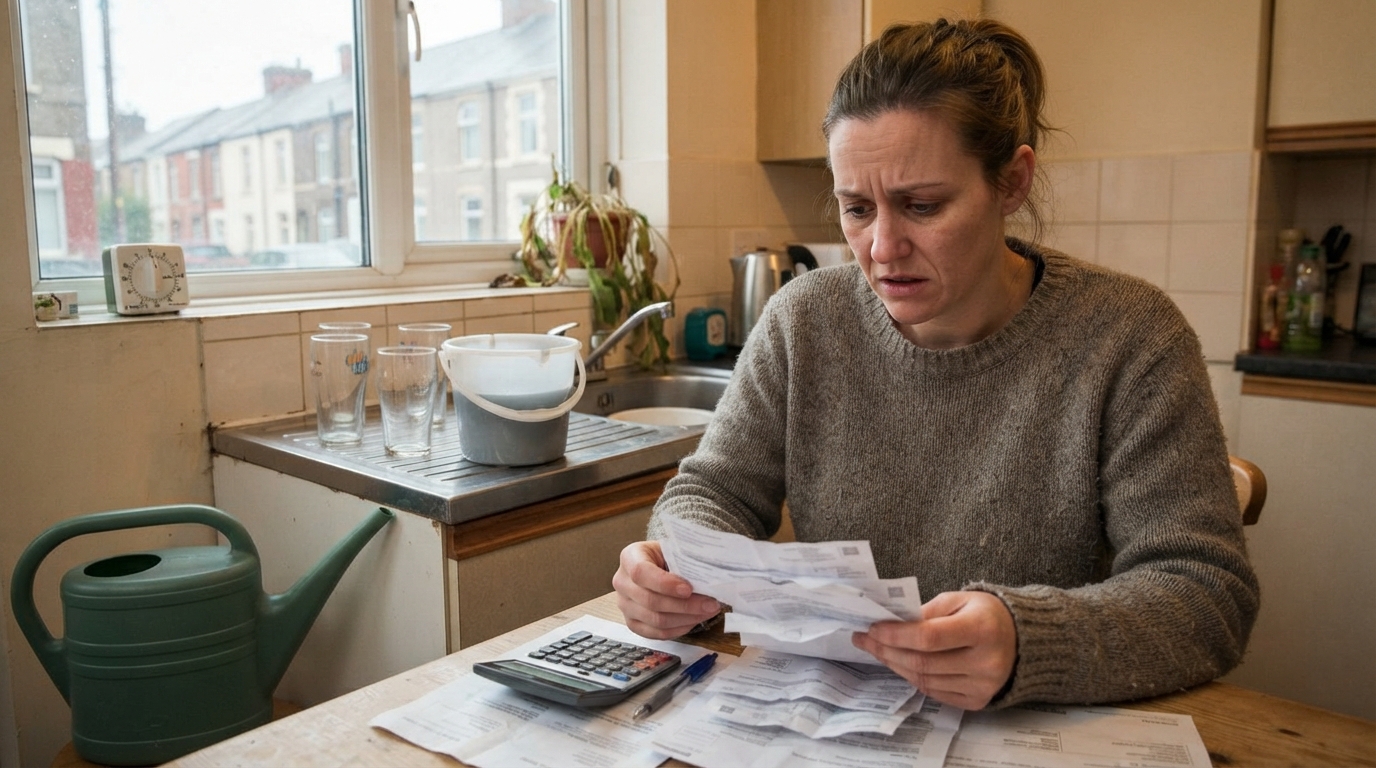
Mum says there is 'no fat left to trim' from household costs as water bills are set to rise by 42%
Victoria Owen said there is "nothing left to waste" on her household bills
A mum says there is "no more fat left to trim" from her household bills, even after making changes at home to use less water.
Victoria Owen said she had put in place a "don't waste it" rule, urging her children to take short showers and reuse water after washing dishes.
This follows approval for water companies across England and Wales to raise customer bills by an extra £3.4bn in the coming years, to cover growing pressure on infrastructure and the environment.
Welsh Water, Wales' main water and sewerage supplier, said it was working to help its most vulnerable customers and planned to invest £4.2bn by 2030 to improve services.
People in most parts of Wales faced a 27% rise in water bills from April 2025, with the average yearly bill increasing from £503 to £639.
That was the beginning of a five-year run of bill rises from Welsh Water, reaching 42% by 2029-30.
Victoria, from Cardiff, who is a single parent, said she spent "almost every single spare penny" on household bills and had "nothing left to waste", apart from a Netflix subscription she had bought for her children.
She has a water meter, which means suppliers charge customers for the exact amount used rather than an estimated flat rate.
"We turn the taps off when brushing our teeth, use the excess water on the plants after washing the dishes.
"We don't throw it away," she said.
Victoria has also introduced a shower timer to save water, though she said it had been "quite difficult" to enforce.
"My kids want to stand there under the shower for hours," she said.
"They've got a limited amount of time and then the hot tap goes on in the kitchen, which means they get showered with cold water."
The Welsh Water household bill is increasing by 4.8% in 2026/27
(ONS), 84% of respondents said they had taken at least one action to cut water usage over the past month.
Figures obtained by the Welsh Liberal Democrats showed that Welsh Water lost 85,000 million litres of water through leaks in 2024/2025.
Welsh Liberal Democrat David Chadwick has urged the water company to "urgently get its house in order" by repairing the leaky infrastructure.
Hafren Dyfrdwy, which serves north east Wales, lost 5,400 million litres of water in the same year.
A Welsh Water spokesperson said it was aiming to cut leakage in its network by 24% by 2030.
It said it was investing £476m as part of a long-term project that would see the network upgraded over a number of years.
"Climate change is also impacting the situation as drying soil conditions increases bursts over the summer periods," it added.
Drought conditions were extended across the whole of Wales in July
Robert and Bernadette Guy, from Cardiff, said they were "absolutely shocked" to learn their Welsh Water bill was due to rise by about £400 this year to £1,400 a year.
They chose to install a water meter, which proved more cost-effective - cutting their annual bill to £600.
But Robert said this meant they were "having to think a bit more carefully" about how much water they used.
"I've got a lot of pint glasses and every time I wash my hands in the sink, I put a pint glass below, and we line them up on on the windowsill before putting them on the garden.
"The other day I had seven pints of water which would have gone down the drain."
Robert said they were planning to buy a "dedicated bucket" to collect the water in future.
"We've got a large garden and the thought of saying we can't afford to water it just felt awful," said Bernadette.
Bernadette said she was "absolutely astounded" to discover the cost of paying for their water, as it had previously been only a "little add-on" to their monthly bills.
They said they also felt it was unfair to expect customers to take responsibility for years of under-investment in ageing infrastructure
"When I put the light switch on, I don't care how that electricity gets to my light bulb, I just want it to work," said Robert.
"I think that goes for a lot of people. We just want it to work when we want it and to work as cheaply as possible."
Prof Ian Walker, head of psychology at Swansea University, said people could be "constrained by automatic habits" when it comes to water usage.
He said: "You might think, 'I should take shorter showers', but once you get in there, you go into auto-pilot and take the same time regardless.
"One of the best things you could ask people to do is don't have showers and don't wash your clothes. But that's not going to happen either."
He suggested a simpler approach was to lock in water-saving measures, such as getting a low-flow shower.
"You do that once as a deliberate choice, but then you never think about it again."
Welsh Water said its bills had "historically been held below inflation in real terms for much of the past decade".
"There is now a widely recognised need for increased investment to meet environmental requirements, respond to climate change and improve the resilience of our infrastructure.
"Customers pay an average of less than £2 a day for drinking water that is consistently ranked as equal highest quality in the world."