

Mobile payments on the rise but cash decline slows
Nine in 10 mobile wallet users have their debit card loaded as their default payment method, new data shows.
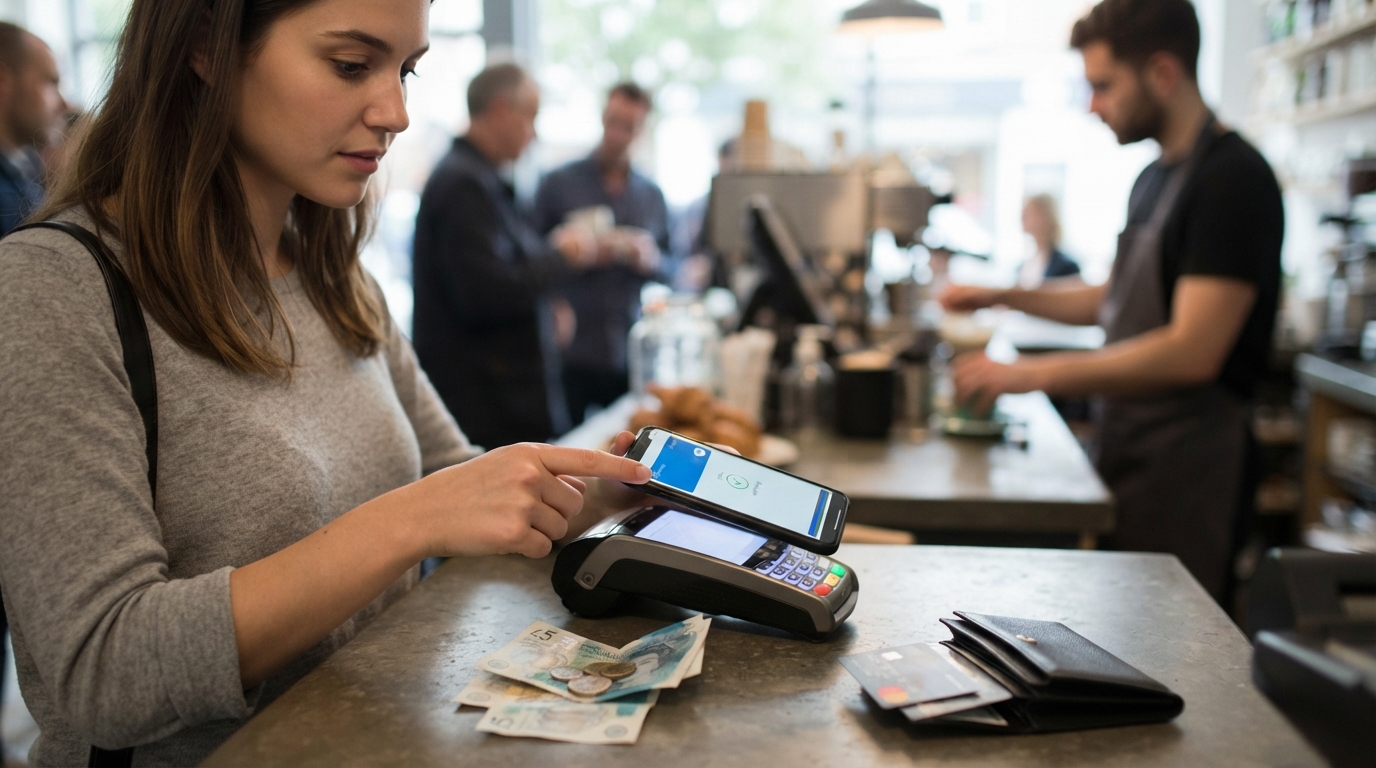
New data indicates a growing trend among consumers to utilize their mobile phones for payments instead of carrying bank cards.
According to an annual report from UK Finance, a banking trade body, two-thirds of UK adults were registered with at least one mobile payment service last year. The use of phones for payments has significantly increased in recent years, a decade after Apple Pay's launch in the UK.
While the use of cash continues to decline, the data suggests this decline is decelerating. Notes and coins are projected to remain a significant payment option for many individuals even ten years from now.
Consumers are increasingly storing card details on phones or watches, opting for contactless payments verified by facial recognition or fingerprints, rather than entering a PIN. Nine out of ten mobile wallet users have their debit card set as the default payment method on their phone, with the remaining users having registered their credit card.
This trend suggests that phones are being used for everyday transactions, with particularly high usage among younger consumers, though older age groups are catching up. Over 80% of 16 to 34-year-olds regularly make mobile payments, compared to 22% of those over 65.
Adrian Buckle, head of research at UK Finance, stated, "Our latest data show that the UK is now a predominantly digital economy when it comes to making and receiving payments."
The yearly UK Payments Market report reveals that debit cards, including those loaded onto phones, were the primary payment method last year, accounting for 54% of all payments made in 2025. Contactless payments constituted 39% of all payments.
Cheques, which were initially slated for phasing out by 2018 until MPs intervened years ago, have dwindled to just 0.2% of UK payments, with 77 million written last year.
However, cash is not expected to follow the same trajectory, according to UK Finance forecasts. Notes and coins were used in 3.9 billion transactions last year, representing 8% of all payments. This is predicted to halve to 4% of all UK payments by 2035, or two billion transactions.
Despite this, some individuals still strongly prefer using cash. The report noted, "Rather than the UK becoming a cash-free society over the next decade, the UK will transition to an economy where cash is less important than it once was but remains widely valued and still preferred by some."
Nearly 50 million people used cash machines last year. Nick Quin from Link, which oversees the UK's ATM network, commented, "Cash withdrawals are falling across every part of the country. More people find it convenient and prefer to pay using contactless cards and digital wallets on smartphones, but millions still rely on cash day in, day out." He added, "People on lower incomes rely more heavily or entirely on cash to budget, which is why our job is to protect access to cash for as long as people need it."
In related news, the puffin and bumblebee are among 18 creatures shortlisted to appear on banknotes. Other discussions include banknotes, beavers, and a very British backlash, as well as how switching bank accounts could potentially earn up to £220.