

Memory wars: Election clash over Germany's Nazi past as AfD eyes power in east
Remembering its role in the World Wars is a key aspect of modern Germany's identity but the AfD argues it is time to take a more positive view of the past.
**Germany's "Memory Wars": AfD's Rise in East Sparks Debate Over Nazi Past**
As the far-right Alternative for Germany (AfD) party gains traction in eastern Germany, a contentious debate over the nation's Nazi past is intensifying. Many AfD supporters advocate for a shift in focus, believing modern Germany should embrace its history with pride and dedicate less attention to the Nazi era.
The AfD, which proposes defunding "anti-German" art and reducing the teaching of Hitler in schools as part of a "patriotic" agenda, is currently leading polls in Saxony-Anhalt ahead of state elections on September 6. The party's manifesto describes Germany's memory culture as a "guilt complex," a stance that deeply divides a nation where confronting Nazi crimes has long been considered a moral imperative.
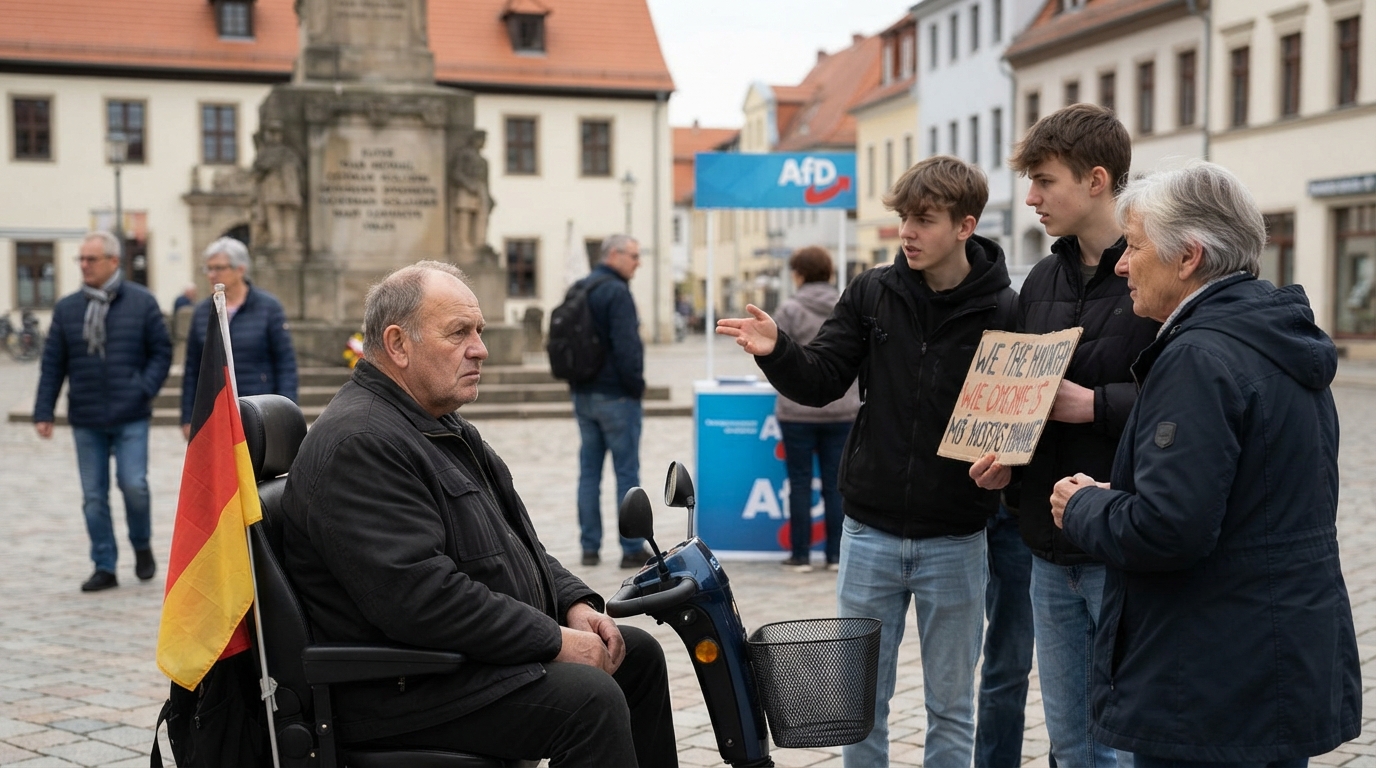
At a rally in Querfurt, 70-year-old AfD supporter Gerd, with a small, worn German flag attached to his mobility scooter, stated that while history cannot be "wiped away," "the Second World War has nothing to do with us any more." Gerd believes it's crucial to look to both the future and a pre-Nazi past when German-speaking lands were celebrated as a hub of "poets and thinkers."
If victorious in Saxony-Anhalt, the AfD plans to revise the history curriculum, emphasizing the century preceding World War One and Two. Hans-Thomas Tillschneider, the architect of this program, indicated that while National Socialism would still be taught, it would be "somewhat less so." He summarized the approach as "More Bismarck, less Hitler," referencing Otto von Bismarck, the architect of German unification in 1871. The party also pledges to fly the German flag daily at public schools and enhance the preservation of war memorials dedicated to German soldiers.
Other political parties have refused to form coalitions with the AfD, which has been classified as right-wing extremist in several states, including Saxony-Anhalt since 2023. Domestic intelligence agencies found the local party branch to be anti-democratic and its objectives permeated by a "racist ideology," designations the AfD generally dismisses as politically motivated smears.
The AfD aims to secure a parliamentary majority in Saxony-Anhalt, a significant achievement in German politics. While polling suggests this is possible, it is not guaranteed. A victory of this magnitude would grant the party control over cultural, policing, and educational services.
Senior AfD figures have faced accusations of attempting to downplay the darkest chapter of German history, which critics argue is a tactic to appeal to more extremist supporters. In 2018, former co-leader Alexander Gauland referred to the Nazi era as a "speck of bird poop," and a year prior, Björn Höcke, the party leader in Thuringia, called Berlin's Holocaust Memorial a "Monument of Shame."
Ulrich Siegmund, the man poised to become the AfD's first state premier in Saxony-Anhalt, defended the party's patriotism agenda to the BBC, calling it "the most normal thing in the world" for people to be proud of their country. "We want to get that back," he stated. "We have a diverse history, stretching back many hundreds of years, and we want to teach that history in its entirety, with all its highs and lows but with pride and a positive outlook."
Siegmund, a 35-year-old former air-freshener salesman, has become a prominent AfD figure due to his energetic campaign and adept use of social media. In Querfurt, crowds queued for hours to meet him, as he signed copies of a Der Spiegel magazine cover that labeled him "Germany's Most Dangerous Man."
The AfD has consistently denied allegations of extremism or comparisons to National Socialism. In 2024, renewed calls to ban the party emerged after it was revealed that senior figures, including Siegmund, attended a gathering with Austrian far-right activist Martin Sellner. Sellner, who has a neo-Nazi past he attributes to youthful folly, now advocates for "remigration," a term widely understood to mean mass deportations or the forced removal of individuals with a migration background. The AfD maintains its "remigration" policy would be lawful, focusing on deporting criminals and those in the country illegally. When asked by the BBC, Siegmund confirmed he had not seen Sellner since their single meeting in Potsdam in 2023.
Critics argue that the AfD's plans for Saxony-Anhalt, including its pledge to cut funding for "anti-German" art, echo National Socialism. The Nazi regime exerted strict control over Germany's cultural life, notably showcasing works deemed unacceptable at the "Degenerate Art Exhibition" in 1937. Frank Martin Widmaier, director of a local theatre in Eisleben, expressed concern, stating, "How can somebody say it's not German enough, and what does it mean?" Widmaier, whose theatre relies heavily on state funding, finds the AfD's plans both vague and menacing, calling it "playing with Nazi propaganda" and a threat to people and institutions.
The AfD asserts that while artistic freedom is protected by law, taxpayer money should primarily support art that fosters a German identity. This is part of the AfD's "patriotic shift" aimed at "restoring" the country's self-confidence.
The controversial claim that Germany's culture of remembrance, or *Erinnerungskultur*, has created a damaging identity crisis is not new. However, the AfD's growing popularity is revitalizing this argument, as the party leads polls not only in Saxony-Anhalt but also nationwide, albeit with a less significant lead at the federal level.
Widmaier rejects the notion that *Erinnerungskultur* equates to a guilt complex. He states, "You don't have to feel guilty," particularly when referring to generations born after World War Two. "But you have to deal with all of that to make it never happen again. That's part of our DNA in Germany."
The election in Saxony-Anhalt represents a potentially pivotal moment for Germany. The formation of an AfD government would mark the first time a far-right party has held significant power in post-war Germany. It would also serve as the initial real-world test of the party's patriotism agenda, which critics contend camouflages a dangerous revisionism. German intelligence has classified the AfD as extreme-right, with the agency reporting almost 60,000 far-right extremists in Germany.