

Security concerns grow in Germany
An ARD Deutschlandtrend poll in Germany found that concerns about security, terrorism and migration are growing among the country's population. At the same time, dissatisfaction with the government's performance remains high and public support for the right-wing Alternative for Germany (AfD) party is growing.
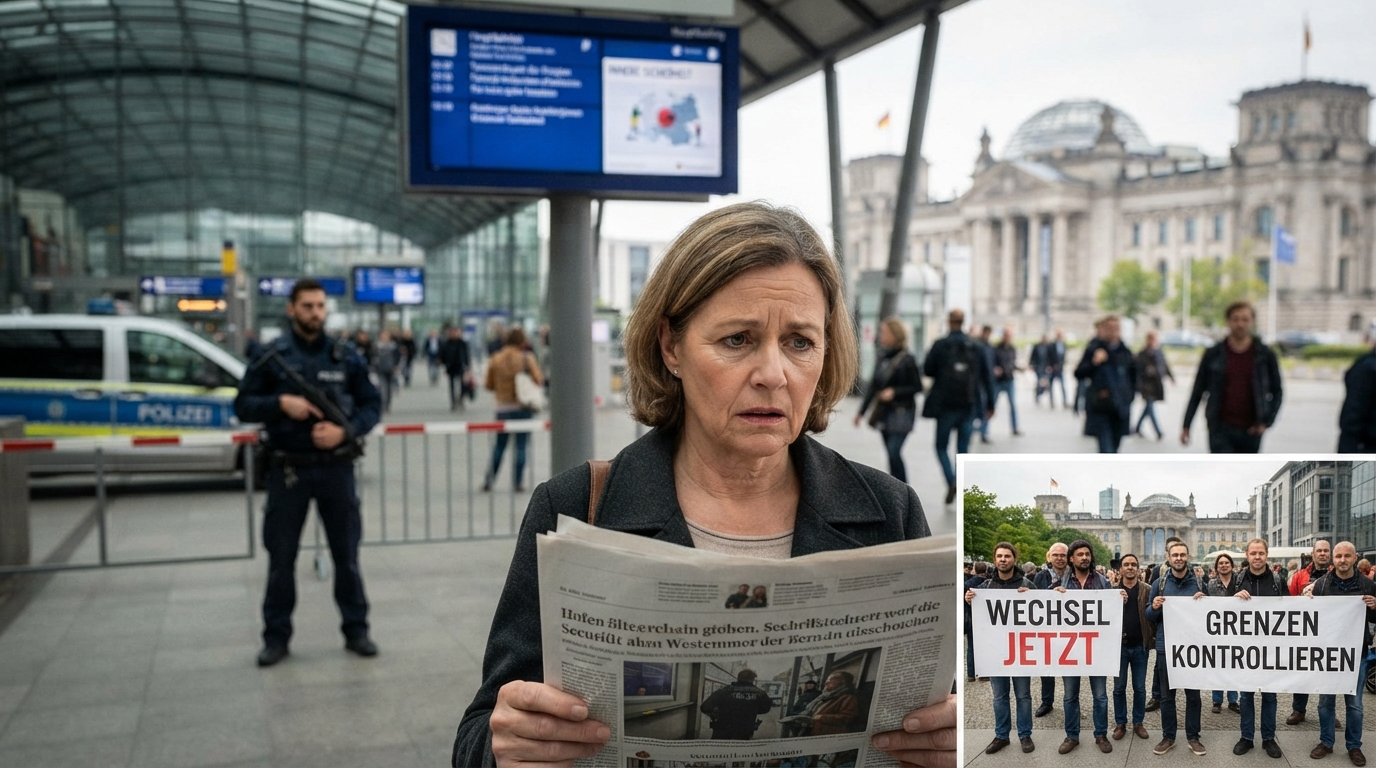
Security concerns have risen sharply in Germany. According to a monthly survey by ARD Deutschlandtrend, one in three Germans is worried about becoming a victim of a terrorist attack. This shows that security has become a priority on the country's political agenda since the July 25 terrorist attack in Berlin.
69 percent of those surveyed assessed the risk of terrorist attacks as high. In addition, 56 percent expressed concern about the possibility of attacks by right-wing extremists and 50 percent by left-wing extremists.
There were also strong opinions on migration policy. 71 percent of Germans support the continuation of border controls that have been in place since 2024. At the same time, 59 percent believe that it is more effective to solve the migration problem jointly, not nationally.
In the political ratings, the right-wing Alternative for Germany (AfD) party continues to strengthen its position. According to the survey, the party's rating has reached 28 percent, while the conservative XDI/XSI bloc has recorded one of its lowest figures in history with 21 percent. The ratings of the remaining parties have hardly changed.
The study also showed that 85 percent of Germans are dissatisfied with the work of the federal government. 68 percent of respondents believe that the situation will not improve even after the recent personnel changes. Also, 55 percent of the population said that they want fundamental changes to be implemented in Germany.
According to the survey, AfD supporters in particular feel that they are being treated unfairly. 70 percent of them said that they have fewer opportunities and benefits in society than they deserve. Nationwide, 43 percent of respondents consider themselves to have fewer opportunities than others.