

Political pressure to close the "Russian House" in Berlin is growing
In Germany, the controversy surrounding the "Russian House" in Berlin is intensifying. A number of politicians from the Christian Democratic Union, the Greens and the Free Democratic Party are calling for its closure, claiming that the institution may be working in the interests of Russian special services. The German government has said that such a move could also affect the activities of the Goethe Institute in Moscow.
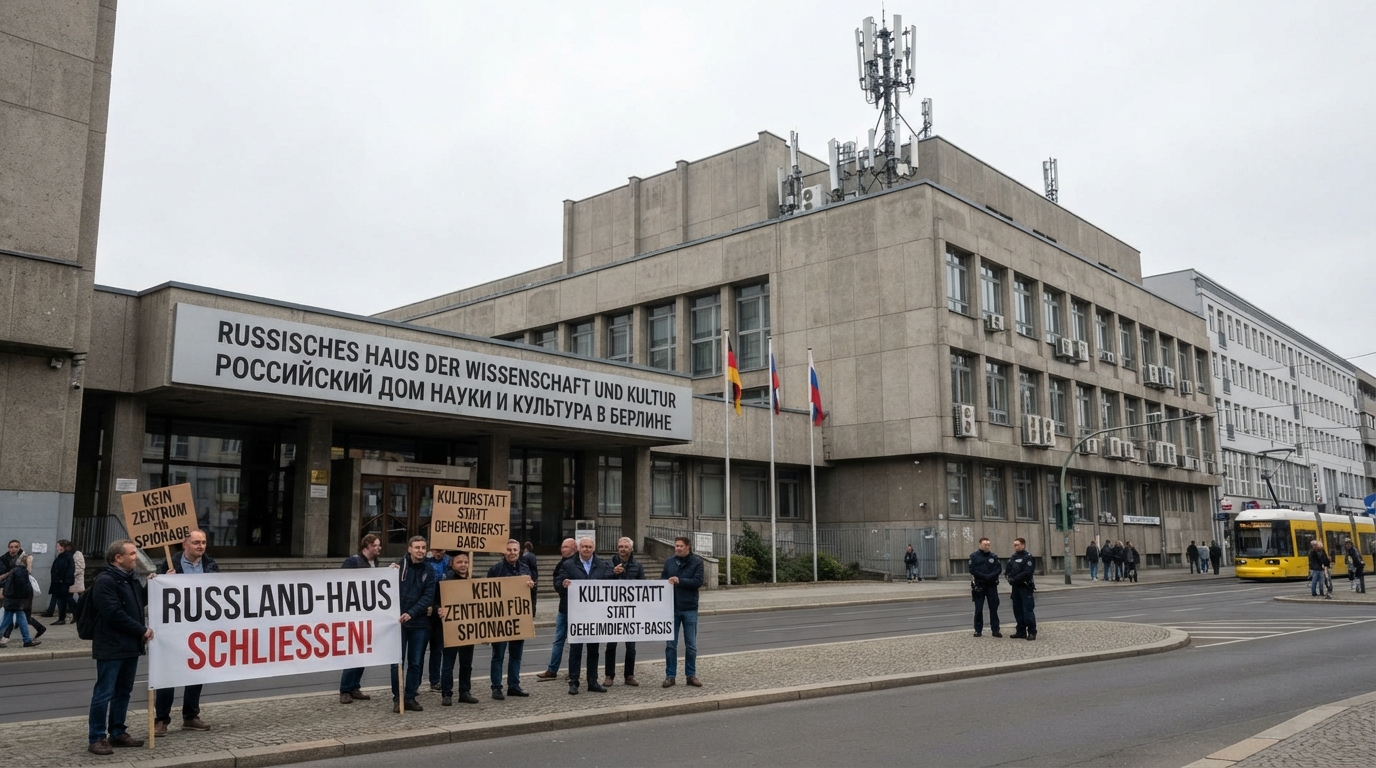
Political pressure to close the Russian House in Berlin is growing. Political discussions in Germany have intensified over the institution's alleged illegal activities. Representatives of the Christian Democratic Union (CDU), the Greens and the Free Democratic Party (FDP) are calling for the closure of the cultural center.
Roderick Kiesewetter, a member of the Bundestag and a foreign policy expert for the CDU, has alleged that the Russian House may be used as a spy center. In an interview with Welt TV on August 11, he cited several factors as the basis for his suspicions. In particular, the politician said that more than 100 people live in the building and that there is not enough information about their activities. He also cited the building's significantly higher than usual electricity consumption as a suspicious factor.
Kiesewetter said that the Russian House may have once been a cultural institution, but that the situation has changed. He called the facility "a center filled with equipment that is probably intended for intelligence," and claimed that people who are not friendly towards Germany are operating there. The politician described the Russian House as a symbol of Germany's weakness and Russian influence.
Green Party member of the Bundestag, defense expert Sarah Nanni, also supports the closure of the facility. She said that the party had tried to shut down the Russian House during the previous "traffic light coalition" government, but failed. Nanni also said that she believes that the facility is being used for espionage purposes. She pointed to suspicious mobile phone and GPS signals, saying that they indicate that there may be powerful transmitting equipment in the building. The MP described the German government's refusal to close the institution as a sign of "submissiveness" and weakness towards the Kremlin. He claimed that Russian President Vladimir Putin was using the situation for provocations and aggressive actions. Nanni cited the recent incident in Leipzig involving a drone strike on a Ukrainian cargo plane.
Marie-Agnes Strack-Zimmermann, a member of the European Parliament from the Free Democratic Party, also supported the demand to close the "Russian House". She stated on Welt TV that "an enemy of freedom is sitting in the heart of Berlin, and we are just watching." Strack-Zimmermann called on the German federal government not to extend the cultural cooperation agreement with Russia, which expires at the end of 2026. According to her suspicions, the "Russian House" may be used by people who coordinate cyberattacks and send spies. The politician criticized the Berlin authorities for refusing to close the institution.
The German government, however, is taking a cautious approach to the issue. Official Berlin explains that the closure of the Russian House may require the cancellation of existing relevant agreements with Russia. These agreements, in turn, also regulate the activities of the Goethe Institute in Moscow. According to the official representative of the German Foreign Ministry, Martin Giese, the activities of the two institutions are interconnected. Therefore, further measures taken against one of them may have direct consequences for the other.
At the same time, not all political forces in Germany are in favor of closing the Russian House. Josephine Thier, head of the Berlin branch of the Sara Wagenknecht Union (BSW), supported the preservation of the institution's activities. She sent a video message in Russian, emphasizing that such a position does not mean support for the Russian government. She also called for support for the petition launched by the BSW to preserve the Russian House.
The Russian House in Berlin officially operates as a cultural center. However, recently there have been reports that it could be used as a front for Russian special services. WDR and Süddeutsche Zeitung, citing French documents, reported on the institution's possible links to Russian special services. The "Russian House" is run by the state agency "Rossotrudnichestvo", which is subordinate to the Russian Foreign Ministry. This agency is under EU sanctions.
At the same time, the allegations that the "Russian House" is engaged in espionage or coordination of cyberattacks are still suspicions and allegations made by German politicians and the media, and the text does not indicate whether they have been confirmed by the results of a court or official investigation.