

“Mecca Alliance is moving faster than expected” - political scientist
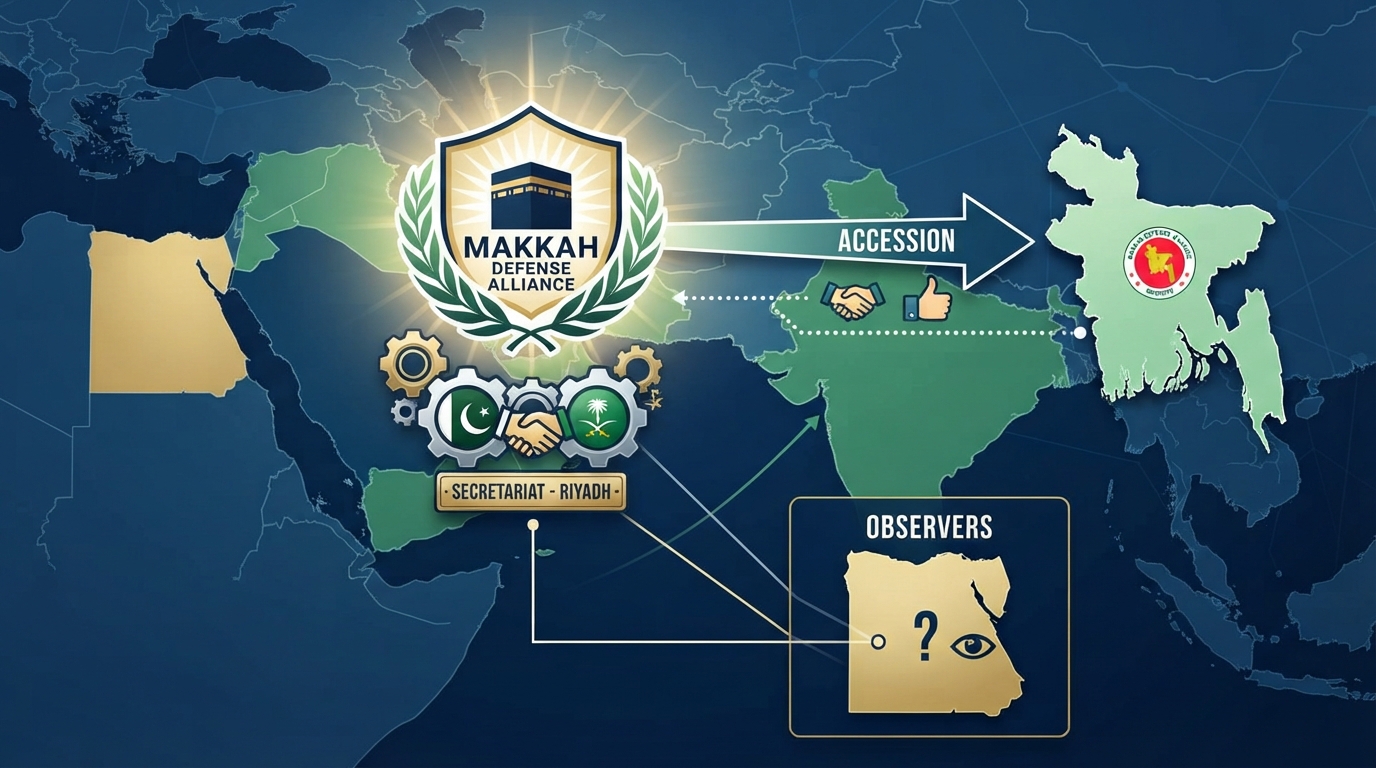
Three weeks after the signing of the Mecca Pact, it officially took the name "Mecca Defense Alliance." The establishment of a secretariat in Riyadh and the appointment of a Pakistani representative as secretary-general indicate that the alliance is taking shape as a permanent defense structure. Bangladesh was one of the first countries to express its desire to join this alliance.
“Mecca Alliance is moving faster than expected” - political scientist
Three weeks after the signing of the Mecca Pact, it was officially named the “Mecca Defense Alliance.” The establishment of the secretariat in Riyadh and the appointment of a Pakistani representative as secretary-general indicate that the alliance is taking shape as a permanent defense structure. Bangladesh, meanwhile, became one of the first countries to express a desire to join this alliance.
- The Mecca Pact is now officially called the “Mecca Defense Alliance.” What will be the next stage of the organization, and how are the processes around this topic progressing?
Shavkat Ikromov: In the Mecca Pact signed on August 7, a final decision had not yet been made regarding the name of the three-state alliance. For this reason, many initially wondered whether this would remain just another military alliance, like previous agreements between Pakistan and Saudi Arabia, or turn into an institutional structure. However, the process moved faster than expected. On August 31, the alliance was given an official name in Istanbul. Most importantly, its organizational mechanisms also began to take shape. It was decided to establish a secretariat in Riyadh, and a Pakistani representative was appointed as secretary for a three-year term.
These steps show that the intentions of the parties are serious. This is not about a simple political or military agreement, but about the process of turning it into a stable institutional structure. The establishment of the secretariat and the appointment of the secretary show that the alliance is forming governance mechanisms characteristic of international organizations.
The issue of the alliance's expansion is also on the agenda. One of the most frequently mentioned countries right now is Bangladesh. Since the agreement notes that the organization is open to other states, Bangladesh became one of the first countries to express a desire to join the alliance.
Bangladesh is not a small country in terms of military and demographic potential. Although its economy is still developing, it is considered one of the countries with a high growth rate. In addition, the country knows the history of wars and conflicts in the region well. Bangladesh separated from Pakistan in 1971 and was formed as an independent state. Today, it possesses significant military potential and maintains close relations with Saudi Arabia. Therefore, Bangladesh's accession to the alliance could significantly expand the organization's geographical and military potential.
Another important issue is Egypt's position. Cairo has not yet made a final decision regarding joining the alliance. The Egyptian side stated that it would first observe how the organization forms and develops. Nevertheless, the possibility of Egypt joining the alliance in the future cannot be ruled out. Egypt and Saudi Arabia have maintained close relations for many years. Meanwhile, Turkey and Egypt have been gradually restoring relations in recent years. Relations between Pakistan and Egypt are also good.