

Living in disadvantaged areas can negatively affect brain health – study
Living in disadvantaged areas can negatively affect brain health – study
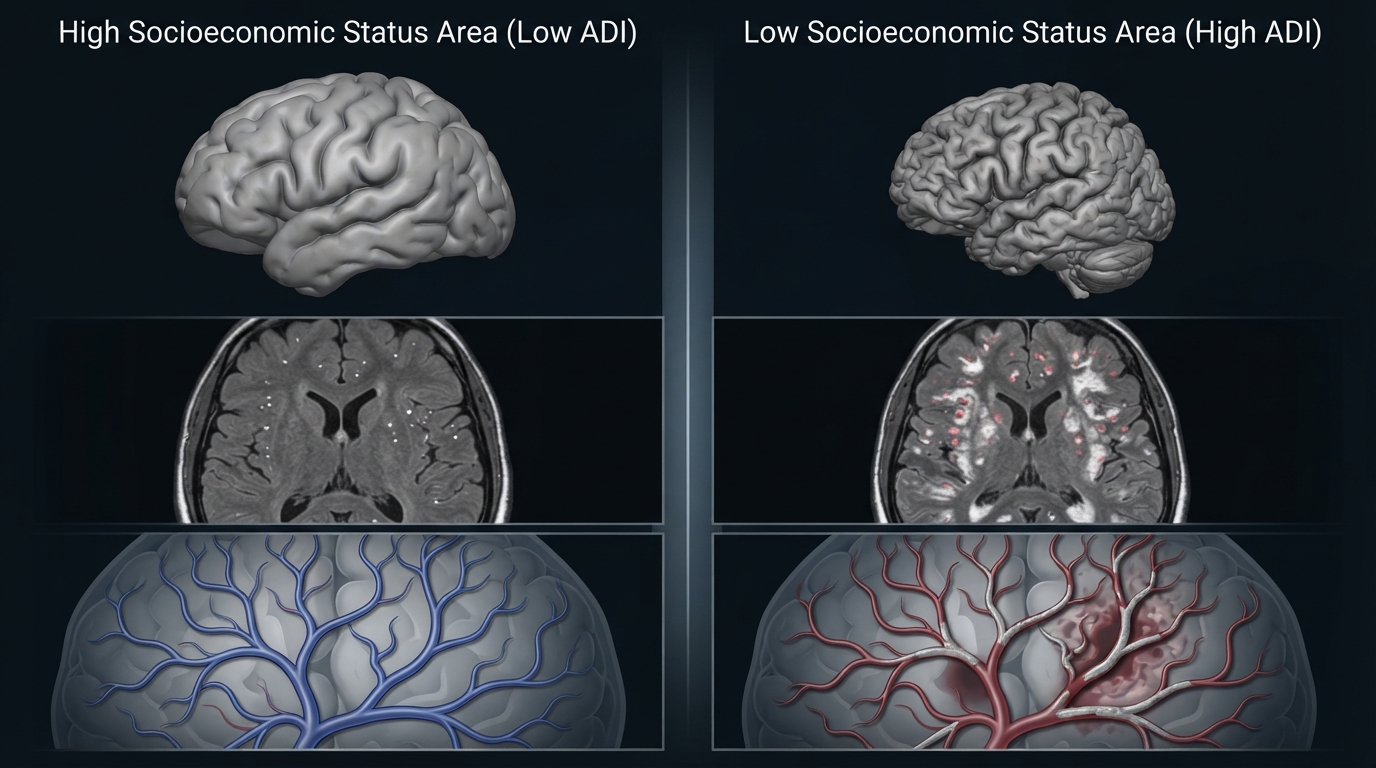
Living in areas with difficult economic and social conditions can harm brain health: it has been found that the brains of those living in the most disadvantaged places "age" faster, have a smaller overall volume, and exhibit more blood vessel damage.
A new study published in the journal Radiology of the Radiological Society of North America showed that the area where people live can leave a mark on their brains.
Researchers analyzed brain MRI scans of nearly 3,000 patients aged between 18 and 96. The results were compared with the Area Deprivation Index (ADI). This index assesses the situation in areas based on income, education, employment, and housing conditions.
It turned out that the brains of residents in the most disadvantaged areas are older and smaller in volume compared to those living in wealthy areas.
"Where you live leaves its mark on your brain," said John-Paul J. Yu, one of the study's authors. According to him, the environment surrounding a person is one of the factors that affects brain age and, indirectly, brain health.
The findings add to the evidence that the conditions in which people are born, grow, live, work, and age affect their long-term neurological health.
In addition, the researchers found that those living in the most socio-economically disadvantaged areas had a larger volume of white matter hyperintensities in their brains. These are areas clearly visible on MRI scans and are associated with damage to the brain's small blood vessels.
"White matter hyperintensities are, in fact, the footprint of cardiovascular damage in the brain," Yu said.
He noted that factors such as high blood pressure, poor sleep, and chronic stress can disrupt blood circulation in the brain over time.
Therefore, the socio-economic disadvantage of areas must also be taken into account when developing healthcare measures and public policy, Yu concluded.