

A baby born to an anemic mother will have a smaller brain — study
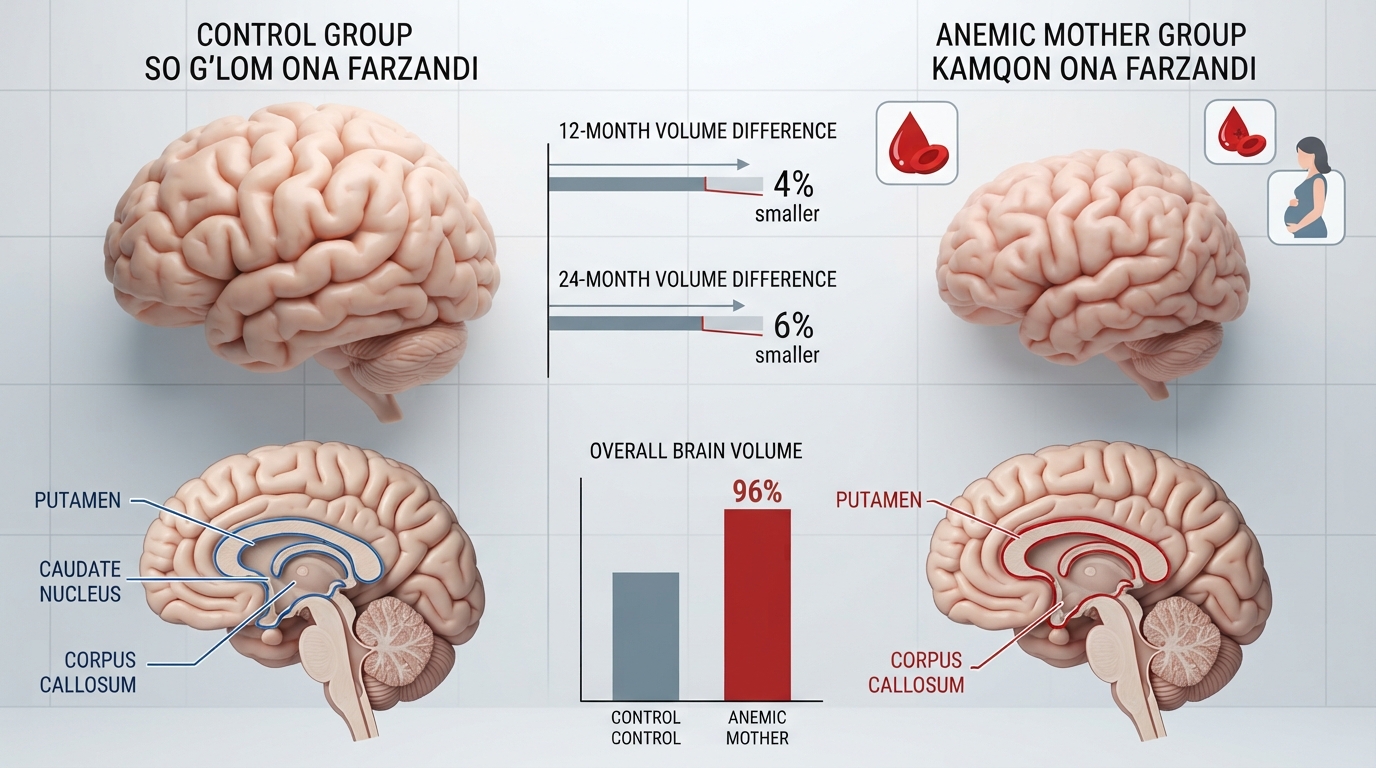
Babies born to anemic mothers have smaller brains — study
It has been found that babies born to mothers suffering from anemia typically have smaller brains. In particular, key areas responsible for movement, learning, and emotional regulation are also reduced in size.
Scientists say these differences can be detected for the first time when the child reaches one year of age. Furthermore, there is a possibility that the child may face cognitive development difficulties by the time they reach school age. Globally, more than one-third of pregnant women suffer from anemia.
Anemia is a condition in which the number of red blood cells in the body drops below normal, often caused by iron deficiency. Symptoms of the disease include fatigue, shortness of breath, and dizziness. This condition is most common in Sub-Saharan Africa and South Asia.
Researchers from King's College London in the UK and the University of Cape Town in South Africa monitored more than 300 mothers and their children in Cape Town. They scanned the infants' brains several times from three months to two years of age.
It was revealed that the total brain volume of babies born to anemic mothers was, on average, 4 percent smaller compared to the children of healthy mothers. Notably, all of these mothers had been diagnosed with a mild form of anemia.
Differences were recorded in three distinct parts of the brain: the putamen, the caudate nucleus, and the corpus callosum.
Study author and scientist Jessica Ringshaw said these three areas are responsible for key neuropsychological processes, such as information processing speed, emotional regulation, and executive function.
These differences between the groups of infants became even more pronounced during the first two years of the child's life. For example, while the volume of the corpus callosum was 4 percent smaller in 12-month-old babies of anemic mothers, this figure reached 6 percent at 24 months.
Ringshaw noted that these differences do not disappear over time. The problem persists even when the children reach six years of age and start school. Later, this can lead to significant learning difficulties for them.
The scientist added that this finding explains the results of previous studies. Until now, it had been established that children born to anemic mothers scored lower on developmental tests.
Other factors, such as family income and food security, were very similar between the anemic and healthy mothers. Therefore, the scientists are confident that the identified differences were caused specifically by maternal anemia.
Ringshaw emphasized that combating anemia in women of childbearing age is extremely important. She recommended screening to detect anemia and iron deficiency during pregnancy, and prescribing iron tablets or injections if necessary.
According to her, the causes of anemia are complex and can also include infectious diseases. The study showed that anemia is more common in women with HIV infection. Therefore, along with iron, infectious diseases must also be treated properly.