

Left-wing block slightly ahead in Swedish elections
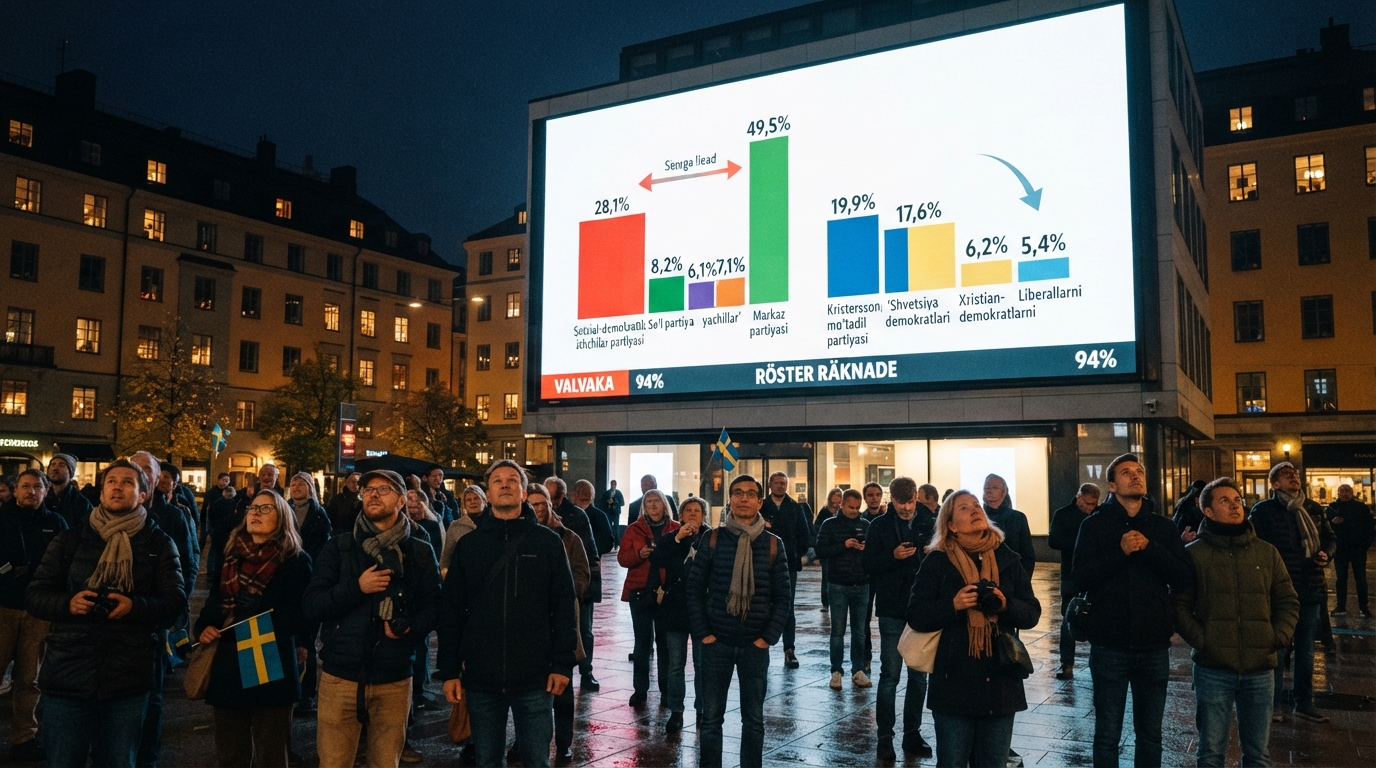
In Sweden's parliamentary and local government elections, former Prime Minister Magdalena Andersson's Social Democratic Workers' Party is leading with 28.1 percent of the vote. After 94 percent of the ballots have been counted, the gap between the left and right political blocks remains very small.
Left bloc holds a slight lead in Swedish elections
The preliminary results of the parliamentary and local government elections held in Sweden on September 13 have been announced.
According to the SVT television channel, after 94 percent of the ballots were counted, the Social Democratic Workers' Party, led by former Prime Minister Magdalena Andersson, is leading with 28.1 percent of the vote.
Overall, the four left-wing opposition parties — the Social Democrats, the Left Party, the Greens, and the Centre Party — are ahead of the right-wing bloc led by incumbent Prime Minister Ulf Kristersson by a very narrow margin.
According to preliminary calculations, the Left Party received 8.2 percent, the Greens 6.1 percent, and the Centre Party 7.1 percent of the vote.
In the right-wing bloc, Kristersson's Moderate Coalition Party garnered 19.9 percent of the vote. The Sweden Democrats were supported by 17.6 percent of voters, the Christian Democrats by 6.2 percent, and the Liberals by 5.4 percent.
Pre-election polls initially predicted a confident victory for the left bloc. However, as election day approached, the gap between the opposition led by Magdalena Andersson and Kristersson's right-wing bloc narrowed.
The Social Democratic Party has been the leading force in Swedish politics for most of the past century and remains the largest party in the country. During the election campaign, the left bloc promised to strengthen the social welfare system and address issues related to the rising cost of living.
Meanwhile, incumbent Prime Minister Ulf Kristersson focused his campaign primarily on the government's fight against organized and violent crime, as well as tightening migration policy.
There are nearly 8 million people eligible to vote in Sweden. The country's population stands at 10.6 million. Voter turnout is typically above 80 percent.
Nearly half of the votes were cast early before election day. The final results are of particular importance due to the very small margin between the political blocs.