

Left turns have finally been opened at Aktepa Square and zebra crossings have been created (but more are needed)
Left turns have been opened at the Aktepa intersection in Tashkent, eliminating the need for drivers to travel hundreds of meters to make a U-turn. Zebra crossings have been installed near one overpass, but the other still lacks them. This ill-conceived intersection was built in 2016, when authorities were promoting the idea of "traffic light-free highways."
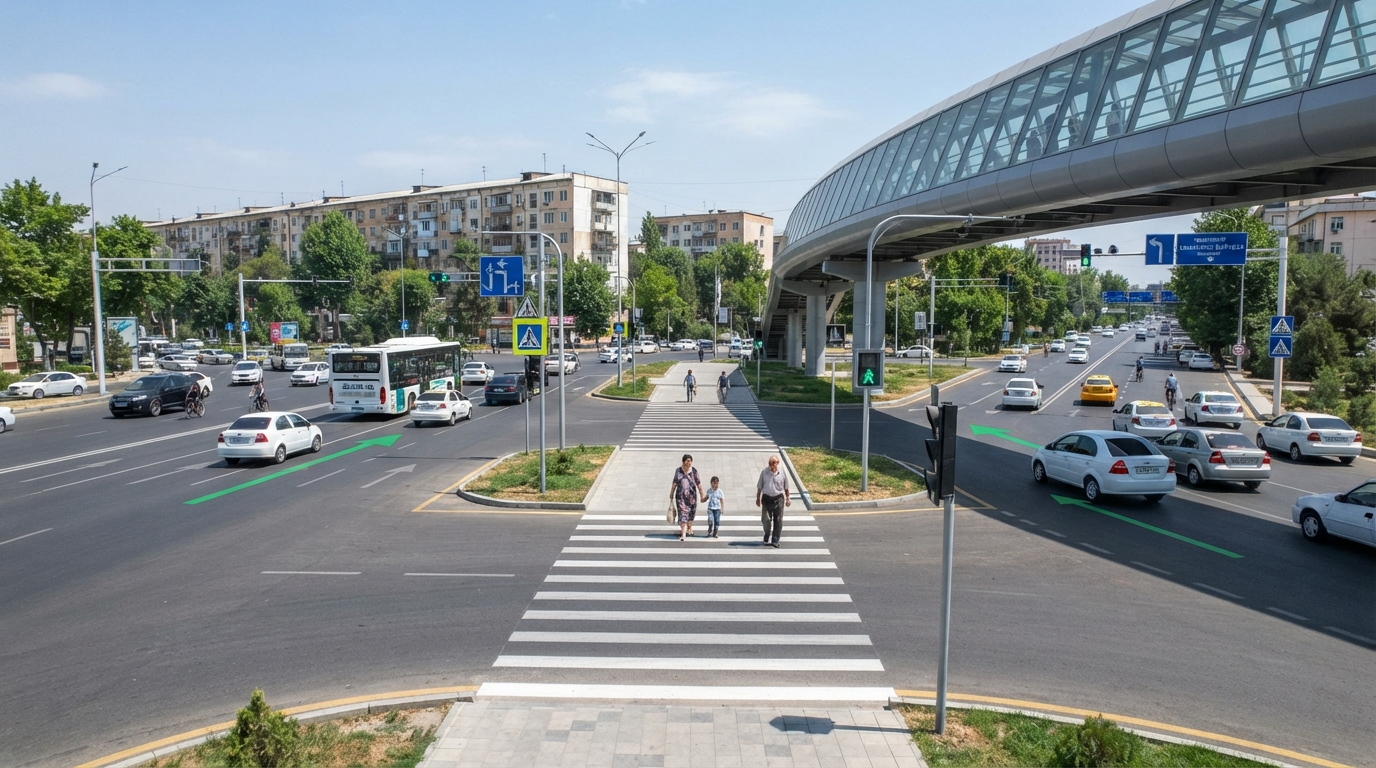
Left turns and designated pedestrian crossings have finally been introduced at Aktepa Square in Tashkent, although their number needs to be increased.
According to the Tashkent Traffic Management Center, the traffic pattern at the intersection where the Aktepa roundabout was previously located in the Chilanzar District has been changed. Drivers traveling from Lutfi Street toward Nurafshan and Seoul Streets can now make a direct left turn at the traffic light, instead of having to make a lengthy U-turn via Mukimi Street.
A similar direct left turn option has also been introduced for vehicles traveling from Samarkand Darvoza Street toward Mukimi and Lutfi. Previously, drivers also had to travel hundreds of meters to make U-turns. These U-turns often resulted in traffic jams not only on the far left lane, but also on the second and even third lanes.
Furthermore, to improve safety and convenience for pedestrians, ground crossings (zebra crossings) and pedestrian traffic lights were installed near one of the existing overpasses. However, the second overpass still lacks ground crossings.
Gazeta has repeatedly criticized the lack of pedestrian amenities in the former Aktepa Square and other areas of the capital, as well as the poorly planned traffic management for cars.
The inconvenient Aktepa intersection was created in the summer of 2016, during a period when city authorities were actively adapting infrastructure for motorists, completely ignoring the needs of pedestrians. That same year, a popular and heavily used tram line was eliminated.
The city's leadership at the time installed unsightly barriers in the center of streets, which were dismantled a few years later. The idea of creating "traffic light-free highways" was popular, and this is precisely what they attempted to achieve on Mukimi Street after the tram tracks were dismantled. However, it soon became clear that pedestrian crossings across 8-10 lanes without traffic lights and extended U-turns were ineffective, and traffic lights were gradually installed on Mukimi.
Gazeta previously reported how, before the opening of the Aktepa intersection in August 2016, local residents filled the empty roadway with their children in the evenings because they simply had nowhere to walk (and still have nowhere to walk).
Despite the obvious colossal damage inflicted on the city by the decisions of those years, many intersections and street sections have yet to be reconstructed. At the Aktepa intersection, people have been repeatedly hit while attempting to cross the street on the ground.
Renowned urbanist Arkady Gershman called the Aktepa intersection "a typical example of a violation of transportation and urban planning principles." "It's essentially a man-made river, difficult for healthy people to cross and practically impossible for pensioners or the disabled—one side is cut off from the other," the urbanist noted in a 2018 article for Gazeta.
In recent years, the city has clearly turned its attention to pedestrians. Streets with wide sidewalks and entirely pedestrian streets have appeared, and the Traffic Management Center has declared creating conditions for pedestrians, not cars, a priority. Tashkent's streets and public spaces are becoming more humane, but much work remains, and much should have been done yesterday.
Video by the Traffic Management Center.