

Last UK and US troops leave Iraq as anti-Islamic State mission ends
The withdrawal of coalition forces, under a deal agreed two years ago, was a key demand of the Iraqi government.
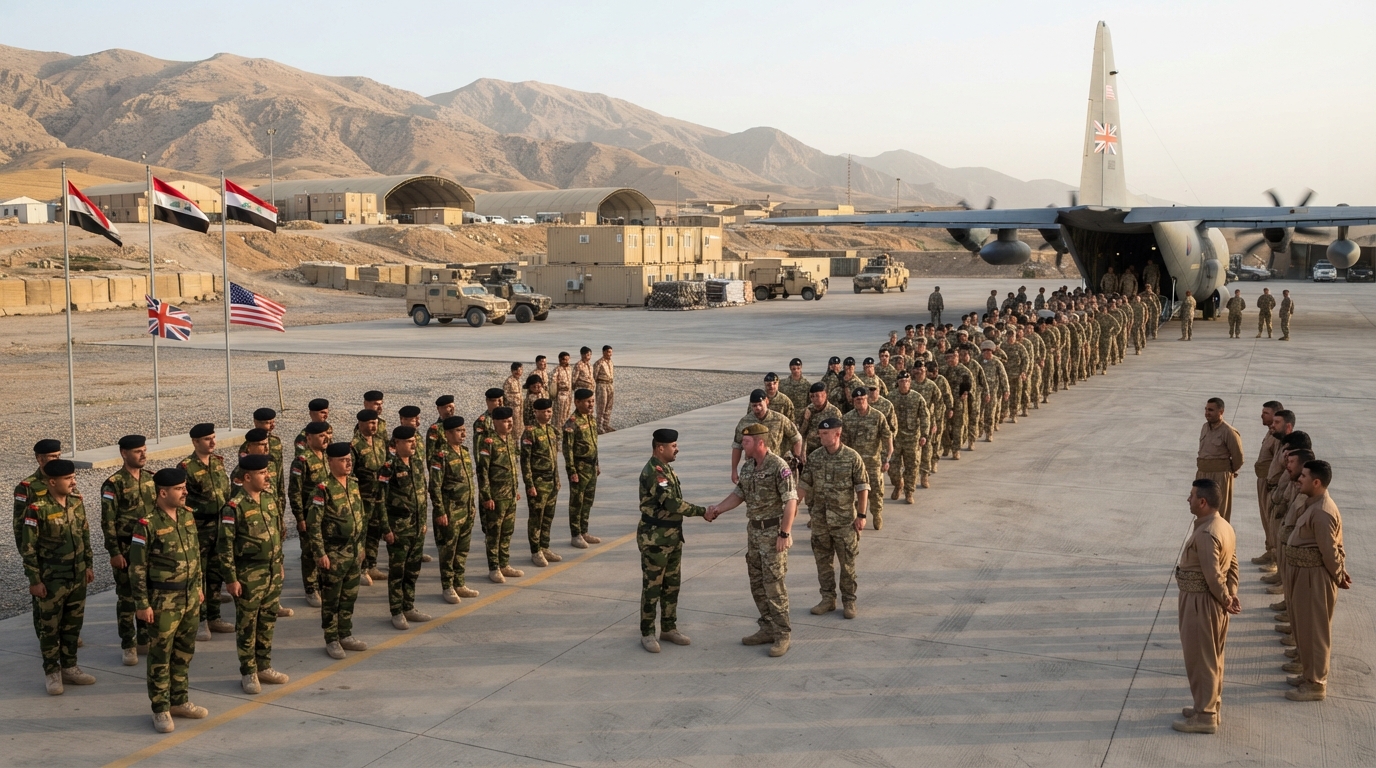
Last UK and US troops depart Iraq as anti-Islamic State mission concludes
Iraq’s security forces have now taken full responsibility for the country’s security after confirmation of the US and UK withdrawal.
The final British and American troops have now left Iraq after more than a decade of military presence in the country.
The departure of the remaining UK military personnel — about 100 — from Irbil, in the northern Kurdistan region, was coordinated over recent weeks with US forces, who also left on Wednesday.
It comes after an agreement between the US and the Iraqi government, signed two years ago, to pull foreign troops out by the end of this month.
British and US forces have been in Iraq since 2014 as part of the international coalition formed to help defeat the extremist Islamic State (IS) group. Their exit ends the mission known as Operation Inherent Resolve.
Iraqi Prime Minister Ali al-Zaidi said the coalition’s mission ending marked “Iraq's transition to a phase in which it assumes full responsibility for its security and stability”.
Iraq is due to observe four “Sovereignty Days” as a national holiday to commemorate the withdrawal.
“Following more than a decade of operations, training and capacity building, Iraqi Security Forces (ISF) and the Kurdish Peshmerga have secured the enduring territorial defeat of Daesh in Iraq and are now well placed to take primary responsibility for the country's security,” the UK Ministry of Defence (MoD) said in a statement, using an Arabic acronym for IS.
“With these objectives achieved, Iraq and its international partners can begin a new chapter focused on enduring security co-operation under Iraqi leadership.”
Pentagon spokesman Sean Parnell said the coalition’s departure from Irbil marked “the successful conclusion of the military mission that defeated [IS] in Iraq”.
He added: “The primary responsibility for addressing Iraq's remaining security challenges, including [IS] remnants and Iran-aligned militias that undermine Iraqi sovereignty and regional stability, now rests with the government of Iraq.”
The Iraqi government declared IS militarily defeated in 2017, but coalition troops stayed on to help stop the group from re-emerging.
A recent UN report estimated that sustained counter-terrorism pressure by Iraqi security forces had reduced IS to several hundred fighters who were “able to carry out unsophisticated operations only”.
The Iraqi government also faces the issue of Iranian-backed militias in the country.
Zaidi, who took office in May, has pledged to disarm them and bring all weapons under state control after the coalition’s departure.
But several powerful factions have resisted his plans and could now see their influence increase without the US presence.
Since the start of the US and Israel’s war with Iran earlier this year, militias have been attacking the remaining US and UK forces stationed at Irbil air base.
Hundreds of Nato troops based in Baghdad left the country in March as tensions escalated.
A BBC team visited the coalition base in Irbil in April this year, during a fragile ceasefire between the US and Iran.
They were forced to circle the base in an RAF transport aircraft while drones were being launched nearby.
At the height of the US bombing campaign against Iran, the coalition base was being hit by as many as 28 drones and missiles a day.
RAF Regiment Gunners, among the last British military personnel stationed there, had shot down more than 100 drones in the first six weeks of the war. Many of the attack drones were being launched by Iranian-backed militias in Iraq.
On Wednesday, marking the end of the mission, the MoD paid tribute to UK personnel who had supported the counter-IS effort.
It said they had provided “valuable support, training and assistance” to more than 111,000 members of the Iraqi Security Forces, including more than 21,000 Peshmerga forces in the semi-autonomous Kurdistan Region.
It also said the RAF had carried out thousands of sorties, striking more than 2,300 IS targets. The RAF is expected to keep flying missions over neighbouring Syria to stop the remnants of IS from gaining a foothold.
The Pentagon said the US would continue to provide “targeted training and intelligence support” to its Iraqi partners.
US Central Command said the coalition’s joint taskforce remained operational and was now based in Jordan.
US forces will also continue their mission against IS in Syria, where the UN estimates the group has up to 3,000 fighters.
This is the third time US and UK forces have withdrawn from Iraq.
Tens of thousands of US and British troops were sent to the country in 1991 after Saddam Hussein’s invasion of Kuwait.
They returned to Iraq in 2003, when US President George W Bush ordered Operation Iraqi Freedom to remove the dictator from power and eliminate weapons of mass destruction that later proved not to exist.
The intense sectarian insurgency that followed the invasion cost tens of thousands of lives, including nearly 4,500 US military personnel and 179 British military personnel.
US and UK forces left Iraq in 2011, only to return three years later when IS threatened to seize control of the country.