

Killed, burned, and dismembered with an axe. In the Tashkent region, a sentence was handed down to a man who brutally killed his brother. Video
Killed, burned, and dismembered with an axe. In Tashkent region, sentence pronounced on man who brutally killed his brother. Video
A resident of the Akhangaran district of the Tashkent region has been sentenced to 18 years in prison for the murder of his own brother and attempting to hide his body. The 35-year-old man stabbed his relative to death during a joint drinking session, buried the body in his own yard, and a few days later dug up the grave, dismembered the corpse, and hid the remains on both sides of a river.
According to the materials of the criminal case, which are at the disposal of Podrobno.uz, late in the evening of January 20, 2026, the 27-year-old victim came to visit his older brother with cognac and energy drinks. The owner of the house, where his wife and three children were also present, refused the alcohol but kept his guest company.
At first, the conversation touched on everyday topics, but as the bottle was emptied, the tone began to change. The younger brother started discussing who owned the house, after which mockery began. When asked to speak quieter, the guest insulted his sister-in-law and threatened to call law enforcement to evict the family.
According to the defendant, he tried to defuse the tension, but his brother started arguing again. Then the host lost his temper, took a kitchen knife, and stabbed his brother in the neck three times. When the victim began to wheeze, he pinned him to the floor, covered his mouth with his hand, and inflicted several more stabs to his side. He held his relative down until he stopped showing signs of life. The whole thing took about twenty minutes. His wife and children were sleeping in the next room.
Wrapping the body in a blanket, the man carried it out into the yard and threw it into a pit previously dug for an outdoor toilet, then buried it. He poured gasoline over the fresh grave and set it on fire along with the bloody clothes.
In the morning, the family had breakfast as usual. The man called his sister and asked if she had seen the younger brother, who had allegedly gone missing.
On January 23, the sister filed a missing person report. Detectives visited the house and inspected the plot several times. On one of the days, they noticed freshly dug earth, but the owner explained that he had been burning trash there.
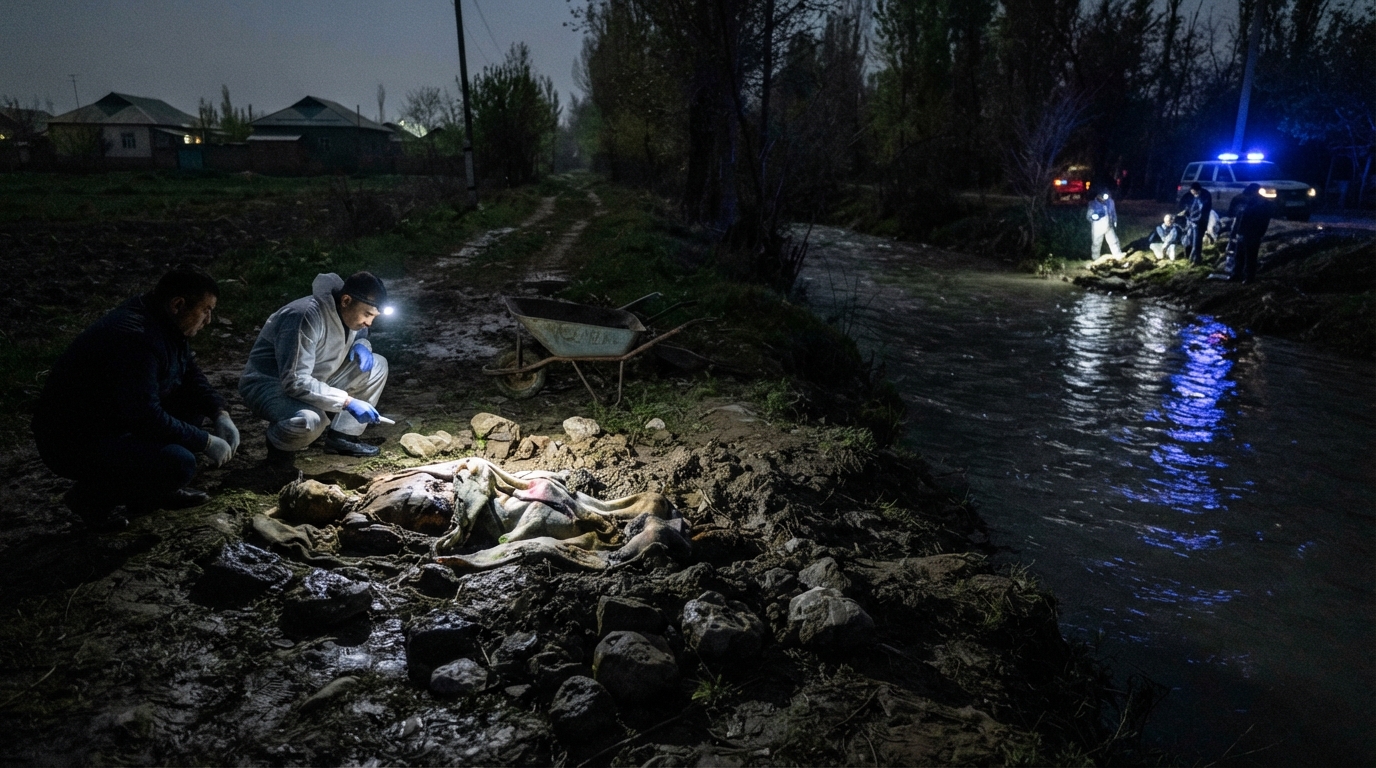
Realizing that the investigation was getting too close, the man decided to re-hide the remains. At night, he returned to the pit but realized he would not be able to lift the body whole. Dismembering the corpse with an axe, he transported the parts in a garden cart to the river. He hid one part between stones, and buried the head and torso on the opposite side. He drowned the knife, axe, and the victim's phone in the river.
On January 30, the brothers' mother returned from Russia. She came to question her son in person, but he continued to stick to his previous story.
The denouement came on February 3. The mother persuaded her son to travel with her to the Navoiy region to visit their father's grave. On the way, she kept asking him about the fate of her younger son. Approaching the city, the man could not hold out any longer and confessed to everything.
The next day, at the internal affairs department, he wrote a confession and pointed out the locations where the body parts were hidden. The forensic examination established that death occurred from acute blood loss due to incised wounds to the neck. The burns and damage sustained during dismemberment were inflicted after death. Genetic testing confirmed with 99.9% probability that the remains belonged to the missing man.
The court qualified the actions under Article 97, Part 2 of the Criminal Code ("Intentional murder with extreme cruelty") and Article 134 (desecration of a dead body).
The defendant fully admitted his guilt and asked for leniency, pointing out that he is the sole breadwinner for three minor children, one of whom is disabled. The sister of the deceased also petitioned for leniency.
The court sentenced him to 17 years under the murder article and 4 years under the desecration article. Concurrently, the final sentence was set at 18 years of imprisonment in a general regime penal colony.