

"Since I couldn't get the body out of the pit, I dismembered it with an axe." A man who killed his younger brother in Tashkent region was sentenced to 18 years in prison
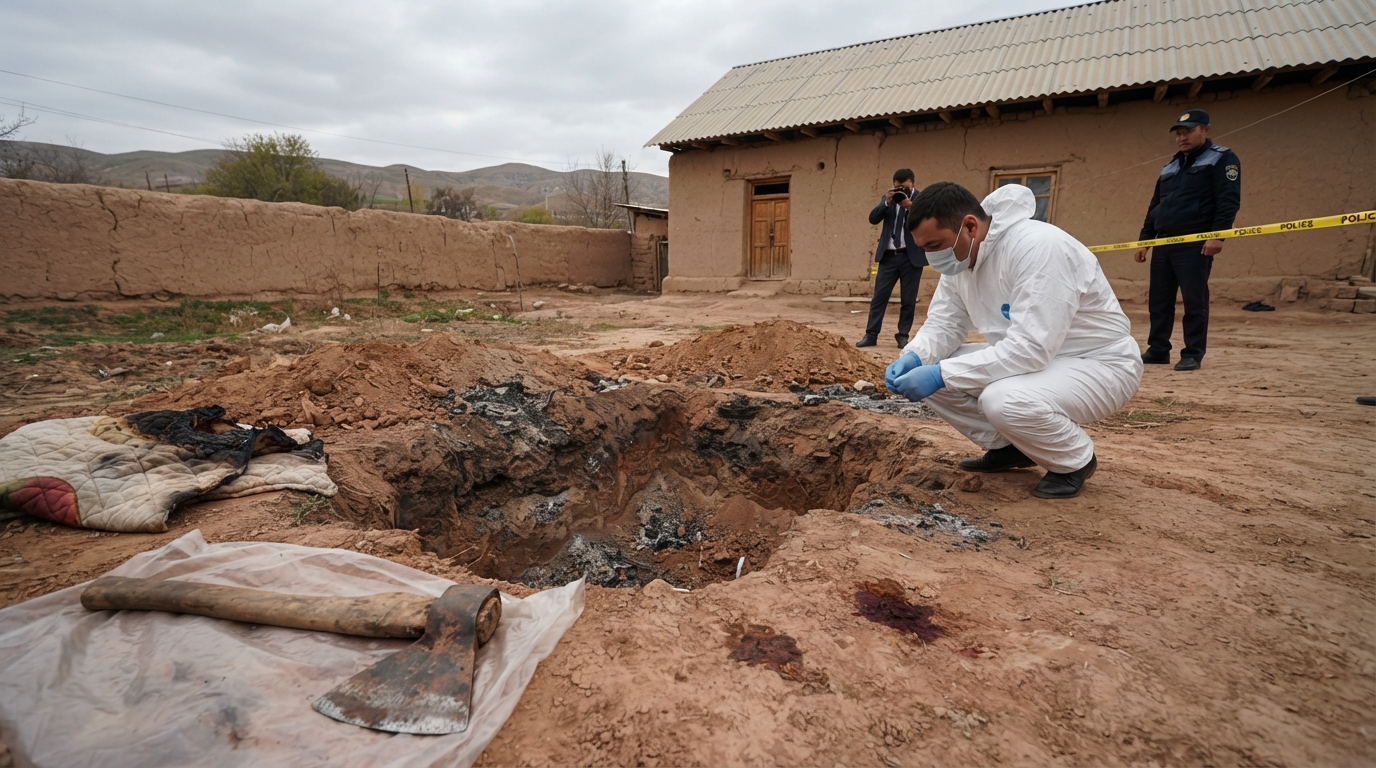
“Since I couldn't get the body out of the pit, I dismembered it with an axe.” A man who killed his younger brother in Tashkent region was sentenced to 18 years in prison
In the Ohangaron district of Tashkent region, a man who killed his younger brother and burned his body has been sentenced to 18 years of deprivation of liberty.
It was revealed that the man, born in 1990, lived together with his younger brother, born in 1998, in one of the homes in Ohangaron district. In January 2026, a dispute arose between them. On that day, the younger brother, who had consumed alcohol, said he wanted to buy a car and showed a picture of a car on his phone. The older brother told him that he first needed to pay off his debt to the Bureau of Compulsory Enforcement (MIB) and should think about how he would drive a car while being deprived of his driving license.
After that, according to his statement, the younger brother brought two bottles of cognac and energy drinks. After drinking one bottle of cognac within half an hour, he asked who the house belonged to and demanded that his older brother leave the house with his family. A.B. stated that their mother had bought the house and that he would leave for another place after speaking with her in the morning.
According to the defendant, the younger brother called himself a “street boy” and insulted his brother and his wife.
“My brother said, ‘your wife had a good time on the street, so let us also live and have a good time in the house.’ Then he called ‘102’ and said he would kick me out of the house, and if necessary, make it so that my wife and I wouldn't be able to walk on the street. Showing his phone, he insulted me, saying he had one billion in money. At that moment, I remembered how he had previously fought with my mother while drunk, and I lost control of myself,” the defendant said in his court testimony.
Following this, he stabbed his drunk younger brother in the neck three times with a kitchen knife. As a result, the victim lost a large amount of blood and died at the scene.
After the murder, the man attempted to hide the crime. He wrapped the body in a blanket and dragged it to a pit dug for a toilet in the yard. Then he poured gasoline over it and set it on fire. About two hours later, seeing that smoke was still coming out of the pit, he poured two bags of cement, which had been brought for house repairs, over the body and buried it with sand.
The next day, he told his sister that his brother had left the house and had not returned. Having no news of her brother, the sister contacted the law enforcement authorities on January 23. Law enforcement officers arrived at the household and noticed the soil over the pit. A.B. said that the pit had been there for many years and that he used it to throw trash and burn it. He misled the officers by saying he burned trash there. However, after they left, realizing he was under suspicion, he decided to move the body to another place.
On the night of January 24 to January 25, he attempted to exhume the body. Since it was impossible to pull it out whole, he severed the deceased's two legs and left arm from the torso using an axe. He hid the two legs and the left arm among rocks 400 meters away from the household, and buried the head and torso part on the bank of a stream.
When the mother, who returned from Russia, asked about the whereabouts of her youngest son, A.B. initially lied to her, but eventually confessed to the murder. His mother demanded that he go to the law enforcement agencies and surrender. However, fearing imprisonment, A.B. went to Navoiy region by bus from Tashkent with his wife. That evening, internal affairs officers found him and brought him to the Ohangaron District Department of Internal Affairs. On February 4, he confessed to the crime and pointed out the places where the body parts were hidden.
On February 4, he wrote a statement of confession and remorse, and pointed out the places where he had hidden the body parts.
The forensic medical examination confirmed that the injuries related to the dismemberment and burning of the body were inflicted after the deceased had died. DNA analysis showed with 99.9 percent accuracy that the found remains belonged to the defendant's younger brother.
According to the verdict of the Ohangaron City Court on Criminal Cases, A.B. was found guilty under Article 97, Part 2, Paragraphs “v” and “j” (intentional murder of a person known to the offender to be in a helpless state, committed with cruelty) and Article 134 (desecration of a corpse) of the Criminal Code. He was sentenced to a final punishment of 18 years of deprivation of liberty.