

Kazakhstan plans to build 21 new logistics centers by 2030
Kazakhstan plans to build 21 new logistics centers by 2030, expanding its network from 46 facilities as the country upgrades road, rail and aviation infrastructure, develops cargo terminals abroad and digitalizes transport systems to strengthen its role as a transit hub between Europe and Asia.
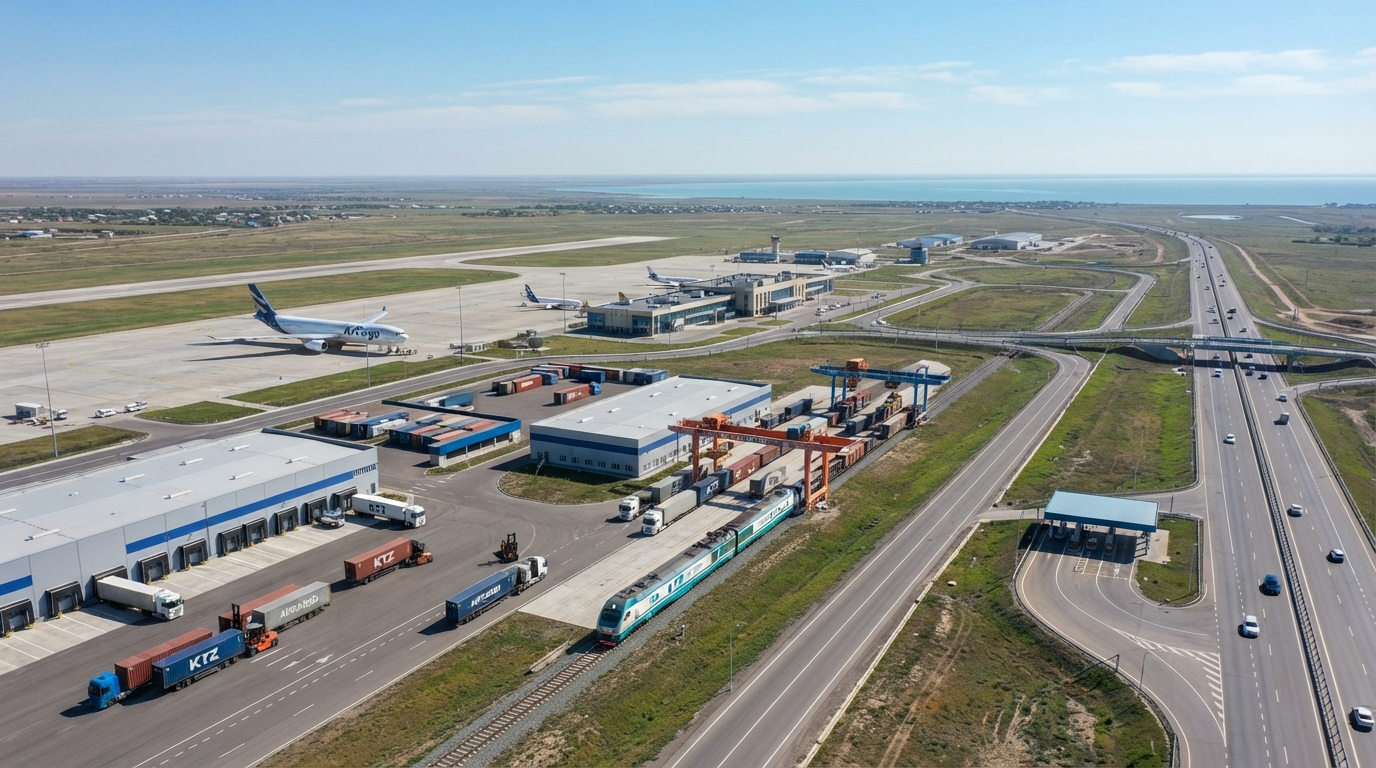
Kazakhstan intends to add 21 more logistics centers by 2030 as part of a broader push to expand transport infrastructure, raise transit capacity, and reinforce its role as a logistics hub linking Europe and Asia.
At present, the country has 46 logistics centers, Deputy Transport Minister Talgat Lastayev said at a government meeting.
Kazakhstan is also building a network of terminals in partner countries to process transit cargo. Three foreign terminals are already in operation, and seven more are being built. These projects are being carried out mainly by Kazakhstan Temir Zholy (KTZ), the national railway operator, together with other Kazakhstani logistics firms.
Road infrastructure is another priority. Work on the Aral-Caspian Highway started in August 2026 and is set to be finished by the end of 2028. Preparatory work on the Kokshetau–Petropavlovsk road section is under way this year, with construction scheduled to start in 2027.
The government is also upgrading 37 automobile checkpoints, with completion expected by the end of 2027. The Ministry of Transport plans to set uniform quality standards for national and local roads and tighten control at every stage of road construction, repair, and operation.
Kazakhstan is modernizing its aviation infrastructure to increase air transit between Europe and Asia. A three-year modernization program covers runway and airport terminal reconstruction, upgrades to fuel and cargo facilities, and better rail and road links serving major aviation hubs. Free economic zones are also being created at designated hubs.
It was also noted that the country has started modernizing its air navigation system to bring it in line with the latest standards.
National cargo carrier AirCargo has signed a contract for aircraft deliveries, with the first Airbus A340 due in November 2026 and the second in March 2027. The carrier’s fleet is expected to reach 10 aircraft, the deputy minister said.
Kazakhstan is also bringing together transport information systems through E-Kolik, a unified intelligent platform designed to digitalize the industry.
The system is expected to enable paperless document handling, reduce processing times, and increase transparency in cargo movement along transport routes.
These measures are part of Kazakhstan’s wider effort to develop its transport and logistics infrastructure in line with the president’s goal of making the country a leading logistics hub in Eurasia.