

Jewellery sold as sterling silver on Amazon and Temu found to contain toxic chemicals
An investigation by Watchdog analysed 25 items bought from Amazon, Etsy, Temu, eBay and OnBuy.
Jewellery sold as sterling silver on Amazon and Temu found to contain toxic chemicals
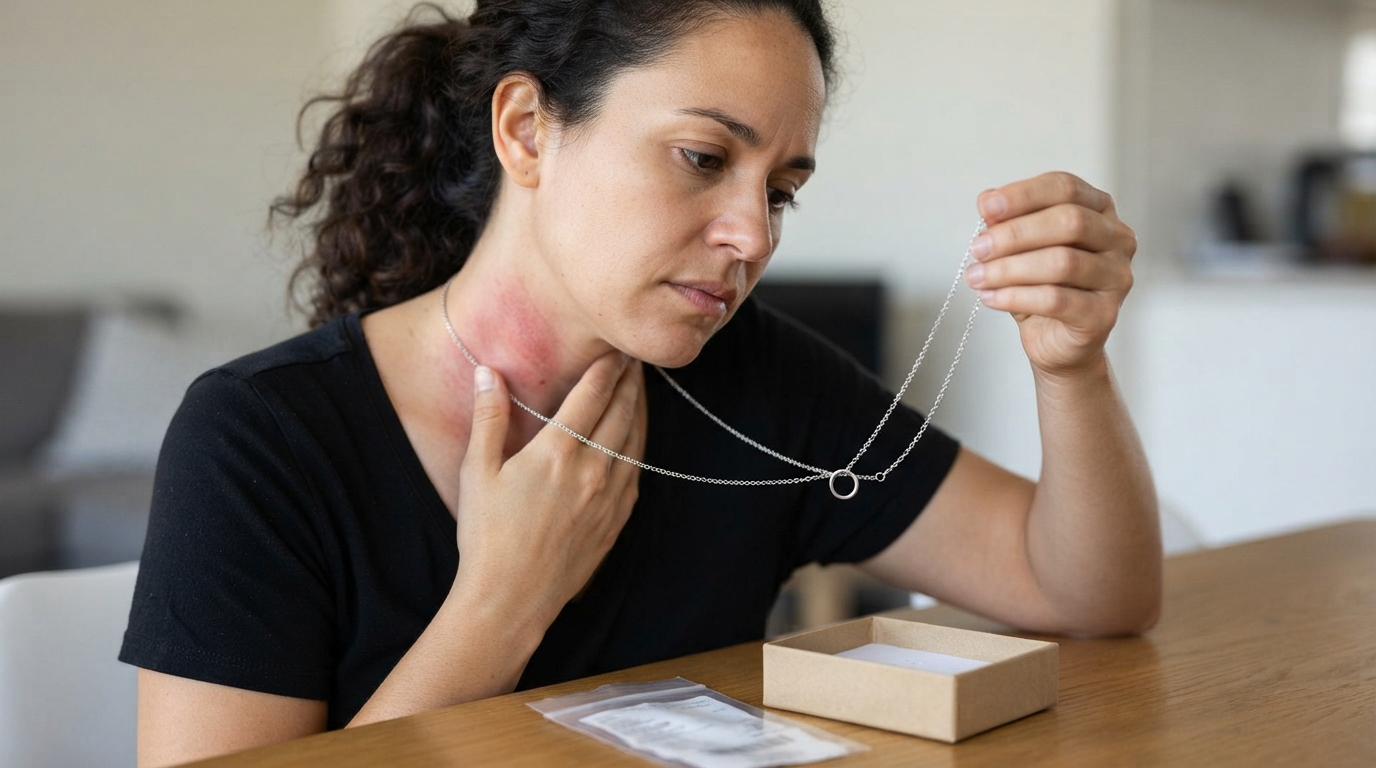
Meranda experienced skin irritation after purchasing a necklace sold as sterling silver
Jewellery promoted as sterling silver on major online marketplaces was found to contain toxic chemicals after a BBC investigation.
Experts examined 25 items bought from Amazon, eBay, Temu, Etsy and OnBuy.
Laboratory testing found that eight contained illegal amounts of cadmium, a chemical that can cause cancer. Only two items could be classified as sterling silver.
Amazon, eBay, Temu and OnBuy said misleading listings were banned and that they had removed the jewellery identified by Watchdog. Etsy did not reply.
Tempted by low-cost jewellery advertised as 925 or sterling silver? A Watchdog investigation into whether it is genuine found that some pieces contain toxic chemicals.
Meranda, 34, bought a necklace listed on Etsy as handmade sterling silver but says that after a few days of wearing it her "neck started getting really irritated".
"I remember looking at it as I took it off and thinking the colour on this doesn't look right."
Meranda's necklace, along with the 25 other pieces bought by Watchdog, was analysed by the Sheffield Assay Office.
Initial testing found that Meranda's necklace contained nickel, another toxic chemical that can cause skin irritation. There are strict legal limits on how much nickel jewellery may contain.
Watchdog bought five pieces of jewellery, described as 925 or sterling silver, from five online marketplaces for analysis.
Meranda's necklace was found to contain traces of nickel, but in one section of the chain the concentration was as high as 11%.
Sterling silver jewellery does not usually contain nickel, though it is found in some cheaper items.
Of the 25 pieces of jewellery bought by Watchdog - including items such as a bracelet for £1.55 and earrings for £1.99 - eight contained cadmium above the legal limit of 0.01%.
Some contained as much as 10% cadmium. "[That] is absolutely massive, relative to the limits we're adhering to," says Sophie Langley, who led the analysis.
Cadmium is a carcinogen linked especially to lung cancer, says Rob Chilcott, a retired professor of toxicology.
It is a danger to humans if inhaled or swallowed. For instance, if an earring falls into food that you then eat.
"If you put something containing cadmium in your mouth, or indeed if you swallow it, that is really bad news," he says.
Of the eight items that breached cadmium limits, three were bought from Amazon, three from Temu, and one each from OnBuy and Etsy.
Meranda says she had no reason to think anything was wrong with her necklace when she first got it.
"It was very shiny. It looked legit," she says. "I did not think it wasn't sterling silver."
It was stamped with the number 925. Genuine sterling silver must contain at least 92.5% silver.
But testing showed that part of her necklace contained only 8.9% silver.
Selling fake sterling silver breaches the Hallmarking Act and can lead to fines or imprisonment, says Langley.
Temu told the BBC it had arranged testing of similar products to identify possible risks.
Amazon and eBay said customers with any concerns should contact them for support. Amazon has since issued recall notices for the products Watchdog identified as unsafe.
OnBuy told us it had offered affected customers refunds and started a recall of the product our analysis found contained cadmium. Etsy did not respond.
Meranda contacted the Etsy seller about the £15 necklace that had irritated her neck. After speaking to Watchdog, she received a full refund.