

Israel's first embassy has opened in Slovenia. People took to the streets in protest in Ljubljana (video)
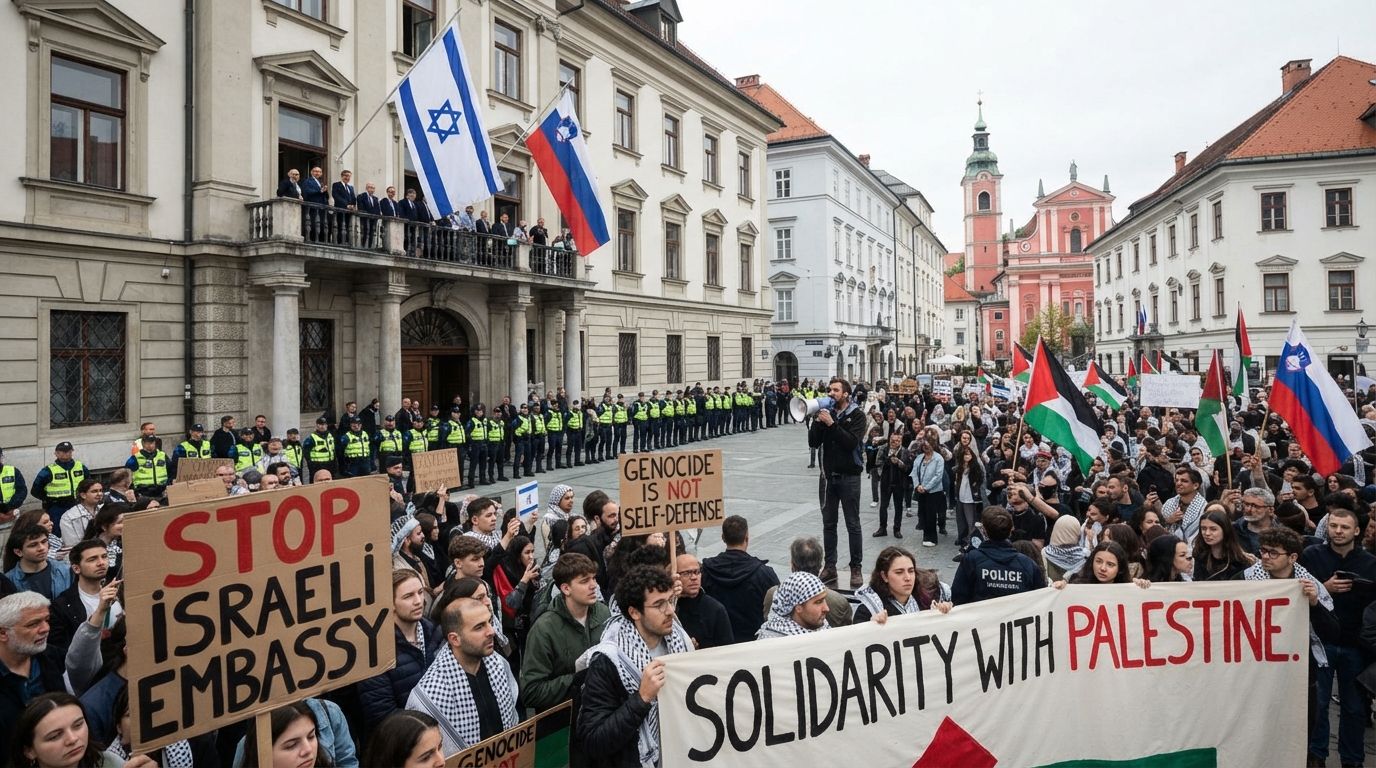
The first Israeli embassy has begun its operations in Slovenia. Meanwhile, people in Ljubljana took to the streets in protest (video)
On September 9, Israel's first embassy opened in Slovenia. In the capital, Ljubljana, thousands of people took to the streets to protest against this.
According to reports, the protest was directed against the nationalist Prime Minister Janez Janša's policy of restoring ties with Israel. This step was in stark contrast to the policy pursued by former Prime Minister Robert Golob. Golob's government had called Israel's war in Gaza a "genocide." Janša assumed office in July.
In Ljubljana, thousands of protesters also marched past the hotel where the embassy was being opened. They carried placards reading "We are for peace and stand with Palestine" and "Genocide is not self-defense."
Urška Breznik, a 48-year-old art historian, accused Janša's government of betrayal. Another protester, Melina Sahernik, told the AFP agency, "This event makes Slovenia look very bad."
According to a poll conducted by the Delo newspaper in June, 56 percent of Slovenians opposed closer ties with Israel. Only 14 percent supported it. Slovenian political analyst Andraž Zorko shared his views with the Associated Press. He stated that the shift in government policy does not align with the general views of the population of 2 million.
"The majority of the Slovenian public is either against Israel or holds a neutral position," he said.
On September 9, the liberal "Freedom Movement" led by former Prime Minister Golob and the "Left" party submitted a proposal to parliament. They are calling for the impeachment of Janša. The reason cited was the Prime Minister's foreign policy, which they claim serves only Israel's interests.
The parties also demanded the dismissal of Foreign Minister Tone Kajzer. They viewed the opening of the embassy as a reciprocal gesture for Israel's support of Janša in the March elections.
Under Golob's leadership, Slovenia had recognized the state of Palestine. Additionally, an arms embargo was imposed on Israel, imports of products from illegal Jewish settlements in the occupied West Bank were banned, and high-ranking Israeli officials, including Prime Minister Benjamin Netanyahu, were barred from entering the country.
As soon as Janša came to power, the Palestinian flag was removed from the Slovenian government building. Previously, this flag had stood alongside the flags of Slovenia, the European Union, and Ukraine. Soon after, his government lifted all restrictions against Israel.
According to a post by the Ministry of Foreign Affairs on the X network, Minister Kajzer spoke at the opening of the embassy. He said this event would mark the beginning of an era of dialogue and close cooperation.
Israeli Foreign Minister Gideon Sa'ar, who arrived in Slovenia to attend the event, called it a historic day at a press conference.
"This is a clear expression of Israel's commitment to our friendship and its future," Sa'ar said, thanking the Slovenian government and Janša for their friendship.
A day before the embassy's opening, the United Kingdom and 11 other countries banned trade with illegal Jewish settlements in the occupied West Bank. This indicates the growing international isolation of the Israeli government due to the war in Gaza. Israel responded sharply, announcing that it would close the British consulate in East Jerusalem.