

Iran trying harder to target US personnel in Middle East, intelligence chief warns
The warning comes as the US State Department makes adjustments to staffing at diplomatic posts in the region.
Iran stepping up efforts to target US personnel in Middle East, intelligence chief warns
Jay Clayton has warned of the "lethal plotting efforts by the Iranians against US citizens"
Iran has "substantially increased efforts to target US personnel" in the Middle East and elsewhere, the US director of national intelligence has warned in a memo seen by the BBC.
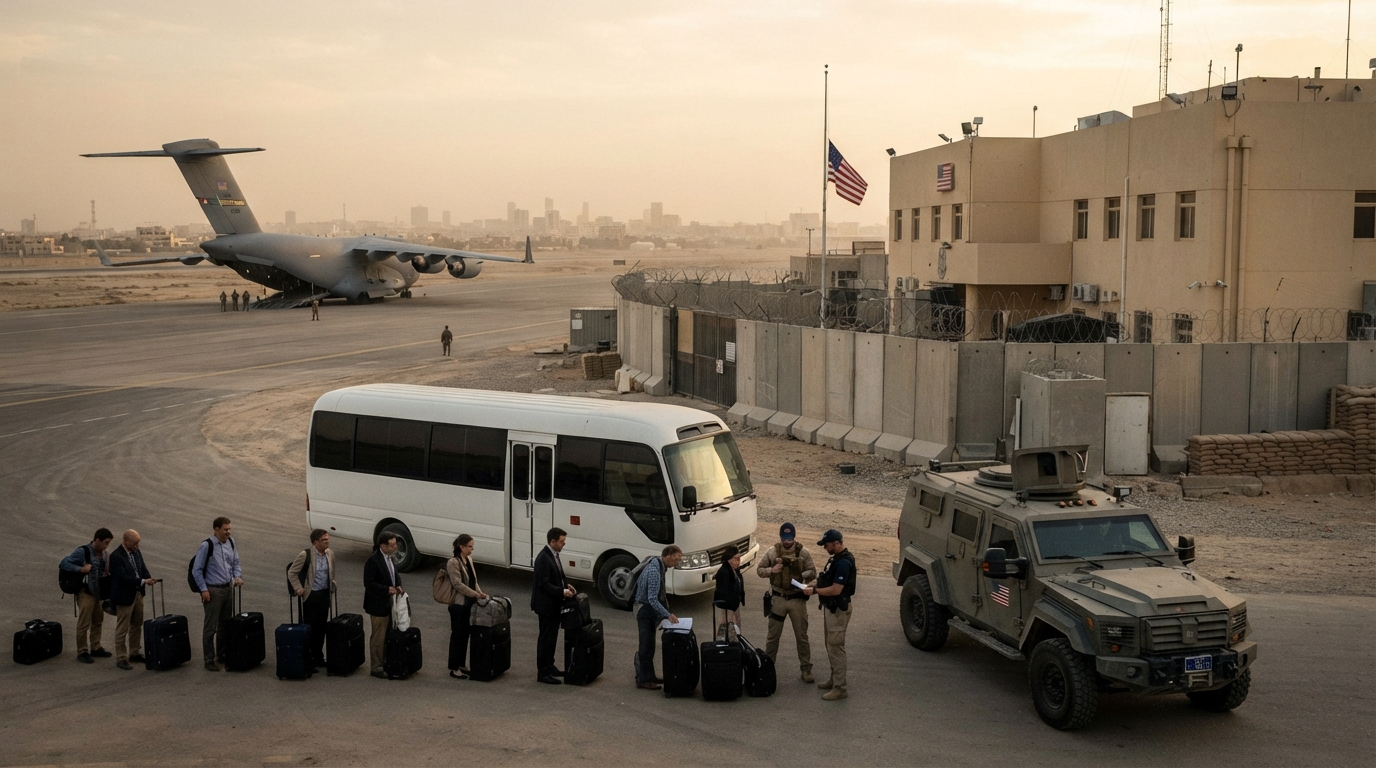
Clayton’s assessment comes as the US State Department is making staffing changes at diplomatic posts in the region, including the ordered departure earlier this week of non-emergency US embassy staff from Saudi Arabia.
That order was issued in response to a rise in attacks by Yemen’s Iran-backed Houthis against Saudi Arabia over the past month.
Clayton’s memo was marked unclassified and sent to US Secretary of State Marco Rubio on Friday.
It said: "The lethal plotting efforts by the Iranians against US citizens have reached advanced stages in both the Middle East and certain other countries."
Clayton said he was taking every possible step to downgrade as much intelligence as he could so Rubio could pass it on to US State Department personnel.
A US official told the BBC: "When it comes to our staffing at embassies, we constantly evaluate new information about the security environment.
"The threat of Houthi attacks and of Iranian terror plots targeting US officials are informing our decisions on staffing adjustments for embassies on [Restricted Operations] Status in the region."
According to Saudi authorities, at least 21 people have now been killed in Houthi attacks on Saudi airports since the beginning of October.
One missile strike on Riyadh’s international airport on 10 October killed 13 people and wounded 308 others — the deadliest attack in Saudi Arabia in more than a decade.
The Houthis say their attacks on Saudi Arabia are retaliation for what they describe as a Saudi blockade of ports and airports in their territory, as well as an air strike on Sanaa airport that they blame on the kingdom.
Yemen has been ravaged by a civil war that started in 2014, when the Houthis drove the government out of Sanaa. The conflict intensified in 2015 after the Saudi-led coalition intervened in an effort to restore the government’s rule.
A four-year informal ceasefire began to fall apart in July, when the Houthis announced a "maritime embargo" against Saudi Arabia and launched missile and drone attacks. Since then, about 155 civilians have been killed in Yemen, according to the Houthi-run health ministry.
This conflict has resurfaced against the backdrop of a broader war in the Middle East.
The US and Israel launched an air campaign against Iran in February, killing its leader and prompting the regime in Tehran to retaliate with strikes on US allies across the region and the effective closure of the Strait of Hormuz, through which around a fifth of the world’s oil and gas usually passes.
In June, the US and Iran reached a preliminary deal to end the war and reopen the strait, but it collapsed within weeks after Iranian attacks on shipping resumed and the US reinstated its blockade.
The situation in the Strait of Hormuz has driven oil prices higher, worsened by the Houthis’ "maritime embargo" against Saudi Arabia.