

US State Department orders some staff to leave Saudi Arabia as attacks escalate
The warning to US officials comes as at least three people die in the latest strikes at an airport and an oil field.
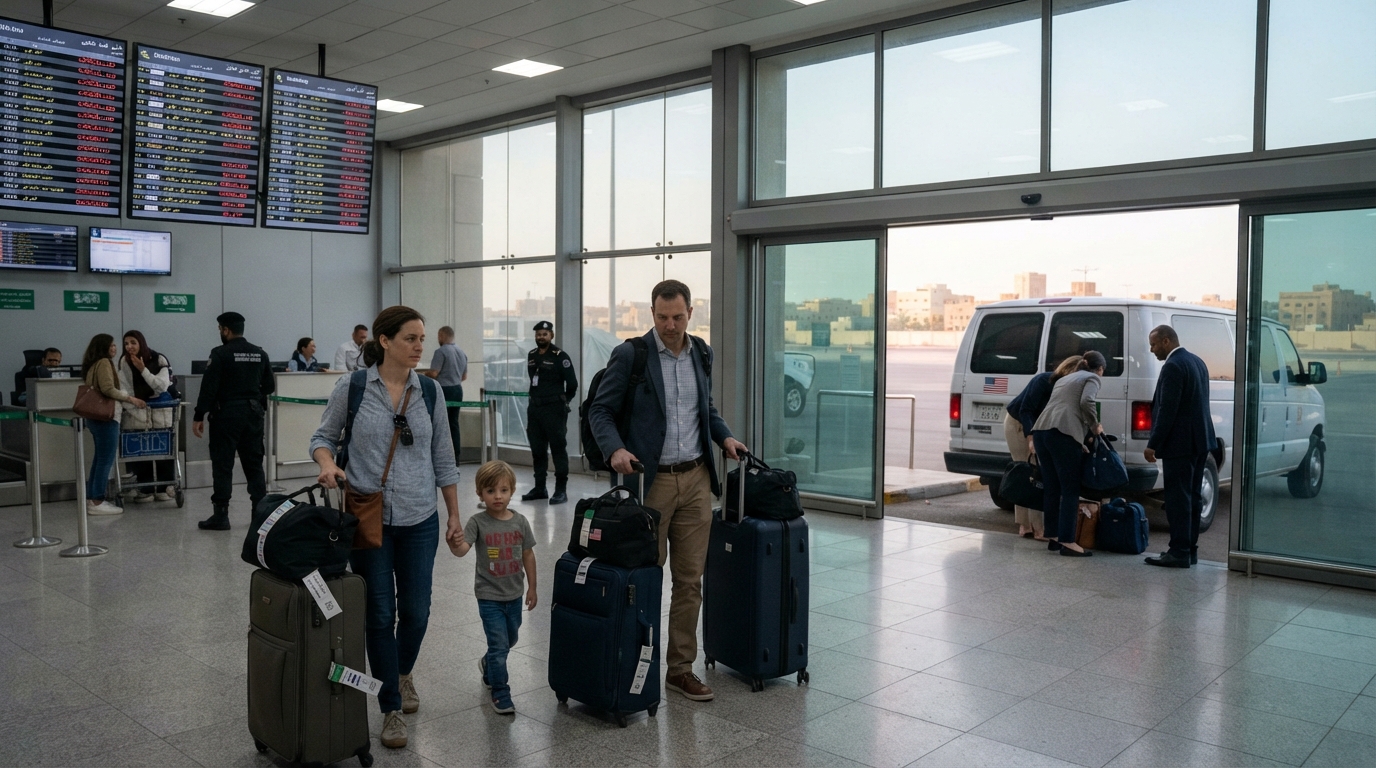
US State Department tells some personnel to depart Saudi Arabia as attacks intensify
Yemen’s Iran-backed Houthis also struck the airport in Saudi Arabia’s capital, Riyadh, earlier this month
The US State Department has instructed some diplomats and their families to leave Saudi Arabia as attacks intensify, after three people were killed in strikes across the country.
Saudi officials said debris from a drone intercepted during an attempted attack on an oil field killed two people, while another person died following a strike at King Fahd International Airport in Dammam.
The conflict between Yemen’s Iran-backed Houthis and Saudi Arabia has escalated over the past month.
In response to Saudi strikes, the Houthis have launched missiles and drones at airports, energy facilities and military bases in Saudi Arabia. A recent attack on Riyadh’s international airport was the deadliest in the kingdom in years.
“The US Department of State issued an ordered departure for non-emergency US government employees and their family members in Saudi Arabia,” a State Department spokesperson said in a statement.
“Iranian-supported Houthis have increasingly engaged in hostilities against Saudi Arabia, including attacks on civilian airports and other critical infrastructure resulting in civilian casualties and severe travel disruptions,” it added.
The spokesperson also warned that “the hostilities have the potential to escalate rapidly”.
Officials said eight people were injured in the latest attack on King Fahd International Airport, with wounds ranging from “minor to serious”.
No details of the attack have been released yet, but the strike follows repeated Houthi attacks on airports in Saudi Arabia.
The energy ministry has also not said who launched the drone aimed at the Shaybah oil field near the border with the United Arab Emirates, which left two people injured.
Yemen has been ravaged by a civil war that began when the Houthis ousted the government from the capital, Sanaa, in 2014. Fighting escalated in 2015 after a Saudi-led military coalition tried to restore the government’s rule.
An informal ceasefire had held for the past four years, but it collapsed in July after the Houthis announced a “maritime embargo” against Saudi Arabia and began missile and drone attacks on Saudi airports, oil facilities and tankers in the Red Sea.
The Houthis said they were retaliating for what they described as a Saudi blockade of their territory, as well as an air strike on Sanaa airport that they blamed on the kingdom.
The group’s “maritime embargo” in the Bab al-Mandab Strait along Yemen’s south-western coast has helped drive up global oil prices because Saudi Arabia had been relying on the Red Sea for oil exports since the US and Israel’s war with Iran effectively closed the Strait of Hormuz in the Gulf.