

Indian and Pakistani warships collided
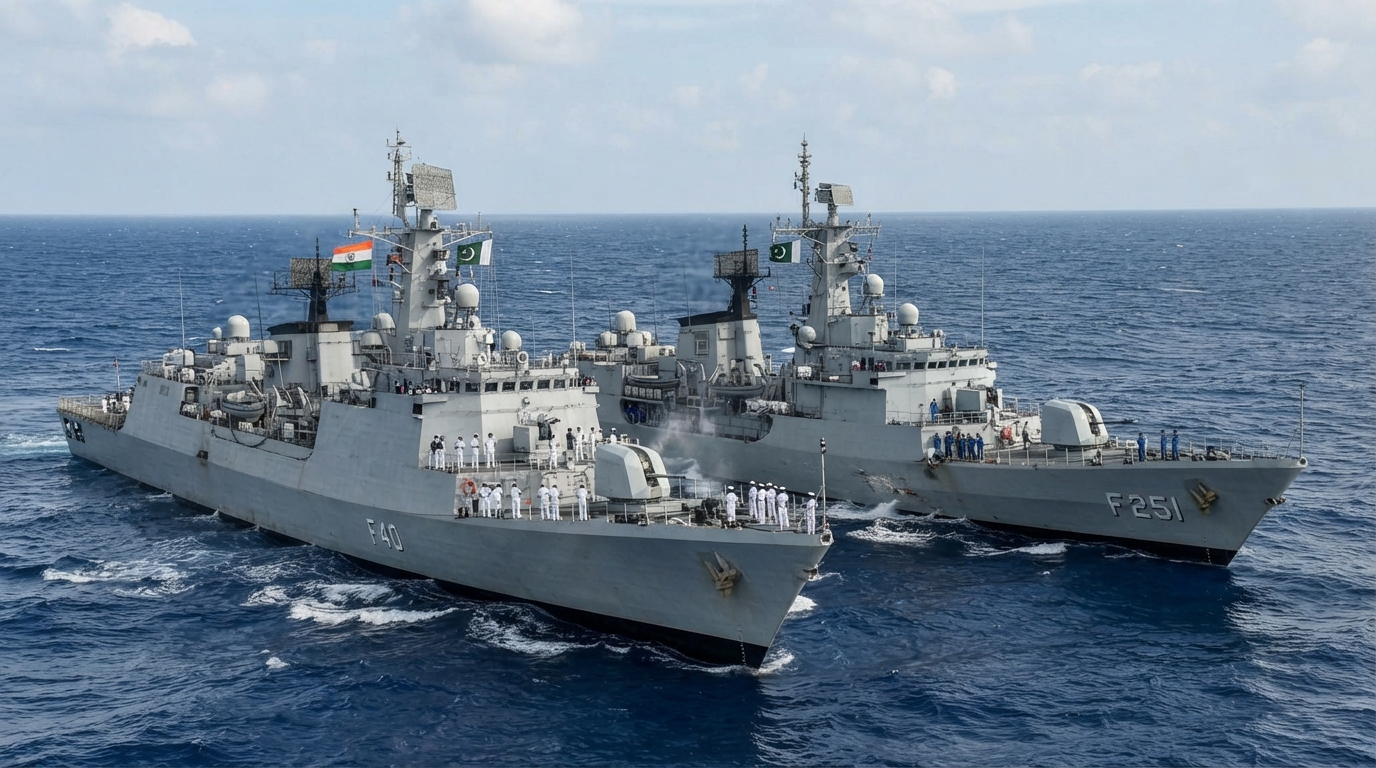
**Indian and Pakistani warships collide at sea**
Indian and Pakistani warships have collided with each other at sea. Following the incident, New Delhi summoned Pakistan's top diplomat in the country.
The summoning of the diplomat was explained by the unacceptable and unprofessional behavior of the Pakistani Navy. Through this, a formal protest was lodged with the Pakistani government.
This is the first open military tension between the two nuclear-armed neighbors since the four-day military clash in 2025. The collision of the ships took place in international waters.
According to Indian sources, on September 15, in the northern part of the Arabian Sea, a Pakistani warship approached an Indian vessel performing a routine surveillance mission at high speed, resulting in a collision.
"The impact did not cause any serious damage. However, Pakistan's action is in direct violation of the 1991 agreement regulating military exercises, maneuvers, and troop movements between the two countries," the Indian Ministry of External Affairs said in a statement.
According to the agreement, warships and submarines of both countries must maintain a distance of at least three nautical miles (5.5 kilometers) from each other in international waters to prevent untoward incidents. The Pakistani government and military did not immediately comment on the situation.
India, through the summoned diplomat, emphasized to the Pakistani side the need to adhere to bilateral agreements to prevent such incidents from recurring. Additionally, India's diplomat in Islamabad was instructed to lodge a similar protest with the Pakistani Ministry of Foreign Affairs.
India and Pakistan do not have ambassadors in each other's capitals. The level of diplomatic relations was downgraded due to the Kashmir conflict in 2019. Since then, diplomatic missions have been headed by chargés d'affaires.
**The last clash between the two countries**
In April 2025, relations between the countries deteriorated following a terrorist attack near the town of Pahalgam in India's Jammu and Kashmir region. At that time, militants from "The Resistance Front" attacked tourists, causing the deaths of 26 people. India blamed Pakistan for the attack, while official Islamabad denied the accusation, stating it had no involvement in the attack. During the tension, India suspended the crucial 1960 water treaty with Pakistan and closed the only land border crossing.
On May 6, India launched Operation "Sindhur," launching missile strikes on Punjab and the Pakistani-administered part of Kashmir. Pakistan retaliated and on May 10 attacked Indian bases, airfields, and missile depots. The corresponding operation was named "Bunyan-ul-Marsus." The peak of the conflict, according to various sources, was an aerial battle involving up to 125 fighter jets.
On May 10, the parties agreed to a ceasefire mediated by the US. At the end of the 88-hour conflict, India reported that more than 100 militants had been eliminated, and 5 military personnel and 16 civilians had been killed. Pakistan, meanwhile, announced that 13 military personnel and 40 civilians, including women and children, had been killed, and 78 military personnel were wounded.