

In the construction sector, 1.65 thousand violations and 1.1 thousand unauthorized buildings and structures have been identified
Appropriate measures were taken regarding these cases, and administrative measures were applied in 624 cases, with the total amount of fines reaching 68.6 billion soums.
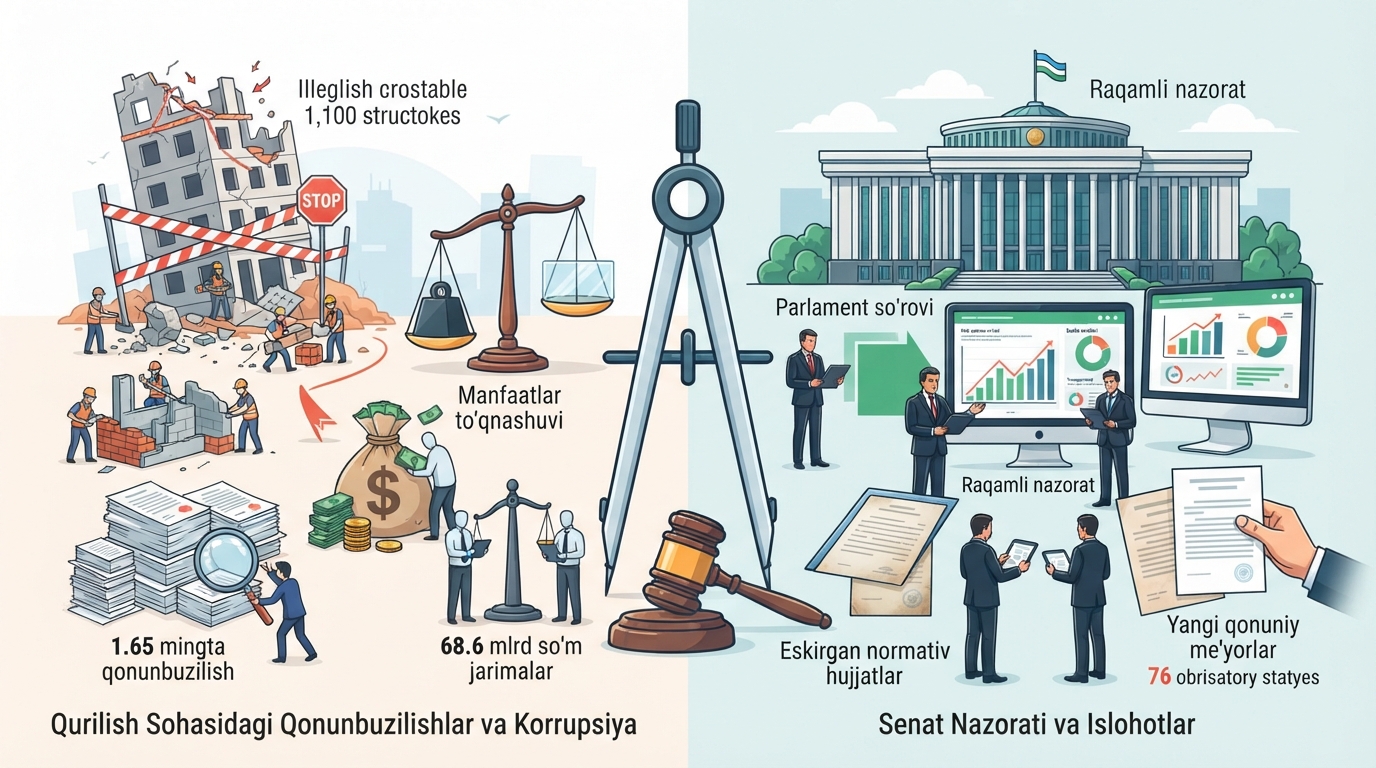
In the construction sector, 1.65 thousand violations and 1.1 thousand unauthorized buildings and structures were identified
At the 20th plenary session of the Senate, the results of the parliamentary inquiry sent regarding the prevention of corruption and conflicts of interest in the construction sector were discussed.
Within the framework of the parliamentary inquiry, the work being carried out in the system of the Ministry of Construction and Housing and Communal Economy on assessing corruption risks, managing conflicts of interest, ensuring transparency of public procurement, strengthening state architectural control, and digitalizing the sector was studied.
In particular, according to the results of the functional assessment of corruption risks, 95 low, 10 medium, and 1 high-risk areas were identified. In addition, during state architectural control activities, 1.65 thousand violations and 1.1 thousand unauthorized buildings and structures were identified. Appropriate measures were taken regarding these cases, with administrative measures applied in 624 cases, and the total amount of fines amounted to 68.6 billion soums.
In the field of public procurement, through the use of the "Remote Audit" mechanism, violations were prevented in a tender worth 3 billion soums, and materials on violations worth 869.5 million soums were sent to law enforcement agencies.
At the meeting, special emphasis was also placed on the issue of regulatory requirements being clear and understandable in reducing corruption risks in the construction sector. The Ministry revised 105 outdated regulatory and technical documents, and the mandatory status of 76 documents was canceled, moving them to the advisory category for reference.
At the end of the discussion, the Ministry was tasked with regularly reassessing corruption risks, strengthening control mechanisms in high-risk areas, analyzing the truthfulness and completeness of declarations on conflicts of interest, ensuring transparency in public procurement, eliminating the systemic causes of violations identified in architectural control, and increasing the efficiency of digital control mechanisms.