

IATA named priorities for aviation industry digitalization in Macau
At the IATA symposia in Macao, participants discussed how digital technologies, biometrics, and AI can enhance the financial resilience of airlines.
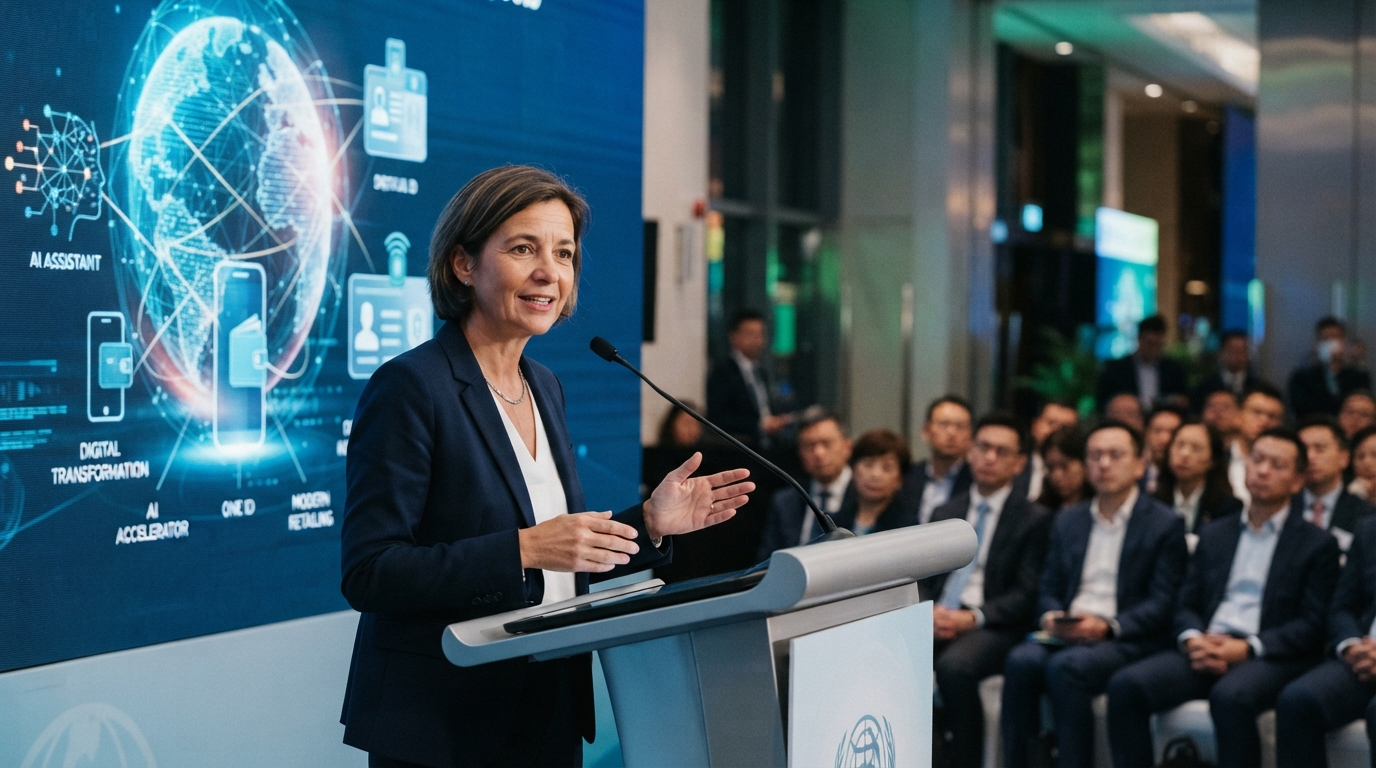
IATA Outlines Digitalization Priorities for the Aviation Industry in Macau
The International Air Transport Association (IATA) has called on the industry to transform the successes of digitalization in air ticketing, payments, and digital identification into tangible benefits for passengers and financial sustainability for airlines.
Sandrine Le Borgne, IATA's Acting Director General, Chief Financial Officer, and Senior Vice President for Corporate Services, stated this on October 28 while speaking at the opening of the IATA World Financial Symposium and World Passenger Symposium in Macau.
"Today, a traveler can plan a trip using AI, pay for it with a digital wallet, and use biometrics to move through the airport faster. The task now is to realize the value these innovations can create," Le Borgne said.
According to her, 2026 has been a year of strong volatility. Conflicts have led to the closure of parts of airspace and disrupted many routes, jet fuel prices have more than doubled year-on-year, and aerospace supply chains have still not recovered.
Airlines carry more than 5 billion passengers a year, but in 2026, they are projected to earn just $4.50 per passenger. The net margin will be around 2%. "A slight increase in costs or a fall in demand could turn profits into losses," Le Borgne noted.
AI assistants and automated agents are changing how travelers search for and compare offers. According to IATA estimates, this creates both opportunities and risks for airlines. It is important for carriers to prepare for these changes while maintaining control over their data, commercial relationships, and information quality.
IATA assigns a key role in adapting to the changing market to the transition to the Modern Airline Retailing model with the Offers and Orders system. Seven airlines are already using or deploying the Orders system, with more than 20 expected to join them starting in 2027. IT companies have directed over $1.7 billion toward the development of Offers and Orders. "Offers and Orders are the foundation; AI is the accelerator," Le Borgne stated.
In IATA's view, financial issues must be considered from the very beginning of digital transformation. Airlines spend more than $24.5 billion a year on payment processing. New payment methods expand customer choice, but they affect costs, cash flows, and risks. When transitioning to Offers and Orders, reconciliation, settlement, and revenue accounting need to be built into the process from the start, so as to eliminate complexity rather than simply digitalize it.
Biometrics is increasingly becoming a part of routine travel. However, many solutions only work in individual airports or countries, meaning their full potential is not being realized. The industry solution is the One ID concept, where a passenger verifies their identity once and is recognized at all stages of the trip. Le Borgne announced that Hong Kong International Airport and Air New Zealand were the first to achieve One ID certification.
Standards for secure digital passports already exist: ICAO has developed Digital Travel Authorization specifications. According to IATA data, more than eight out of ten passengers would like to use a digital passport when checking in for a flight. "Airlines cannot issue passports. Only governments can do that," Le Borgne emphasized. According to her, digital passports will transform international travel only when states are ready to issue and recognize them.
The symposia are taking place in North Asia for the first time. IATA noted that Chinese airlines carried a record 770 million passengers in 2025, and the market retains significant growth potential. "China's leadership is defined not only by scale. The country is also at the forefront of digital innovation," Le Borgne said. She urged maintaining unified global standards and evolving them as technology develops.