

IATA: almost 60% of passengers have already used biometrics
IATA survey: 58% of passengers used biometrics, 49% used AI when planning trips, and 43% refrained from traveling due to entry requirements.
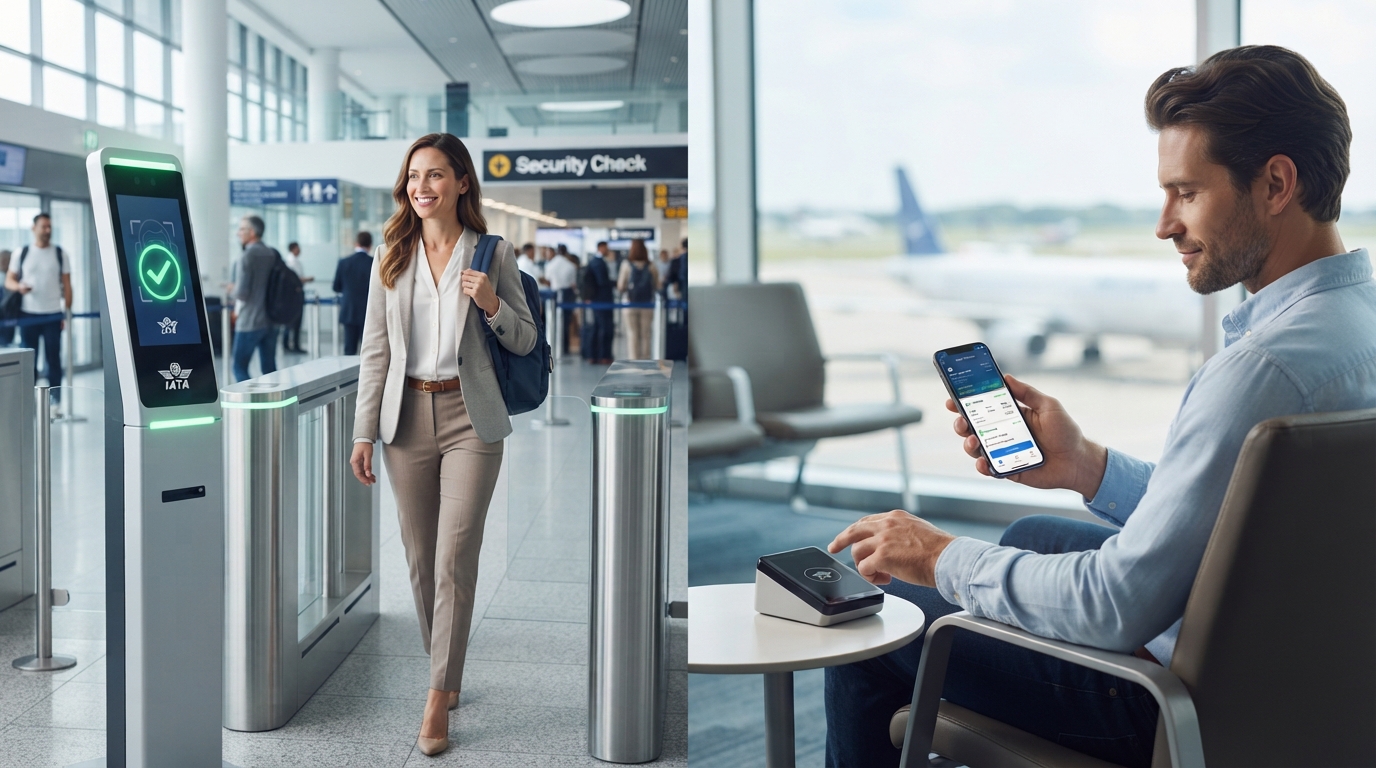
IATA: Almost 60% of Passengers Have Already Used Biometrics
58% of air passengers have undergone biometric identification at an airport at least once over the past 12 months.
A year earlier, this figure stood at 50%, and in 2022 it was 34%. These data are contained in the 2026 Global Passenger Survey (GPS), the results of which were published on October 28 by the International Air Transport Association in Macau.
The survey covered more than 10,000 respondents from over 200 countries. According to IATA, it highlights three key trends. Biometrics is becoming mainstream, and interest in digital passports is growing. Artificial intelligence is changing the way people plan their trips. Entry requirements are increasingly turning into a travel obstacle.
"Passengers are using technology to simplify travel. AI is becoming a mainstream planning tool, while biometrics and digital identity are making the airport experience faster. However, many travelers still face barriers due to complex immigration and visa procedures," said Nick Careen, IATA Senior Vice President for Operations, Safety and Security.
The overall level of satisfaction with air travel reached a record 87%, compared to 86% in 2025. In 2019, this indicator was 75%. Passengers are least satisfied with baggage collection and border control. Satisfaction at these stages stands at 72% and 70%, respectively, with the share of dissatisfied passengers at 11% and 12%.
Among those who underwent biometric identification, 87% are satisfied with the experience. 78% are willing to provide biometric data if it allows them not to show their passport and boarding pass at checkpoints. Of these, 75% would prefer to register once in advance so that they are automatically recognized at all stages.
Biometrics is most frequently applied during security screening: this figure rose from 44% to 48%. Usage during flight check-in increased from 29% to 35%. 40% of passengers underwent biometrics at departure border control, 33% at arrival border control, 28% during boarding, 13% at bag drop, and 7% in business lounges.
Passengers' main concerns relate to data leaks (59%), sharing information with other organizations (49%), and a lack of clarity on how personal data is used (41%). 24% do not know how long their data will be stored, and 20% do not know how to get it deleted.
84% of passengers are interested in using a digital passport during online check-in instead of a physical document. 82% are ready to share a digital passport with an airline when booking if it allows them to receive personalized services, such as information on visa requirements. The same proportion would like to use a smartphone that combines a digital wallet, a digital passport, and loyalty cards.
"For biometrics to become the norm in international travel, governments must harmonize the issuance and recognition of secure digital passports," Careen noted.
Almost half of passengers (49%) have already used AI when planning trips. 21% used it to search for flights to a specific destination, 19% for the cheapest tickets, and 17% for travel ideas. 16% looked for the best place to book, and 13% for flights within a budget. "It is important for airlines not only to ensure their offers are present in AI services, but also to create convenient ways to turn an AI conversation into an actual booking," Careen said.
Immigration requirements deterred 43% of passengers from traveling to a specific country, up from 33% a year earlier. Among them, 53% cited the complexity of procedures as the main reason, with privacy issues and cost cited by 17% each. 59% of respondents refrained from travel due to geopolitical issues and conflicts. For 72% of them, the main reason was safety, for 13% it was uncertainty over whether the trip was possible, and for 10% it was rising costs.
86% of passengers are willing to submit immigration data electronically in advance (83% in 2025). 45% would prefer to complete immigration procedures before arriving at the airport (41% a year earlier). 60% want to apply for visas online, while 25% prefer doing so in person at a consulate or embassy. "More than 100 countries issue electronic visas, but there is almost no unified approach to verifying them. Tools to solve this problem already exist, and governments should implement them," Careen stated.
The highest level of travel satisfaction is among passengers from the Asia-Pacific region and the Middle East (90% each). They are followed by Africa (89%), North America and Latin America (85% each), and Europe (84%). In Latin America, satisfaction grew the most—by 5 percentage points.
Passengers from the Middle East are more likely than others to use AI when planning trips (72%). They are the most willing to use biometrics (84%) and digital passports during check-in (91%) and booking (88%). Europeans are the most cautious: 35% of them used AI, and 47% used biometrics. The willingness to use biometrics in Europe is 70%, and 79% for digital passports during online check-in.
Biometric usage is highest in North America (63%), but concerns over data leaks are also strongest there (64%). The Asia-Pacific region has the highest proportion of passengers using electronic bag tags (56%, compared to an average of 42%). Africans were the most likely to forgo trips due to entry requirements (52%). The complexity and cost of visas were the reason for 84% of them.
Among passengers aged 26–40, 70% used AI when planning trips, compared to an average of 49%. In this group, 61% used biometrics, and 52% used electronic bag tags.