

"I paid for 3.5 years and am still in debt." Why are people sinking into debt?
Borrowing in Uzbekistan is extremely expensive. Despite this, over the last 6 years, the balance of loans of individuals in banks has increased 6 times, reaching 20 billion dollars. The issue of financial discipline has become more urgent than ever, and more and more people are finding themselves in a difficult situation. What is the reason for this?
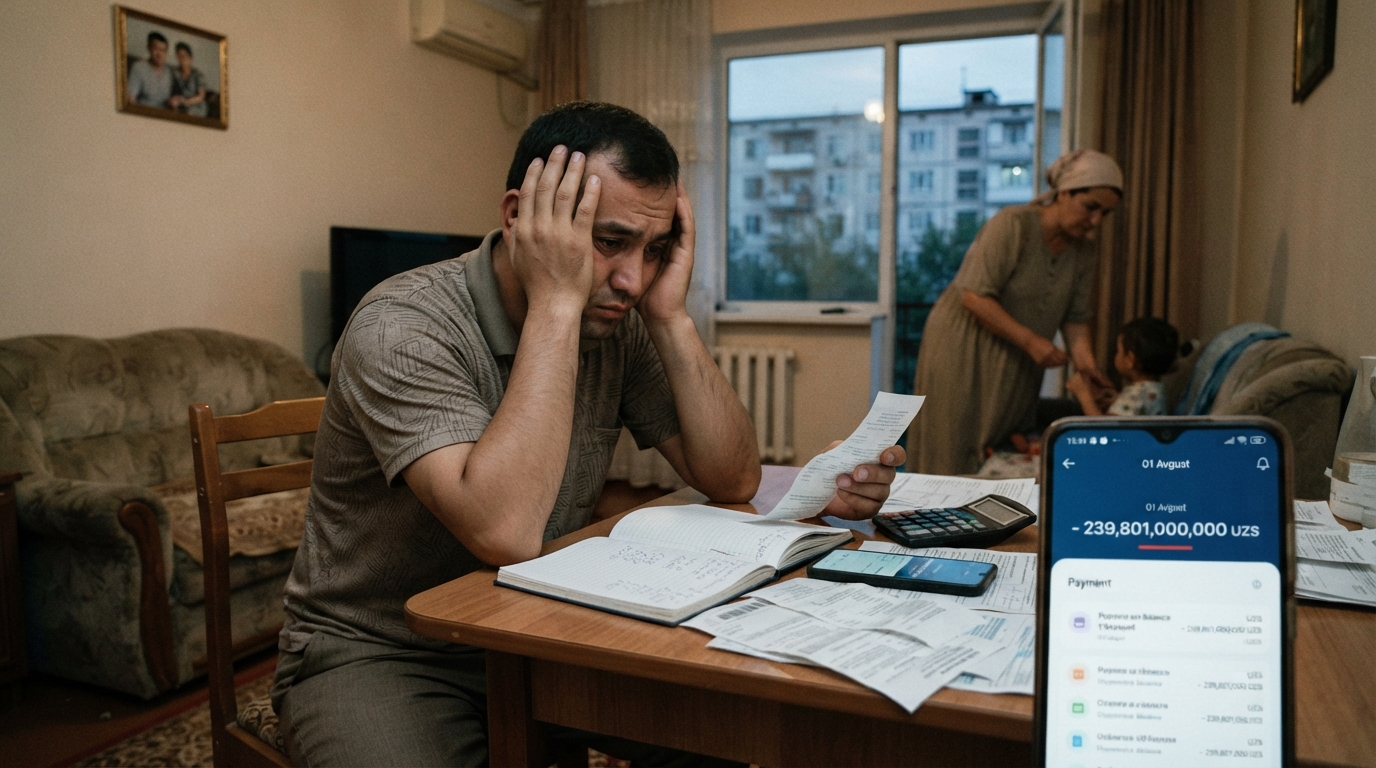
"I paid for 3.5 years, and I am still in debt." Why are people sinking into debt?
Today, it can be said without exaggeration that buying products on credit or installment plans has become an inseparable part of the daily life of Uzbeks. People are borrowing from banks or other financial organizations for various needs, ranging from the simplest household appliances to purchasing cars and housing. Living on credit has already become a "new norm" in society to some extent.
The process of borrowing has also become much easier than before. Just pressing two buttons in a bank application on a smartphone screen, scanning the face, and confirming with an SMS code is enough — within a few minutes, the required amount is credited to your card. This convenience quickly attracts human psychology and seems like the fastest solution to financial needs. What is the actual situation?
How much debt do Uzbeks have?
As of August 1, 2026, the total balance of credits allocated to individuals by banks amounts to 239 trillion 801 billion soums, which is nearly 20 billion dollars.
This figure is 18.8 percent higher compared to a year ago.
Statistical data shows that the debt balance has been growing very rapidly in recent years. For example, as of January 1, 2020, the credit balance of individuals was 39 trillion 934 billion soums. By now, this amount has increased 6 times.
According to the analysis of the last 6-year period, the period when the population's credits increased sharply falls in 2023. In that year, the debt balance increased by 48 trillion soums or 47 percent.
As of August 1, individuals borrowed mainly for the following purposes:
Looking at the numbers, microcredits and microloans make up more than 40 percent of the population's total debt portfolio. The interest rates on these types of loans are high, and they often consist of credits that do not turn into specific real assets. The share of car loans is also quite large — 17 percent. According to classic financial rules, a car is considered a depreciating asset. The allocation of more than 40 trillion soums to car loans means that purchasing power is maintained through long-term debt, but people's fundamental wealth is not increasing.