

Hundreds of thousands of people took to the streets in European countries to protest the rising cost of living
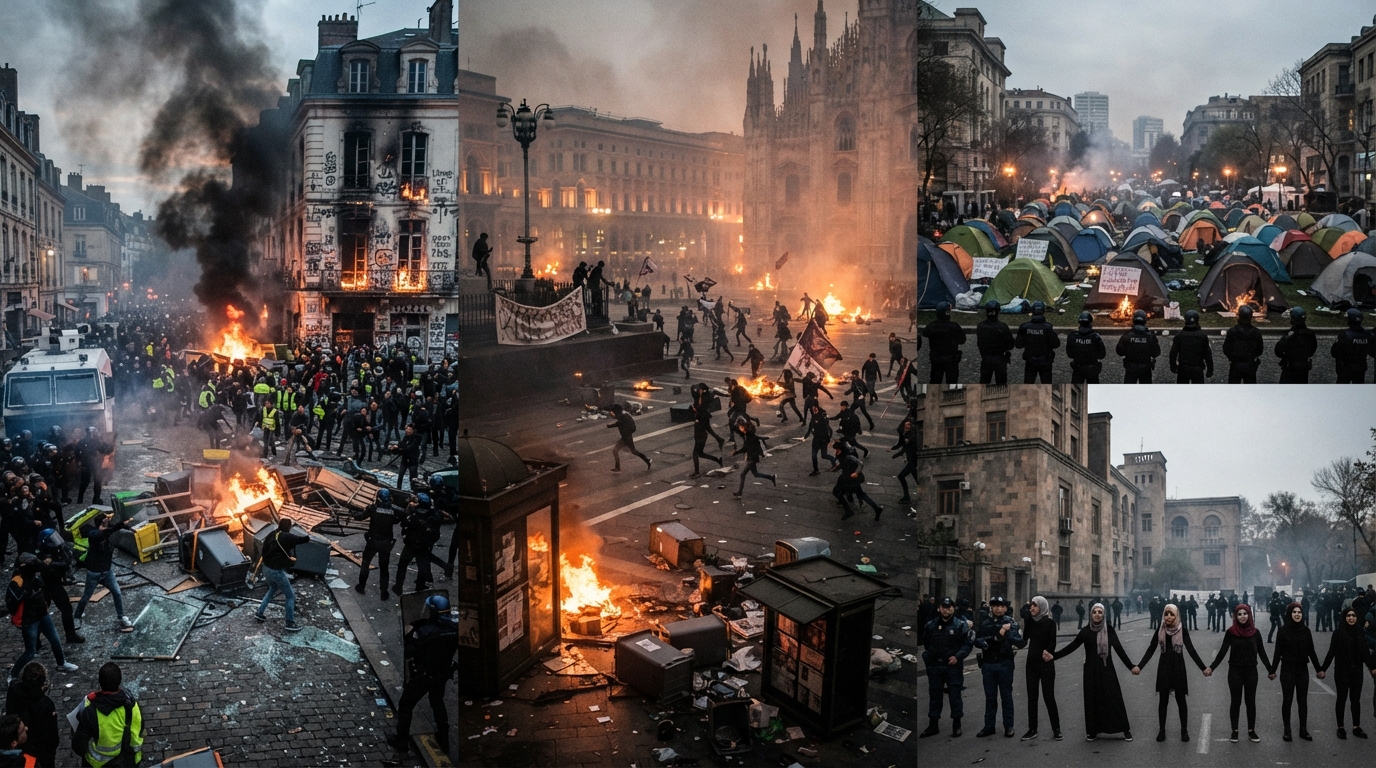
Hundreds of thousands of people took to the streets in European countries amid the rising cost of living
In recent days, mass protest actions have taken place in several European states at once, accompanied by clashes with the police, rioting, and hundreds of arrests. The reasons for the demonstrations were the rising cost of living, cuts to social spending, corruption scandals, and demands related to school uniforms.
In France, the demonstrations started back in late September with actions by schoolchildren protesting against the shortage of teachers and the poor condition of educational institutions; however, they were later joined by students, trade unions, farmers, and eco-activists dissatisfied with rising prices and underfunding of public services. Last weekend, hundreds of thousands of people took to the streets, and the protests escalated into riots with shop looting and arson of buildings, during which the city hall burned down in Limoges. Security forces detained more than 2,000 people, a curfew is being introduced in a number of regions, and President Emmanuel Macron refused to accept the resignation tender of Minister of the Interior Laurent Nuñez.
The French events triggered youth demonstrations in neighboring Belgium, where students joined the multi-week trade union strikes against budget cuts and tax reforms, protesting against the rising cost of higher education.
In Brussels and Liège, the demonstrations escalated into clashes with the police on October 17, and about 150 people were detained in the Belgian capital.
Similar socio-economic demands were put forward by participants of the decentralized "Italia in Piazza" movement in Italy, who organized actions through social networks.
In Milan, Turin, and Bologna, protests against the high financial burden ended in riots, smashed shop windows, and trash cans set on fire in Piazza del Duomo, leading to the detention of several hundred activists and injuries to more than 140 police officers.
In Portugal, the city of Porto became the center of protests against the rising cost of living and the new rent law, where dozens of people were injured on October 15 when police attempted to prevent the setup of a tent camp.
The harsh actions of the security forces caused a public outcry, after which peaceful tent cities appeared over the weekend in Lisbon, Coimbra, Faro, and other cities across the country. Meanwhile, in the Albanian capital of Tirana, peaceful actions lasting more than four months against corruption and the construction of a luxury resort by Jared Kushner's entities in a protected area escalated into fierce clashes. Demonstrators demanding the resignation of Prime Minister Edi Rama explained the shift to violence by the authorities' disregard for their position; following the clashes, more than 500 people were detained and about 120 law enforcement officers were injured, while the head of the cabinet refused to resign and accused Russia and Iran of interference.
In Azerbaijan, protest activity flared up around educational institutions in Baku and the regions after schoolgirls in hijabs were no longer allowed to attend classes amid the entry into force of the Cabinet of Ministers' September Decree No. 309 on a unified school uniform. Although the document does not directly ban religious headwear and does not provide for suspension from classes, in practice the restrictions affected both female students and teachers in Baku and Sumqayit, who were asked to remove their headscarves or resign after the approval of new rules on October 6.
As a sign of solidarity, classmates began boycotting lessons, and on October 3 a protest action took place outside the republic's consulate in Istanbul. The authorities explain the measures by the secular nature of education, and on October 12, the country's Ministry of Internal Affairs reported the detention of 37 people and the initiation of a criminal case on public order violations due to conflicts with school staff, property damage, and road blockades.