

How much gas could Jackdaw provide? And will it cut your energy bills?
BBC Verify looks at what the Jackdaw decision means for bills, energy security and the environment.
How much gas could Jackdaw supply? And will it reduce your energy bills?
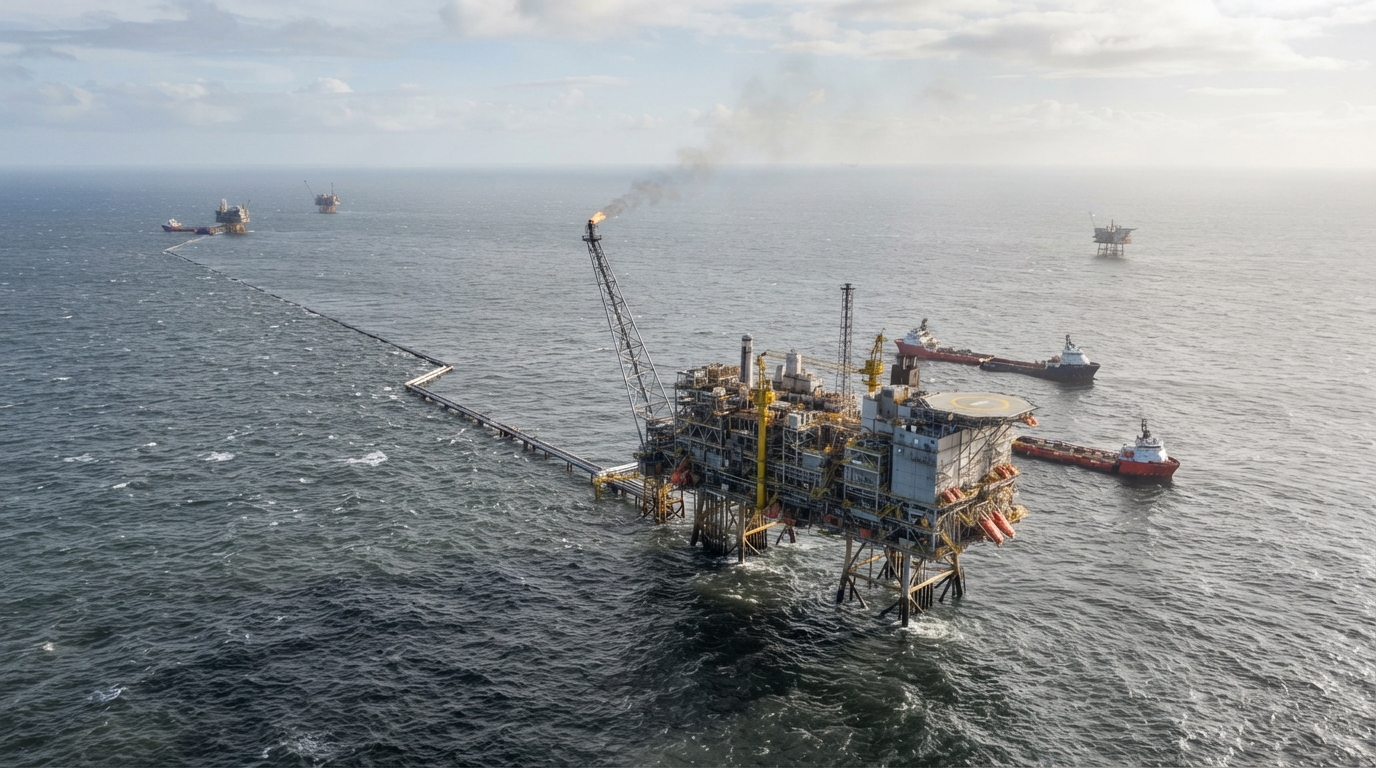
The government has given the green light to drilling at the Jackdaw gas field in the North Sea.
The ruling — following years of argument and legal disputes — will clear the way for gas to be taken from the field and fed into Britain’s gas network within weeks.
BBC Verify has examined what this could mean for energy bills, energy security and the environment.
Jackdaw is a gas field 150 miles (241.4km) east of Aberdeen. It is owned by Adura Energy, which is itself jointly owned by the energy firms Shell and Equinor.
The site’s owners, which first received approval four years ago but then faced legal delays until now, estimate that Jackdaw contains about 10 million cubic metres of recoverable gas.
, external for the amount of gas the UK will need over the next decade, that indicates Jackdaw could cover about 1.6% of total forecast national gas demand between 2026 and 2036.
Operators say it could be linked to the Great British gas network within weeks and could keep producing gas for the next 11 years.
About half of the UK’s natural gas comes from its current North Sea gas fields and is sent ashore through pipelines.
Of that, most comes from Norway’s North Sea gas fields through separate pipelines.
But a larger proportion of the UK’s gas imports now arrives as Liquefied Natural Gas (LNG) than did 20 years ago.
This is natural gas that is extracted, converted into liquid, and then shipped to the purchasing country, where it is turned back into gas to be used as an energy source.
And the UK is increasingly dependent on LNG shipments from the US, which made up a quarter of all natural gas imports in 2025.
Energy Secretary Miatta Fahnbulleh has said Jackdaw gas "won't lower energy bills this winter".
And most energy analysts do not expect the extra gas output from Jackdaw to have a major, direct effect on households’ energy bills either.
That is because of how natural gas markets operate. Great Britain is tied into broader European gas markets and physically connected to the continent by undersea pipelines.
Gas prices for British households and businesses are effectively determined at a pan-European level and by the price customers across Europe are willing to pay for energy.
People across the continent have seen their energy bills rise sharply in recent years, driven by the wars in Ukraine and Iran affecting gas and oil supplies.
But the extra gas entering the UK system from Jackdaw will still be relatively modest, and unlikely to significantly shift the European price paid by British firms and households.
"Essentially, producing more British energy doesn't necessarily mean cheaper British energy," Karl Matikonis, professor of taxation at University College Dublin, told BBC Verify.
"North Sea oil and gas are sold at market prices rather than reserved for British consumers at a discount."
However, the extra gas production from Jackdaw could bring in more corporation tax revenue for the UK government, because any profits made by the owner would be taxable.
, the government said it was creating a new energy wealth fund, using tax revenues from North Sea oil and gas to invest in green energy projects. It said this would "help get bills down for good in the long term" by reducing the UK’s dependence on gas for electricity generation.
However, both plans depend on the future profits of Jackdaw’s owner, which cannot be predicted with certainty.
Prime Minister Andy Burnham said opening the gas field would "protect hundreds of jobs" and the move has been welcomed by unions.
One of the main arguments in favour of developing Jackdaw is that it would strengthen the UK’s national energy security.
Energy experts hold differing views on this.
However, others are unconvinced that Jackdaw would make a major difference to national energy security because the UK would still be heavily dependent on natural gas imports even once the field is operating.
The environmental impact of Jackdaw has also been a major source of dispute. Supporters say the gas field would be beneficial because the carbon emissions from production in the UK’s own North Sea field would be lower than those from producing US LNG.
The North Sea Transition Authority (NSTA), which regulates the sector, has estimated that emissions from the production, delivery and processing of US LNG are around three times higher than those from producing North Sea natural gas.
That is because the process of liquefying LNG, shipping it and then converting it back into natural gas on arrival is extremely energy-intensive compared with pumping it ashore through a pipeline, resulting in higher carbon emissions.
However, the NSTA estimates that Norwegian North Sea gas production — which Britain already imports in large volumes by pipeline — has a much lower average emissions impact than the UK’s existing North Sea gas production.
That is because UK North Sea gas mostly comes from smaller fields and is extracted using older infrastructure and technology than Norway’s.
Jackdaw’s owner estimates that the emissions intensity
, external of its production would be lower than that of older UK North Sea infrastructure — though still higher than gas produced from Norwegian fields.
So the environmental effect of the Jackdaw decision partly depends on how the mix of UK gas consumption changes in future — and where it comes from — which is uncertain.
If extra gas production from Jackdaw replaces US LNG imports, UK-related national emissions could be lower than they otherwise would be.
But if extra gas production from Jackdaw replaces gas imports from Norway instead, then UK-related national emissions could be higher than they otherwise would be.
It is important to remember that emissions from burning gas also far outweigh emissions from producing it.
And analysts say that if the Jackdaw decision ends up increasing the overall amount of fossil fuels produced and consumed worldwide, it will raise global emissions compared with what would otherwise have happened, even if UK-related emissions fall.
Jonathan Stern of the Oxford Institute for Energy Studies told BBC Verify: "If what matters is global rather than UK-related emissions then any new fossil fuel development will increase emissions, because the Norwegian and US gas which might replace Jackdaw will probably be developed anyway."
However, the direct effect on global emissions would still be relatively small given Jackdaw’s size compared with existing global fossil fuel production and consumption.