

Controversial Jackdaw gas field set to be approved in weeks, sources say
The government is set to give the go-ahead for the gas field off the coast of Aberdeen, the BBC understands.
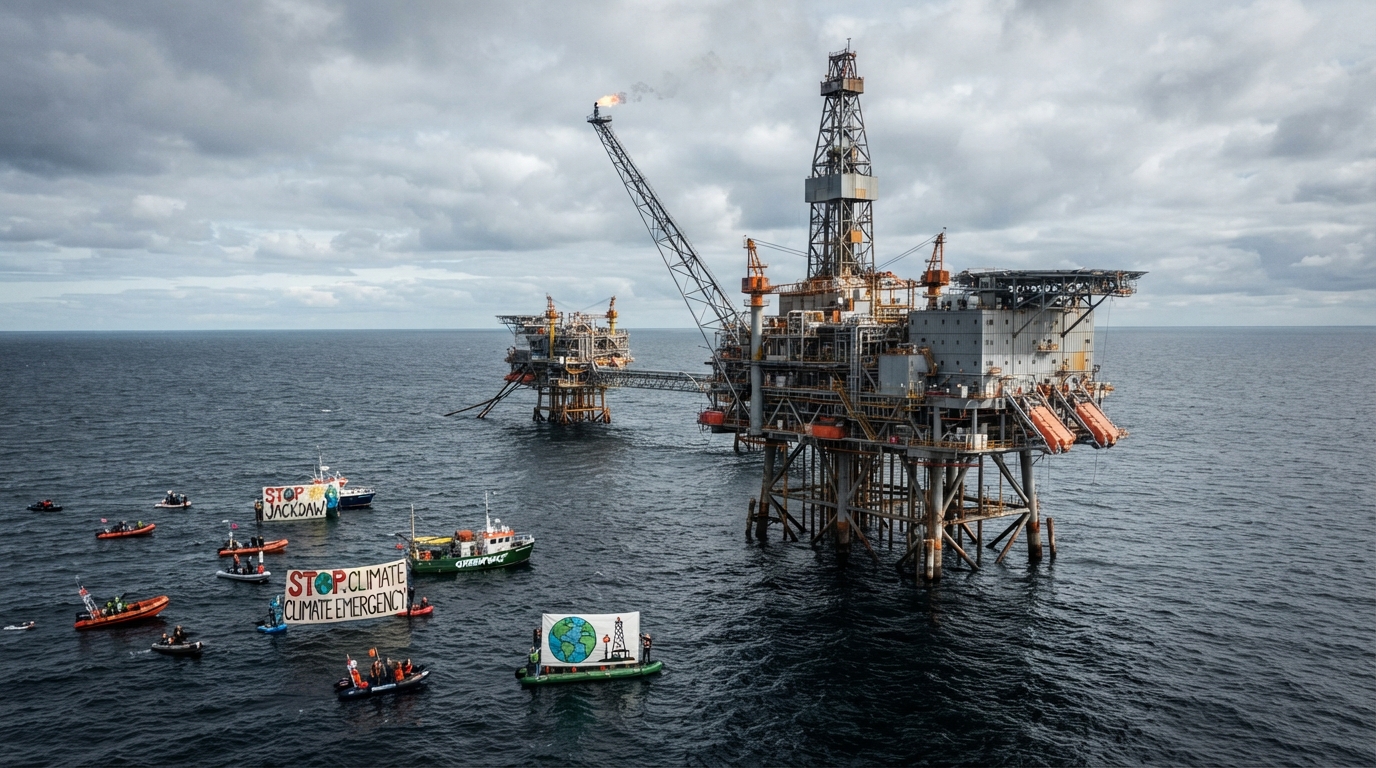
Controversial Jackdaw gas field could be approved within weeks, sources say
The UK government is expected to approve a controversial new gas field off the coast of Aberdeen, the BBC understands.
According to government and industry sources, approval for the Jackdaw project could come as early as mid-September, just before Parliament rises for party conference season.
The gas field was approved by the former Conservative government in 2022, but that decision was delayed by a Scottish court ruling after environmental groups successfully argued that consent had been granted without fully accounting for the climate impact.
Jackdaw’s owner says the field will supply gas equal to up to 6% of the UK’s demand at peak production, while environmental groups say the figure is only 2%.
Campaigners brought legal challenges after Jackdaw was approved in 2022 and again when the Rosebank oil field off Shetland was given the green light in 2023.
Last year, the Court of Session in Edinburgh ruled that Rosebank and Jackdaw had been unlawfully approved because the government had failed to consider the climate impact of burning the oil and gas extracted from the sites.
A judge ordered that more detailed climate assessments be published, and those updated estimates were released for consultation in July.
Both Jackdaw and Rosebank are operated by Adura, a joint venture between energy giants Shell and Norway’s Equinor. Aberdeen-based Ithaca also owns 20% of Rosebank.
Adura has estimated that Jackdaw could generate 35.8m tonnes of carbon over its 11-year lifespan, equal to 90% of Scotland’s emissions for 2023. The company said a more likely figure was about 23.6m tonnes, or 60% of the 2023 total.
Environmentalists argue that further drilling would be unconscionable, undermining efforts to reduce planet-warming carbon emissions while deadly heatwaves and extreme weather hit billions around the world.
They also say production would not improve energy security and that moving sooner to greener technologies would be better for jobs.
Industry groups, however, say production at the sites would create much-needed jobs and strengthen the UK’s energy security as overseas conflicts threaten supply.
Supporters of the project also told the BBC that Jackdaw’s output is vital to extending the life of other North Sea infrastructure, including Shearwater - a major offshore oil and gas production hub that processes hydrocarbons before sending them to coastal refineries and terminals.
Adura said that if approval is granted in September, the field could begin supplying gas to UK homes by this winter, as construction is "99% complete".
A public consultation on the future of Jackdaw and another new oil field, Rosebank, closed in August, and the decision now lies with Energy Secretary Miatta Fahnbulleh.
Speaking in the House of Commons on Thursday, Energy Minister Kate White said the energy secretary would make separate decisions on the two sites, but gave no hint about when an announcement might come.
"The process ended in August, and the Secretary of State will be taking those decisions in due course," she told MPs.
Unlike North Sea oil, much of which is exported and then brought back in refined form, almost all North Sea gas is consumed domestically in the UK.
The UK depends heavily on gas imports, with more than 60% coming from Norway and the United States.
Wholesale natural gas prices have risen sharply this year because of the Iran war and are now at a three-year high, raising concerns about energy security.
Gas storage levels in Europe are much lower than normal for this time of year after countries delayed stockpiling over the summer in the hope the conflict would end before winter and prices would then fall.
They now face the choice of rushing to buy gas or paying potentially higher prices when winter arrives.
Prices are set internationally, and a green light for Jackdaw would not reduce the cost of gas for domestic consumers.
However, extracting gas domestically produces lower greenhouse gas emissions than liquefying, shipping and regasifying liquid natural gas (LNG) imported from other countries.
Tessa Khan, executive director of environmental group Uplift, which brought the legal challenge, said more North Sea drilling would not cut energy bills and would "make no meaningful difference" to UK energy supply.
"The science is clear that the world already has far more oil and gas than can ever be safely burned if we are to limit warming," she added.
"When it comes to these decisions, the prime minister needs to listen to scientists warnings and think back to those families who lost their homes to this summer's wildfires, the UK farmers struggling to grow our food in the drought, and the lives lost in the floods in Nepal – and not the self-interested demands of the oil companies."
The Department for Energy Security and Net Zero said it does not comment on speculation.
A spokesman added: "The North Sea remains a vital national asset and oil and gas will continue to play an important role in our energy system for decades to come - alongside transitioning to clean power to protect jobs and tackle the climate crisis.
"Any decision will take into account all relevant evidence, including environmental assessments and public representations received during the consultation process."