

UK risks being 'uninvestable' if new oil and gas fields not approved, warns Equinor
Equinor warns it may shun further investments in the UK if new oil and gas fields at Rosebank and Jackdaw are not approved.
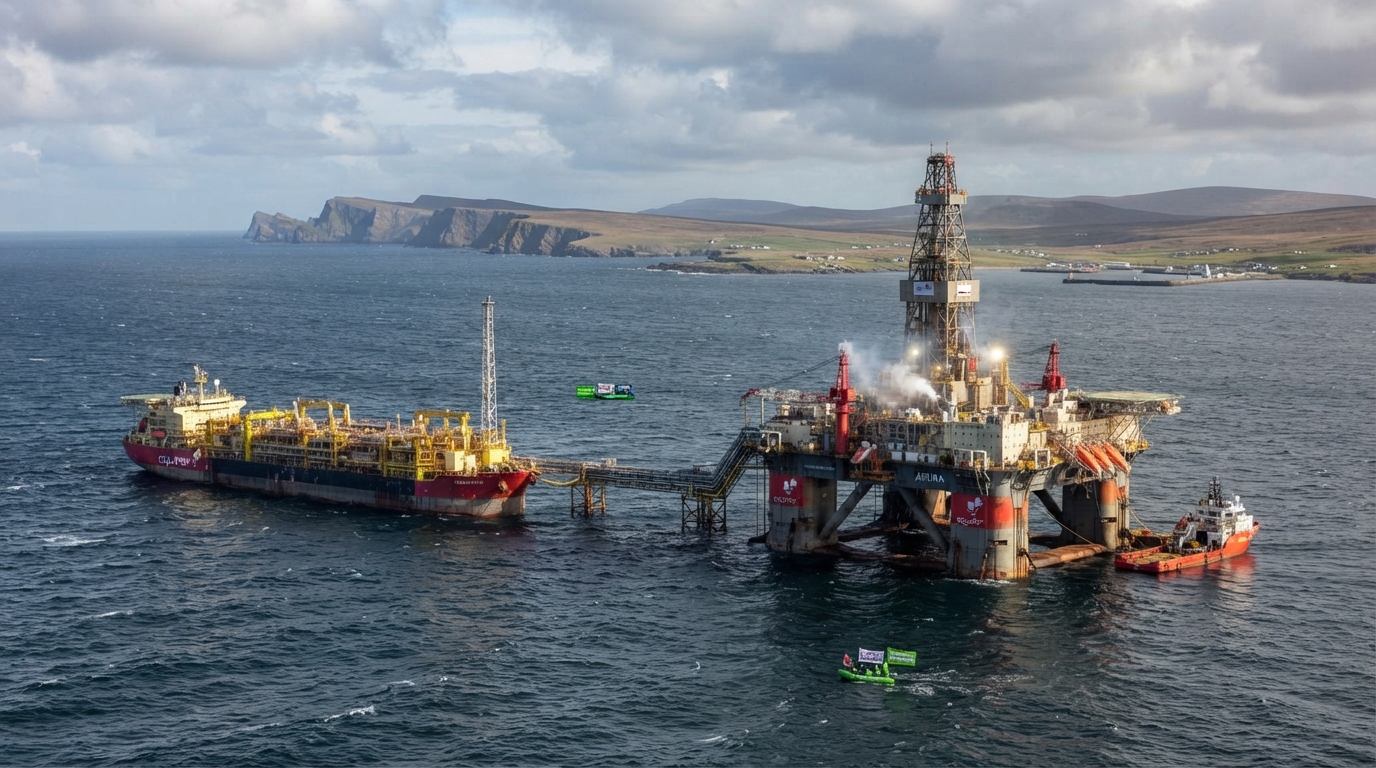
UK could become 'uninvestable' without approval for new oil and gas fields, Equinor warns
Oil major Equinor has said it may avoid further investment in the UK if new oil and gas developments at Rosebank and Jackdaw are not approved.
"The question will be: is the UK investable in the future? I hope it will not come to that," said Anders Opedal, head of the Norwegian state oil company, which co-owns the sites.
He told the BBC the company would "have to take a hard view about it" if a decision were taken to refuse new drilling.
The warning comes as the UK government prepares to decide whether to give final approval for oil and gas extraction at Rosebank and Jackdaw, despite a ban promised in Labour's election manifesto.
The government said any ruling would consider all relevant evidence.
Higher energy prices have renewed discussion about the UK's energy security, with UK production expected to fall by half by 2035.
The UK already depends on Norway for half of its gas requirements, and the Norwegian government has continued issuing new licences for oil and gas exploration in its own North Sea waters.
Equinor has forecast that production will stay at current levels until the middle of the next decade.
Opedal said he still believed Prime Minister Andy Burnham's comments about a "pragmatic approach to oil and gas" meant both projects would be approved, but added that the current uncertainty was "an uncomfortable position to be in".
He said the UK could produce more of its own oil and gas.
"It's a political choice," he said. "The North Sea oil and gas industry started on the UK side. We learned from the UK and it's actually the same geology on both sides of the border - several fields actually cross it."
Rosebank is the UK's largest undeveloped oil and gas field, situated in the North Atlantic around 80 miles north-west of the Shetland Islands, and is believed to contain up to 500 million barrels of oil and gas.
Opedal told the BBC the exploration licence for the site was first granted 25 years ago. "The licence was awarded in 2001, the discovery was made in 2004 and the final investment decision in 2023," he said.
Rosebank and Jackdaw were both originally approved by the former Conservative government, but were held up by a Scottish court ruling after environmental groups argued that consent had been granted without fully accounting for the climate impact.
After a public consultation on the sites, which ended in August, the final decision now lies with Energy Secretary Miatta Fahnbulleh.
Jackdaw and Rosebank are both operated by Adura, a joint venture between Equinor and Shell. Aberdeen-based Ithaca also owns 20% of Rosebank.
Adura has previously said that if approval is granted soon, Jackdaw could begin supplying gas to UK homes by this winter, as construction is "99% complete".
Tessa Khan, executive director of Uplift, an organisation that wants the UK to move away from fossil fuel production, said new drilling at Rosebank "won't cut our bills" and was a "bad deal for Britain".
"It's overwhelmingly oil for export – but it will make Equinor and its part-owner, the Norwegian government, richer, while Britain is left with high energy bills and a declining workforce."
Khan said Labour's "climate credibility is also on the line".
A government spokesperson said the North Sea remained a "vital national asset", adding that "oil and gas will continue to play an important role in our energy system for decades to come - alongside transitioning to clean power to protect jobs and tackle the climate crisis".
"Any decision will take into account all relevant evidence, including environmental assessments and public representations received during the consultation process," the spokesperson added.